
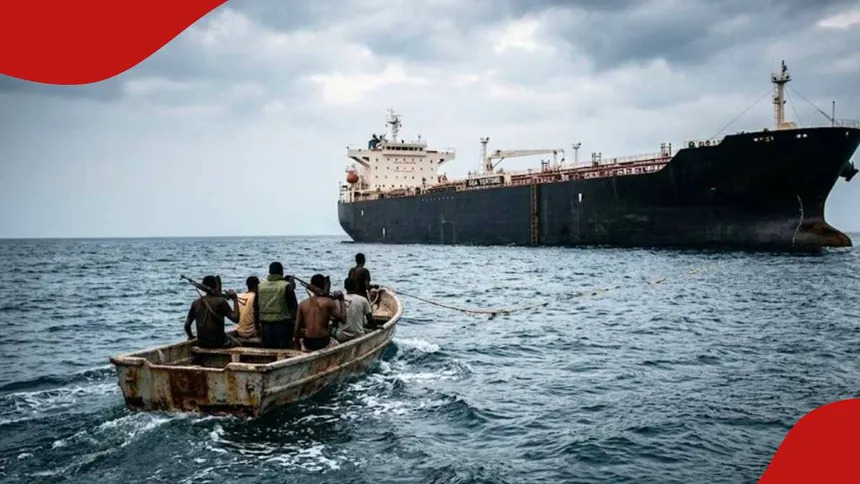
- MV Sward and its 17 crew have been freed after five months.
- The vessel carries 4,500 tonnes of fertiliser bound for Kenya.
- Cargo must pass safety and quality checks before delivery.
Somali pirates have released the MV Sward and its 17 crew members after a five-month hijacking, easing fears over Kenya’s fertiliser supply.
The Turkish-managed general cargo vessel had been held since April 26, 2026, when armed men intercepted it off Somalia’s coast and diverted it towards Puntland. The Saint Kitts and Nevis-flagged ship was en route to Mombasa with roughly 4,500 tonnes of subsidised fertiliser meant for the National Cereals and Produce Board (NCPB) and tea cooperative networks across Kenya.
Its crew, made up of 15 Syrian nationals and two Indian nationals, spent close to five months in captivity before being freed near the Puntland port town of Garacad. All 17 remained safe on board throughout the ordeal.
Vessel turned into a floating pirate base
Regional maritime security agencies say the hijackers did not simply hold the Sward for ransom. Instead, they turned it into an offshore mothership, using its range and endurance to launch smaller skiffs deeper into international shipping lanes.
READ ALSO:
Two Iranian fishing vessels were seized during this phase and later released after local clan elders reportedly negotiated payments of about $20,000 (Ksh2.6 million) per boat. A separate vessel, the Cameroon-flagged MV Lutuf, was captured in August. Puntland security sources put its ransom at $2.5 million (Ksh323 million), while Somalia’s federal government instead credited a joint Somali-Turkish naval operation for its recovery, saying the mission destroyed four pirate boats and killed 14 fighters.
Ransom paid, pirates flee inland
The Sward’s own release followed the delivery of a ransom near Garacad. Once the payment went through, the hijackers abandoned the vessel, climbed onto small boats and made their way ashore, where getaway vehicles were already waiting to whisk them inland.
Security officials say the crew stayed safely aboard throughout the handover, and the ship suffered no reported damage during the escape.
Freedom for the crew does not mean an immediate windfall for Kenyan farmers, however. Before the fertiliser cargo can reach the Port of Mombasa and move on to NCPB depots, the vessel must pass mandatory seaworthiness inspections, inter-agency legal clearances and laboratory quality audits.
These checks are meant to establish whether nearly five months of storage in the ship’s hold altered the fertiliser’s composition, a step officials say is necessary before any of it is released to farmers or cooperative buyers.
By Benedict Aoya
Get more stories from our website: Sacco Review.
For comments and clarifications, write to: Saccoreview@
Kindly follow us via our social media pages on Facebook: Sacco Review Newspaper for timely updates
Stay ahead of the pack! Grab the latest Sacco Review newspaper!