
- Farmers are being introduced to unconventional food options
- New research is opening fresh opportunities for farm diversification
- The university is taking its innovations closer to farmers
Jomo Kenyatta University of Agriculture and Technology (JKUAT) is stepping up efforts to promote alternative sources of food and livestock feed as researchers develop technologies aimed at helping farmers diversify production and improve food security.
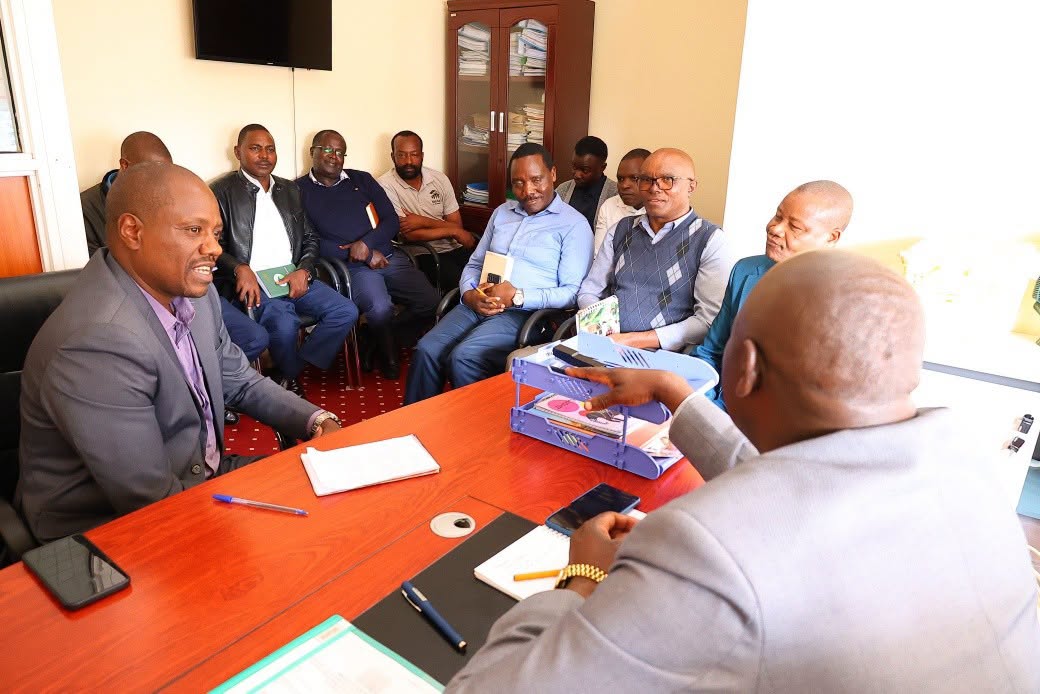
The university Vice-Chancellor Prof Victoria Wambui Ngumi said farmers should embrace agricultural innovations such as crickets, snails and tissue-culture plantains, which she said could open new opportunities for food production while providing additional sources of income.
Prof Ngumi said the university was not only conducting research but also training farmers on how to adopt the technologies and use the products developed by its researchers.
“We are promoting several things in our stand. One of the ones I would like to point out are the crickets,” Prof Ngumi said during the Nyeri Agricultural Society of Kenya (ASK) Show.
JKUAT researchers have developed cricket-based products including flour and biscuits as part of efforts to encourage the use of insects as an alternative source of protein.
The Vice-Chancellor said the university was also promoting snails, which farmers can be trained to rear for food and other commercial purposes. “Farmers can come to us and we train them how to grow the snails. Snails are a delicacy in many parts of the world. It is a very expensive delicacy,” she said.
She said increasing awareness and training would be important in overcoming reluctance among Kenyans to adopt unfamiliar food sources. “The more we talk about it, the more we train Kenyans about it, I think we will be successful,” Prof Ngumi said.
ALSO READ:
JKUAT is also expanding its tissue-culture research beyond bananas to plantains, giving farmers another crop option.
The university is known for tissue-culture banana production, but Prof Ngumi said researchers had now developed tissue-culture plantains that farmers can obtain and grow on their farms. “Now we have tissue-culture plantains. People who would like to plant plantains in their farms can come to us and get them and grow them in their farms. Again, we show them how to do that,” she said.
University showcases new farm machinery
The university is also showcasing machinery developed by its researchers to address challenges faced by farmers and processors.
Prof Ngumi said the machines were designed to simplify agricultural tasks that would otherwise require considerable manual labour, with the university encouraging farmers to seek technical assistance from its researchers.
She urged farmers to make greater use of JKUAT’s research, production and extension services, where experts train them in various agricultural practices, including mushroom production. “My invitation is to Kenyans, ordinary Kenyans, the farmers. They should come to our university, to the research, production and extension division. There are experts there who will train them,” she said.
Prof Ngumi said the university’s agricultural research was focused on translating innovations into practical skills and technologies that farmers could use.
She said some of the alternative protein products, including cricket-based foods, could also contribute to nutrition, particularly when incorporated into diets in appropriate forms.
JKUAT bags top honours at Nyeri Show
The university was among institutions recognised during this year’s Nyeri ASK Show, winning seven trophies in first-place categories and two second-place awards.
Prof Ngumi said the awards were an indication of the university’s growing contribution to agricultural research, innovation and farmer training. “This year we are here for the Nyeri Show and we are very excited because we came to exhibit what we do in the university — our research products, what we want to extend to the farmers and also to showcase our innovations,” she said.
She said the university would continue using agricultural shows and other public platforms to expose farmers to technologies developed through research.
The push comes as farmers face the need to diversify production, improve productivity and identify new sources of food and income amid changing agricultural conditions.
By Amos Kiarie
Get more stories from our website: Sacco Review.
For comments and clarifications, write to: Saccoreview@
Kindly follow us via our social media pages on Facebook: Sacco Review Newspaper for timely updates
Stay ahead of the pack! Grab the latest Sacco Review newspaper!