
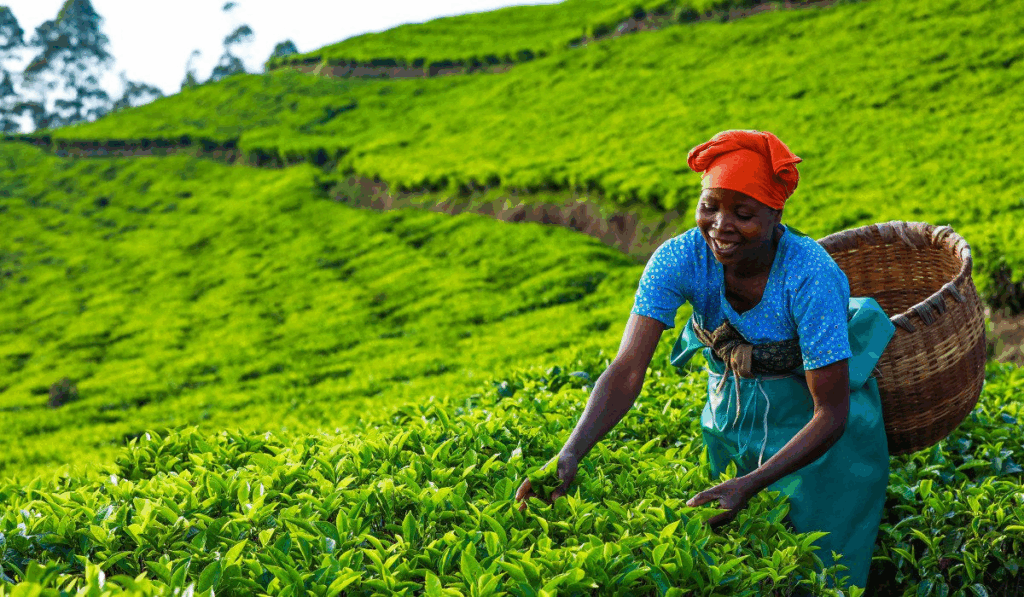
- Murang’a tea farmers have petitioned Parliament over wide differences in payments across factories.
- Growers cite returns of Ksh49 and Ksh31 in two zones, demanding clear explanations for the gap.
- The petition seeks transparent pricing, disclosure of factory finances and stronger oversight of tea payments.
Tea farmers in Murang’a County have asked the National Assembly to investigate why growers across Kenya are paid very different amounts for the same leaf, and to demand a clear explanation of how those payments are worked out.
The request is contained in a petition presented through Kangema Member of Parliament (MP) Peter Irungu Kihungi. He sits on both the Labour Committee and the Public Petitions Committee. The document is addressed to the Clerk of the National Assembly and to the Speaker.
The farmers say they are acting under Article 119 of the Constitution, the Petitions to Parliament Act and the Standing Orders of the National Assembly. They describe tea as a major source of income for hundreds of thousands of smallholders, supporting jobs, household earnings and foreign exchange in the counties where it is grown.
Their main complaint is that returns differ sharply between factories and regions, including areas east and west of the Rift Valley. In Murang’a alone, they say, farmers in Zone 2 and Zone 3 factories deliver tea under similar conditions yet go home with very different amounts. The highest return in Zone 2 is Ksh49, compared with Ksh31 in Zone 3. According to the petitioners, location, the factory a farmer delivers to and that factory’s financial position all play a part.
Importantly, the farmers do not claim that every kilogram should fetch the same price. They accept that quality, market prices, production costs, factory efficiency, debts and management performance can all affect what growers receive. What they want instead is a pricing framework that is fair, open and justified by clear reasons, so that arbitrary gaps cannot arise.
The petitioners also warn that low payments are hurting households. Farmers in lower paying areas, they argue, struggle to cover labour, fertiliser, farm upkeep and transport, which puts the future of tea farming at risk.
Transparency is another central concern. The farmers say too little is disclosed about how tea prices, monthly payments, deductions, loan repayments and annual bonuses are calculated. As a result, they find it hard to understand, check or challenge what they are paid.
They acknowledge that the Ministry responsible for agriculture, the Tea Board of Kenya (TBK), the Kenya Tea Development Agency (KTDA) and individual factory companies all have a role in regulating, managing, processing and marketing tea. However, they want these bodies to account for the differences in earnings and to explain what is being done about them.
READ ALSO:
Kishushe residents demand fresh adjudication of 18,000-acre community land
To strengthen their case, the farmers lean on the Constitution. They point to Article 10, which sets out values such as equity, social justice, non discrimination, transparency and accountability. They also cite Article 43 on economic and social rights and Article 46 on consumer rights, which includes protection of economic interests.
The petitioners say they have not received a satisfactory answer to their concerns and therefore seek Parliament’s intervention. They add that the matter is not before any court or other legal body.
In ten specific prayers, they ask the National Assembly to investigate price and earnings variations across regions and factories, including the gap between eastern and western growing zones. They want the Ministry, the Tea Board, KTDA and factory companies compelled to explain the formulae behind prices, payments, deductions and bonuses. They also want the main causes of the disparities identified, including tea quality, auction prices, management, running costs, debts and marketing arrangements, with the weight of each factor measured.
Beyond that, the farmers propose a transparent pricing framework that gives growers access to information on their factory’s performance and finances. They further seek minimum disclosure rules for factories on prices, sales, expenses, deductions, loans and bonus calculations, subject to legitimate confidentiality.
They also ask the House to review existing laws and oversight arrangements and to recommend amendments where needed. Finally, they want measures to lift quality and value in lower performing regions, through farmer training, access to inputs such as fertiliser, extension services, better processing facilities and stronger marketing, as well as regular reports from State agencies on progress.
By Benedict Aoya
Get more stories from our website: Sacco Review.
For comments and clarifications, write to: Saccoreview@
Kindly follow us via our social media pages on Facebook: Sacco Review Newspaper for timely updates
Stay ahead of the pack! Grab the latest Sacco Review newspaper!