
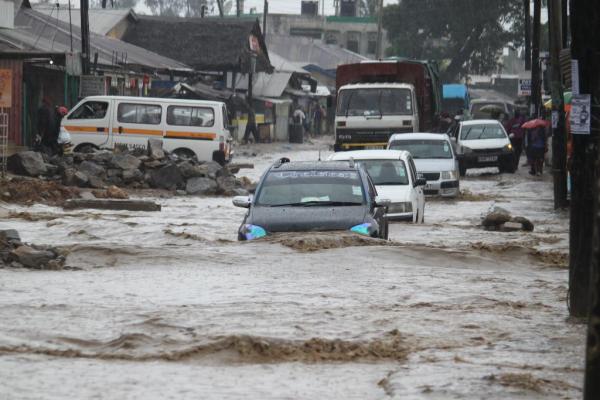
- Kenya Meteorological Service has warned of changing weather conditions across several regions during the October to December rainy season.
- Flood-prone areas, urban centres and highland communities face potential disruptions from heavy downpours.
- The expected rains could boost farming, restore pasture and replenish water sources after months of relatively dry conditions.
Kenya is bracing for three months of enhanced rainfall, with the Kenya Meteorological Service warning of possible flooding, warmer temperatures and increased disease outbreaks across several parts of the country.
The latest seasonal outlook indicates that most parts of the country are likely to receive above-average rainfall in November and December, raising expectations of improved water supplies and better conditions for agricultural production.
However, the increased rainfall could also expose communities to flooding, damage infrastructure and disrupt transport, particularly in low-lying areas, river basins and regions with poor drainage systems.
Acting Director of the Kenya Meteorological Service Edward Muriuki said temperatures would remain higher than normal countrywide, meaning Kenyans should expect relatively warm nights despite the anticipated rains.
The forecast indicates that 44 counties, including major agricultural zones, are likely to experience enhanced rainfall during the period.
Western Kenya and parts of the Rift Valley, including Nandi, Kakamega, Bungoma, Uasin Gishu and Nakuru, are expected to record daytime temperatures of between 20 and 30 degrees Celsius, while night temperatures could range from eight to 20 degrees.
IN CASE YOU MISSED IT:
In northern Kenya, temperatures could climb to 38 degrees Celsius in Turkana, Samburu, Marsabit, Mandera, Wajir, Garissa and Isiolo.
Along the Coast, minimum night temperatures are expected to remain between 20 and 25 degrees Celsius.
Muriuki said the rainfall patterns would be influenced by several climate systems, including the Indian Ocean Dipole, El Niño–Southern Oscillation and Madden-Julian Oscillation, which affect the distribution and intensity of rainfall.
The authority cautioned that prolonged downpours could lead to rising river levels, flash floods and landslides, particularly in highland areas.
Urban centres could also experience flooding and traffic disruptions where drainage infrastructure is unable to cope with increased water volumes.
Rural roads are equally at risk of deterioration, potentially affecting the transportation of farm produce and access to essential services.
The forecast also raises public health concerns, with increased water accumulation likely to create breeding grounds for mosquitoes and heighten the risk of malaria.
Flooding could contaminate drinking water sources and sanitation facilities, increasing the possibility of cholera, typhoid and other waterborne infections.
Despite the risks, the expected rainfall offers relief to farmers and pastoral communities following several months of relatively dry conditions.
READ:
Improved soil moisture, pasture regeneration and replenishment of rivers, dams and water pans are expected to support agricultural activities and livestock production.
The meteorological service noted that November is a critical period in the October to December short rains season, which plays a significant role in food production and water security.
The latest outlook follows a mixed rainfall performance in October, when several parts of the country recorded below-average to near-average precipitation.
Ng’iya Primary School weather station in Siaya recorded the highest monthly rainfall total at 264.4mm.
Temperatures also remained above normal, with Kisii recording an increase of 2.3 degrees Celsius above its long-term average. Lodwar registered a maximum temperature of 40 degrees Celsius on October 22, 2026.
The authority urged Kenyans to follow regular weather updates and use county-specific forecasts to guide farming, travel and other activities.
It also advised residents in flood-prone areas to remain alert, noting that seasonal predictions do not mean all regions will experience similar rainfall amounts or receive rain at the same time.
By Jeff Kirui
Get more stories from our website: Sacco Review.
For comments and clarifications, write to: Saccoreview@
Kindly follow us via our social media pages on Facebook: Sacco Review Newspaper for timely updates
Stay ahead of the pack! Grab the latest Sacco Review newspaper!