- More than 5,000 truckers have halted loading cargo over the cost of mandatory electronic seals.
- Transporters want KRA to allow them to recover seal costs through tax offsets.
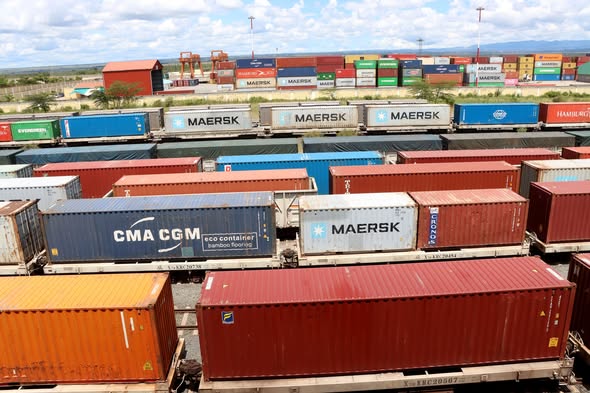
- The standoff threatens cargo movement at Mombasa Port and along the Northern Corridor.
Truckers who haul containers out of the Port of Mombasa have stopped loading cargo that needs the new electronic seals, saying the bill falls on them with no way to claim the money back. More than 5,000 transporters joined the suspension, which started Thursday.
Behind the standoff is a change in who supplies the tracking devices. Until recently, the Kenya Revenue Authority (KRA) issued its own seals through one provider. Since October 26, 2026, fifteen approved private firms sell them instead, and anyone moving goods under customs control must buy from them. Each seal costs between $350 and $450 (Ksh45,483 to Ksh58,478), depending on the vendor.
The Kenya Transporters Association (KTA) says those sums are too heavy for haulers to swallow. Its chairman, Newton Wang’oo, told members on November 4, 2026 that the arrangement is one-sided, financially unworkable and open to legal challenge. He advised them not to buy, lease or contract any seal supplier until KRA agrees to let them offset the expense against taxes they owe. According to the association, repeated talks with the authority have produced no such arrangement.
YOU MAY WANT TO READ:
KRA presents the shift as an upgrade. It says the new system gives users more choice, encourages suppliers to compete and sharpens oversight of goods in transit. Importers, exporters, transporters, clearing agents and bonded warehouse operators can now agree terms directly with the vendor they prefer. The seals link to the Regional Electronic Cargo Tracking System (RECTS), which follows trucks in real time, spots route changes and warns of tampering.
Transporters accept the need for monitoring. Their complaint is that a government requirement should not become their private expense without consultation.
The stoppage comes when the port can least afford delays. Forty four vessels are due at Mombasa over the next fortnight, including 22 container ships, 11 conventional cargo vessels, five car carriers and six oil tankers. Lamu expects nine more. With some container freight stations already short of space, any slowdown in trucking could quickly worsen congestion.
Roughly 3,500 trucks collect containers from the port each day. If they stay idle, boxes could pile up at the port, freight stations and inland depots. Uganda, Rwanda, Burundi, South Sudan and the Democratic Republic of Congo would feel the effect too, as they rely on the Northern Corridor to reach the sea.
The association says it is seeking urgent legal advice and will go to court if necessary. For now, the next move rests with KRA and the talks that follow.
By Benedict Aoya
Get more stories from our website: Sacco Review.
For comments and clarifications, write to: Saccoreview@
Kindly follow us via our social media pages on Facebook: Sacco Review Newspaper for timely updates
Stay ahead of the pack! Grab the latest Sacco Review newspaper!