
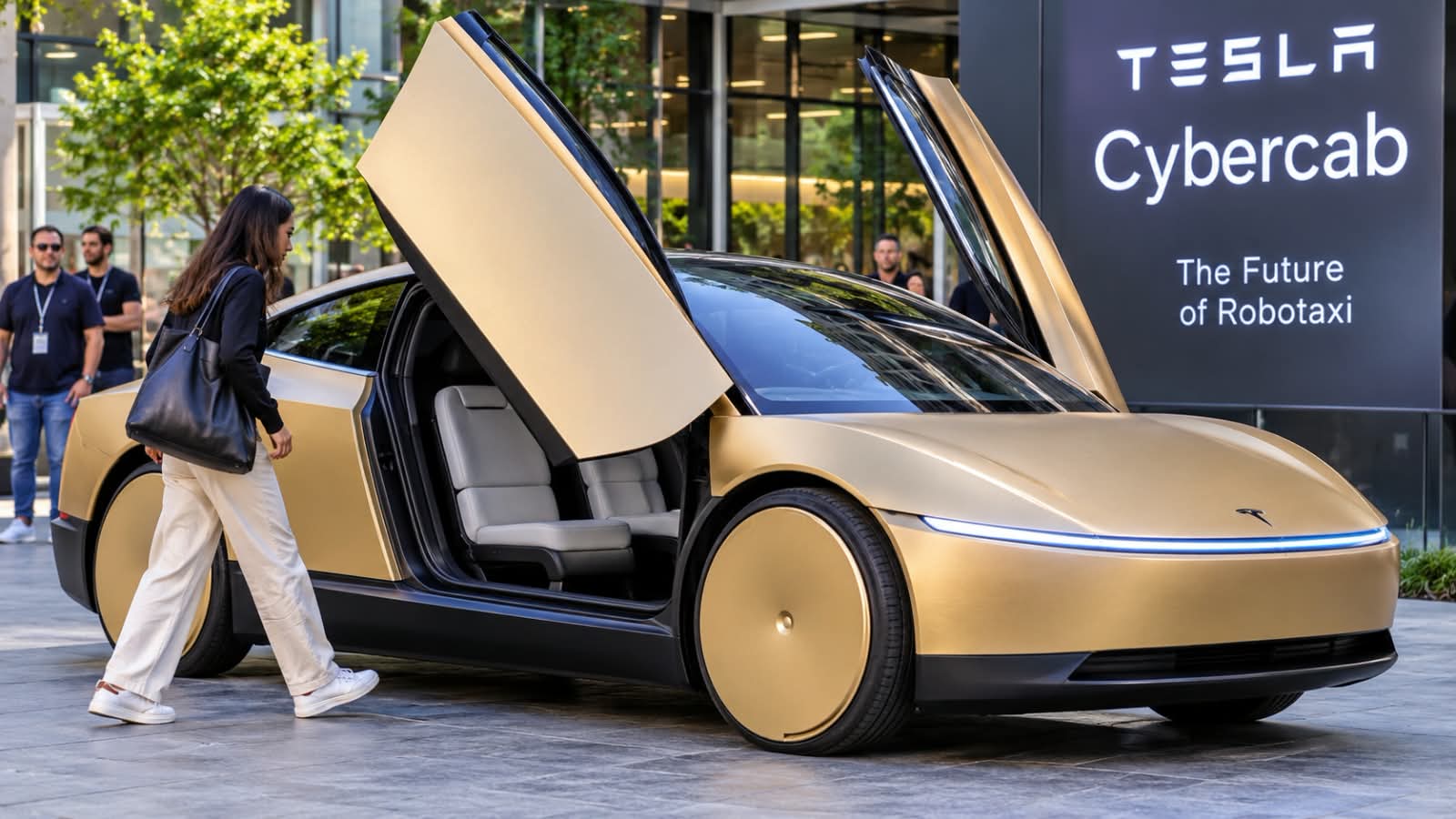
- Tesla introduces a driverless taxi that operates without conventional driving controls
- The Cybercab combines artificial intelligence, cameras and autonomous navigation technology
- Its launch highlights the growing importance of STEM education in preparing learners for future jobs
The future of transportation is rapidly changing, and the latest development from American electric vehicle manufacturer Tesla is raising important questions about the relationship between education, science, engineering and artificial intelligence.
Tesla has opened orders for its futuristic Cybercab, an electric driverless taxi designed to transport passengers without a human driver. The vehicle, which reportedly costs $29,990, approximately Ksh3.9 million, has no steering wheel, accelerator pedal or conventional braking pedal. Instead, it relies on artificial intelligence, cameras, onboard computers and autonomous driving technology to navigate roads and transport passengers.
This development is more than an automotive breakthrough. It demonstrates how knowledge in mathematics, physics, computer science, robotics and engineering is increasingly shaping industries that previously depended almost entirely on human labour.
For education systems around the world, the emergence of such technology presents an important lesson. Preparing learners for the future requires more than teaching them to memorise information, and schools must equip students with the scientific, technological and problem solving skills needed to participate in an increasingly automated economy.
According to the reported ordering arrangements, Tesla has opened orders to selected buyers, with deliveries expected to begin next month. However, the driverless vehicles will initially operate only within designated areas of Texas in the United States. The reported purchase price is $29,990, while owners are required to pay a compulsory monthly subscription of $299 to operate the autonomous system.
Unlike conventional vehicles that require a human driver to control the steering wheel, accelerator and brakes, the Cybercab is designed to perform these functions independently. A passenger requests a journey through Tesla’s digital booking system, selects a destination and waits for the vehicle to arrive.
Once the Cybercab reaches the pickup point, the passenger identifies the vehicle, enters the cabin, fastens the seat belt and confirms the journey through the available digital interface. The autonomous driving system then takes control, navigating the roads until the vehicle reaches the selected destination.
RELATED:
Tesla to wind down Cybertruck production from Mid-2027 to make room for cybercab driverless taxi
The vehicle is designed primarily for two passengers, making it different from conventional taxis that generally accommodate more people. Its design reflects a broader transformation in which vehicles are increasingly becoming intelligent machines capable of interpreting their surroundings and making decisions without continuous human intervention.
So how does a car drive without a steering wheel? The technology behind the Cybercab is built around artificial intelligence, computer vision and autonomous navigation. Strategically positioned cameras observe the surrounding environment, identifying road markings, traffic lights, pedestrians, other vehicles and potential obstacles.
Artificial intelligence processes the information collected by the cameras, enabling the vehicle to interpret its surroundings and determine how it should respond. Onboard computing systems then process this information and coordinate decisions involving acceleration, braking, direction and navigation.
This requires sophisticated combinations of software engineering, mathematics, electronics, robotics and machine learning. It also demonstrates why countries investing in science, technology, engineering and mathematics (STEM) education are positioning their young populations for emerging opportunities in the global economy.
The reported $299 monthly subscription is a significant component of the Cybercab business model. Tesla is not simply selling an electric vehicle. It is also commercialising access to the autonomous technology that enables the vehicle to operate without a human driver. This means purchasing the vehicle alone is not sufficient, since owners must maintain the required subscription to access its driverless capabilities.
The arrangement introduces a different approach to vehicle ownership, where customers pay for both the physical machine and the technology that makes it function autonomously. It also demonstrates how technology companies are increasingly developing recurring digital services around products that were traditionally purchased as standalone items.
Despite the excitement surrounding the technology, the Cybercab will not initially operate everywhere. Its autonomous operations are restricted to approved geographical areas in Texas, where the necessary safety and regulatory arrangements must be observed. This limitation is important because driverless vehicles must demonstrate their ability to respond safely to pedestrians, cyclists, unpredictable motorists, traffic congestion and changing road conditions.
Autonomous transportation also requires appropriate infrastructure, regulatory approval, insurance arrangements and reliable technology. The restrictions demonstrate that technological innovation must progress alongside public safety and effective regulation.
By Hillary Muhalya
Get more stories from our website: Sacco Review.
For comments and clarifications, write to: Saccoreview@
Kindly follow us via our social media pages on Facebook: Sacco Review Newspaper for timely updates
Stay ahead of the pack! Grab the latest Sacco Review newspaper!