
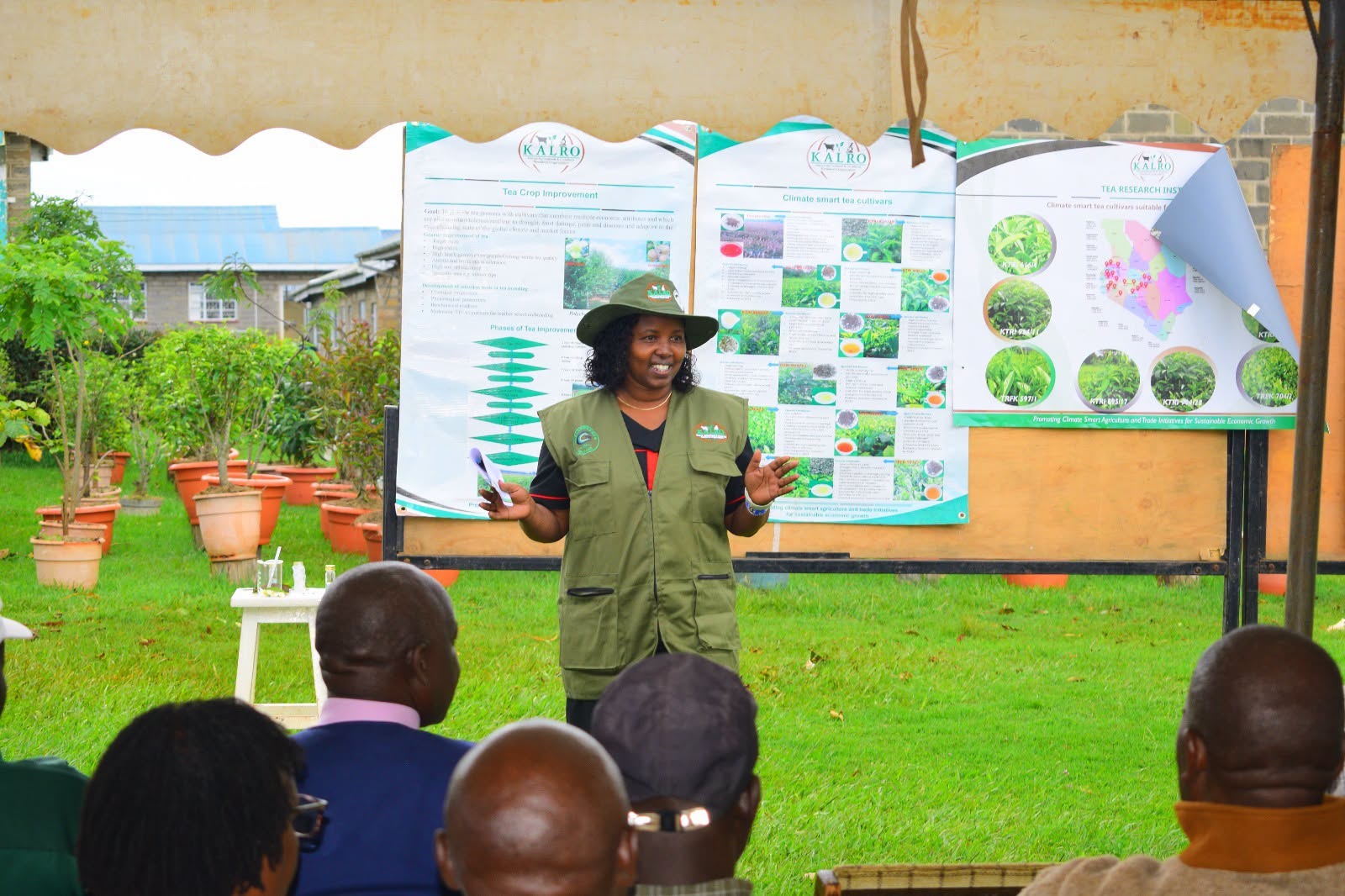
- Kiegoi tea farmers visit KALRO to learn modern tea production and processing practices.
- Growers receive practical lessons on elite cultivars, nursery management and pest control.
- Farmers explore value addition and new market opportunities beyond conventional tea production.
A group of 160 tea farmers from Kiegoi Kenya Tea Development Agency (KTDA) Factory spent November 17, 2026 learning how to grow and process better tea at the Kenya Agricultural and Livestock Research Organization (KALRO) Tea Research Institute (TRI). They went with their factory management team and directors for a tour on Good Agricultural and Manufacturing Practices for sustainable tea production.
Institute Director Lilian Kerio received the visitors and used the occasion to explain what TRI exists to do. She said the institute is committed to generating and transferring research technologies that answer farmers’ real needs, in support of a competitive, sustainable and diversified tea subsector. She also praised Kiegoi KTDA for investing in the knowledge of its growers and urged the farmers to put what they learn into practice. Higher productivity, better quality and bigger incomes, she said, should follow.
Ogise Muku led the circuit and coordinated the programme, keeping the farmers moving between sessions and demonstrations. A panel of experts made up of Joel Langat, Naibei, Carolyne Ogise and Victor Ngeno then took the group through the day’s lessons. Topics covered the latest elite tea cultivars and their attributes, nursery management, agronomic practices, uprooting and replanting, and integrated pest and disease management.
READ:
Practical sessions followed in the tea nursery and at the composite manure site. There, the farmers watched how healthy planting materials are raised and how organic manure is produced and applied. A field trip to FLD7 let them see for themselves how elite tea varieties perform under field conditions.
The tour also looked beyond the farm gate. Farmers learnt about value addition and product diversification, and later visited the Mkulima shop, where they bought kombucha, specialty teas and other value added products. The stop gave them a first hand view of markets that go well past conventional tea production.
TRI closed the visit by promising to keep supporting tea farmers through research driven by their demand, technology transfer and capacity building. Each presenter was also tasked with preparing a technical report to record the proceedings and recommendations from the day.
By reporter
Get more stories from our website: Sacco Review.
For comments and clarifications, write to: Saccoreview@
Kindly follow us via our social media pages on Facebook: Sacco Review Newspaper for timely updates
Stay ahead of the pack! Grab the latest Sacco Review newspaper!