
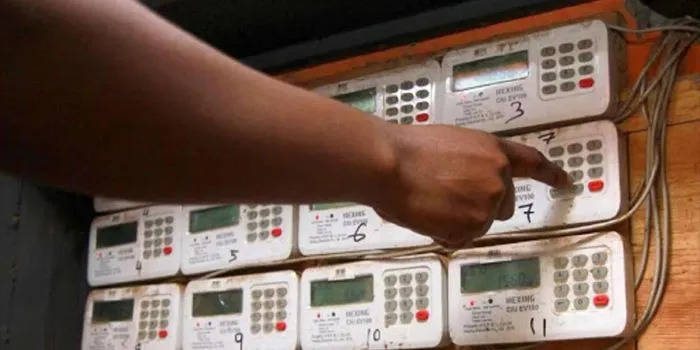
- Electricity consumers are facing additional costs under revised charges covering the November billing period.
- Fuel expenses and currency adjustments account for the largest share of the new charges.
- A separate levy will support water resource management linked to hydro-power generation.
Power will get more expensive this month for homes and businesses across Kenya, after the Energy and Petroleum Regulatory Authority (EPRA) approved three extra charges that add roughly Ksh4.56 to every unit consumed. Prepaid customers will feel it when they buy tokens, while postpaid customers will see it on their monthly bills.
EPRA set out the charges in a Gazette notice, saying they apply to all meter readings taken during the November billing period. Together they come to Ksh4.5567 a unit.
Fuel makes up most of that amount. The Fuel Energy Cost Charge is Ksh3.54 per kilowatt-hour (kWh), or 354 cents, and it lets power suppliers recover what they spend on running thermal plants that burn diesel and other petroleum products.
That bill moves with fuel prices, the volume of electricity those plants produce and how much the national grid demands from them. Whenever the cost goes up, it is passed on to consumers through their monthly charges.
READ:
The Foreign Exchange Fluctuation Adjustment adds Ksh1.0031 a unit. It captures currency gains and losses among Kenya Power, the Kenya Electricity Generating Company (KenGen) and Independent Power Producers (IPPs).
These players depend on imported equipment, fuel and contracts priced in foreign currencies, so movements in the exchange rate change what it costs them to generate, buy and deliver power.
In October, the three groups together recorded foreign exchange gains of about Ksh1.16 billion. Because the figure depends on gains and losses within each assessment period, it shifts from one month to the next.
The smallest item is a levy of Ksh0.013606 per kWh for the Water Resource Management Authority (WRMA). It applies to power bought from hydro-power stations with an installed capacity of at least one megawatt.
EPRA said 314.19 million units came from such plants in October, and that volume fed into the levy calculation for November. The money supports water resource management work linked to hydro-power generation.
By reporter
Get more stories from our website: Sacco Review.
For comments and clarifications, write to: Saccoreview@
Kindly follow us via our social media pages on Facebook: Sacco Review Newspaper for timely updates
Stay ahead of the pack! Grab the latest Sacco Review newspaper!