- Livestock farmers face a 30 million-tonne feed deficit threatening milk production and household incomes
- Heifer study exposes costly fodder, poor quality and seasonal shortages holding back Kenya’s dairy industry
- New initiative targets youth participation in feed production to address persistent gaps across the dairy value chain
Every year, Kenya’s livestock farmers go without about 30 million tonnes of the feed their animals need, a gap that is quietly eroding milk output, household incomes and the future of the dairy industry.
The country needs roughly 55 million tonnes of feed dry matter annually, yet only about 25 million tonnes is available. Those figures come from a Dairy Value Chain Gap Analysis by Heifer International Kenya, which also lists expensive feed, seasonal scarcity, poor quality and limited access to machinery among the problems holding producers back.
Milk volumes show how deep the problem runs. Farmers produce between 5.2 billion and 5.76 billion litres a year, while domestic demand stands at about 12.76 billion litres. The stakes are high because the sector supports around 1.8 million smallholder households and accounts for 4.5 per cent of Gross Domestic Product (GDP) and 14 per cent of agricultural GDP.
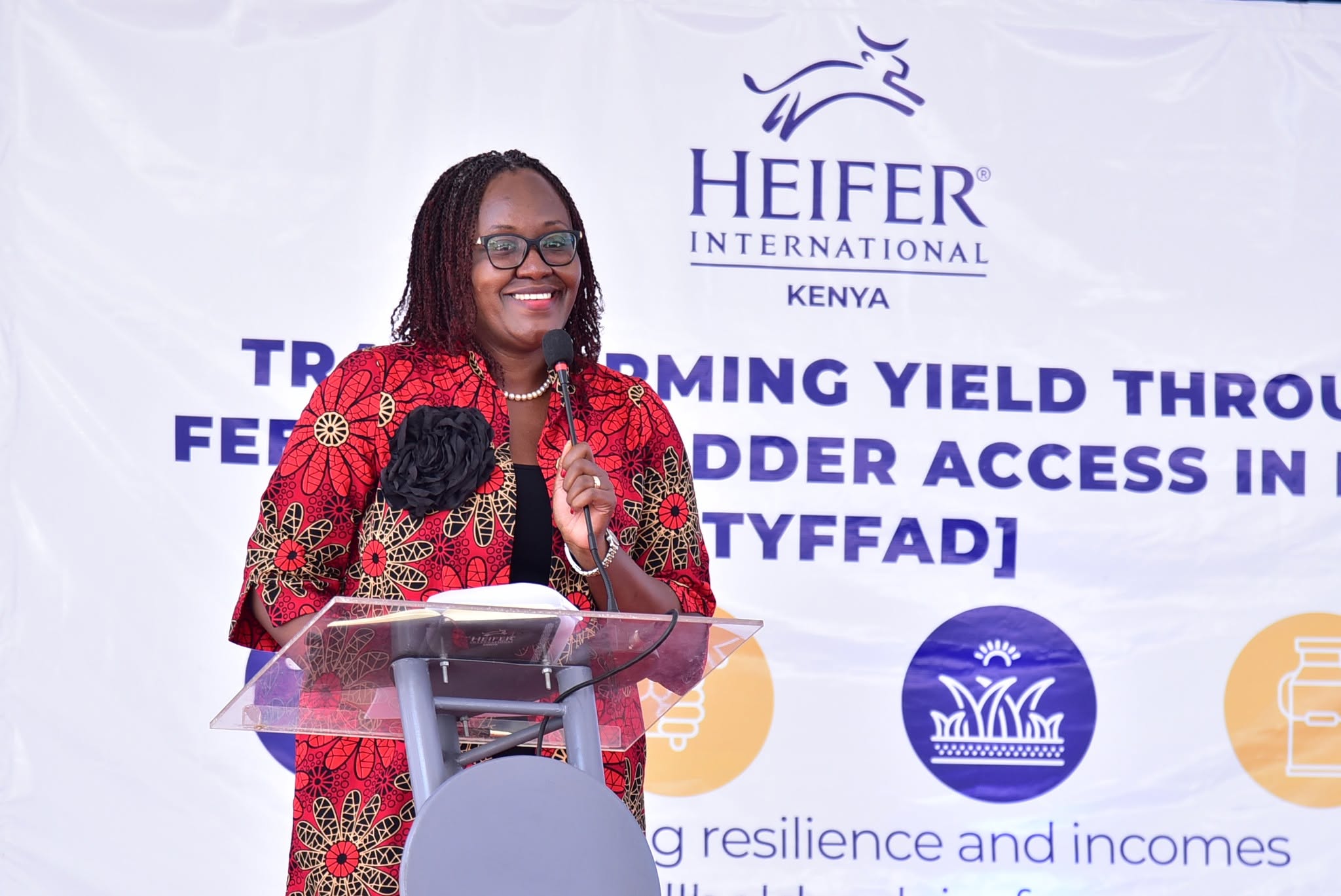
Heifer International Kenya Country Director Wairimu Munyinyi used a media breakfast in Nairobi to argue that the recent milk shortages exposed weaknesses in how the country grows and supplies fodder. In her words, scarce or costly feed hurts “market supply, household incomes and ultimately food security”, and not just the farm where the cows are kept. Affordable, good quality feed, she added, is the foundation of higher production, better profits and stronger resilience for livestock keepers.
Dry areas feel the pressure most. Repeated droughts and shrinking pasture put herds and pastoral livelihoods at risk there. Even so, Munyinyi pointed to encouraging work in Isiolo, Laikipia and other livestock regions, where communities are restoring worn out rangelands, conserving water and growing more pasture. One method she singled out involves digging earth structures shaped like half moons, which trap rainwater and hold moisture in the soil so that grass can grow back.
READ:
KEPROBA, EATTA strike deal to boost Kenyan tea brands globally
The study covered dairy projects in 11 counties before taking a closer look at Nyandarua, Embu and Elgeyo Marakwet. Across them, it found that investment in better breeds, farmer training, veterinary care, milk cooling and cooperatives has not yet delivered the productivity or commercial returns it should.
Farmers in Nyandarua struggle with feed supply, cold chain infrastructure and cooperatives that face business hurdles. In Embu, feed is costly and support services do not work together, which cuts into profits. Elgeyo Marakwet presents a wider mix of gaps, including feed, breeding, veterinary support and market infrastructure, all made worse by climate pressures. Across the three areas, farmers also lack finance, machinery and knowledge of which fodder varieties suit their local conditions.
Representatives of the Kenya Dairy Board and other industry players responded by calling for closer teamwork among government agencies, researchers, lenders and private companies. They said easier access to credit would let farmers buy machinery and modern feed production technology, while partnerships would help spread research findings and better farming practices.
The assessment itself recommends building feed and fodder businesses that can stand on their own commercially, turning cooperatives into centres for delivering services and widening financing tailored to dairy. It also urges more spending on feed production that can withstand climate shocks, along with quality assurance and joined up livestock services, to keep dairy farming sustainable.
Heifer International Kenya says one of its responses is the Transforming Youth in Dairy Through Feed and Fodder Access in Dairy (TYFFAD) initiative, which tackles feed shortages while opening up income opportunities for young people along the dairy value chain.
By Benedict Aoya
Get more stories from our website: Sacco Review.
For comments and clarifications, write to: Saccoreview@
Kindly follow us via our social media pages on Facebook: Sacco Review Newspaper for timely updates
Stay ahead of the pack! Grab the latest Sacco Review newspaper!