
Potato farmers in Meru County have a reason to smile after realizing significant improvements in their crop yields and income courtesy of a long-term training initiative spearheaded by the Korea Program for International Agriculture (KOPIA) in collaboration with the Meru County Government.
The program, which has been running for several years, aims to strengthen food security and reduce post-harvest losses by equipping farmers with modern farming technologies and best practices in potato production.
During a recent training session held in Murungurune, Imenti South Sub-county, KOPIA Kenya Centre Director Dr. Ji Gang Kim emphasized the importance of adopting contemporary agricultural techniques.
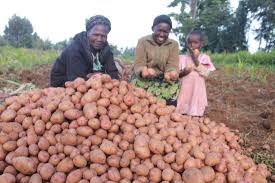
He noted that the initiative is not only focused on improving crop yields but also on helping farmers transition from subsistence farming to commercial agriculture.
“Our goal is to increase farmers’ income by introducing advanced storage facilities, disease-resistant seedlings, and modern packaging methods that preserve produce quality. Through pilot projects and hands-on training by agricultural experts, we’re developing locally tailored solutions for the unique challenges faced by Meru’s potato farmers,” said Dr. Kim.
ALSO READ:
One of the key innovations introduced by the program is standardized packaging, which includes labeled bags of varying sizes ranging from 2 kgs to 50 kgs to improve marketing and traceability.
Julius Ntoitonga, KOPIA’s Meru County coordinator, highlighted the importance of branding in promoting regional identity and consumer trust.
“We’ve introduced packaging that clearly identifies the origin of the potatoes. This enhances market visibility and helps farmers fetch better prices,” Ntoitonga said.
David Mugambi, the county government’s accounting officer for KOPIA programs, reiterated the administration’s commitment to supporting the initiative.
However, he acknowledged ongoing challenges in enforcing national potato packaging regulations and expressed optimism that continued training would bridge these gaps.
“Farmers are now learning how to package and sell their produce more efficiently based on market demand. The new methods offer flexibility and reduce losses caused by poor storage and handling,” Mugambi stated.
ALSO READ:
Saccos in Mombasa urged to exercise good leadership, governance to boost operations
Local farmer Teresia Baabu applauded the program, saying it has empowered her and other farmers with knowledge and tools to cope with climate change and market fluctuations.
“The training has been a game-changer. We’re already seeing better results, both in crop quality and income. The packaging is not only convenient but also helps us reach new markets,” she said.
So far, the program has trained over 400 farmers in Murungurune and Katheri, covering both Imenti South and Imenti Central sub-counties.
The initiative represents a significant step toward transforming Meru into a model region for sustainable and profitable potato farming.
By John Majau.
Get more stories from our website: Sacco Review.
For comments and clarifications, write to: Saccoreview@
Kindly follow us via our social media pages on Facebook: Sacco Review Newspaper for timely updates
Stay ahead of the pack! Grab the latest Sacco Review newspaper!