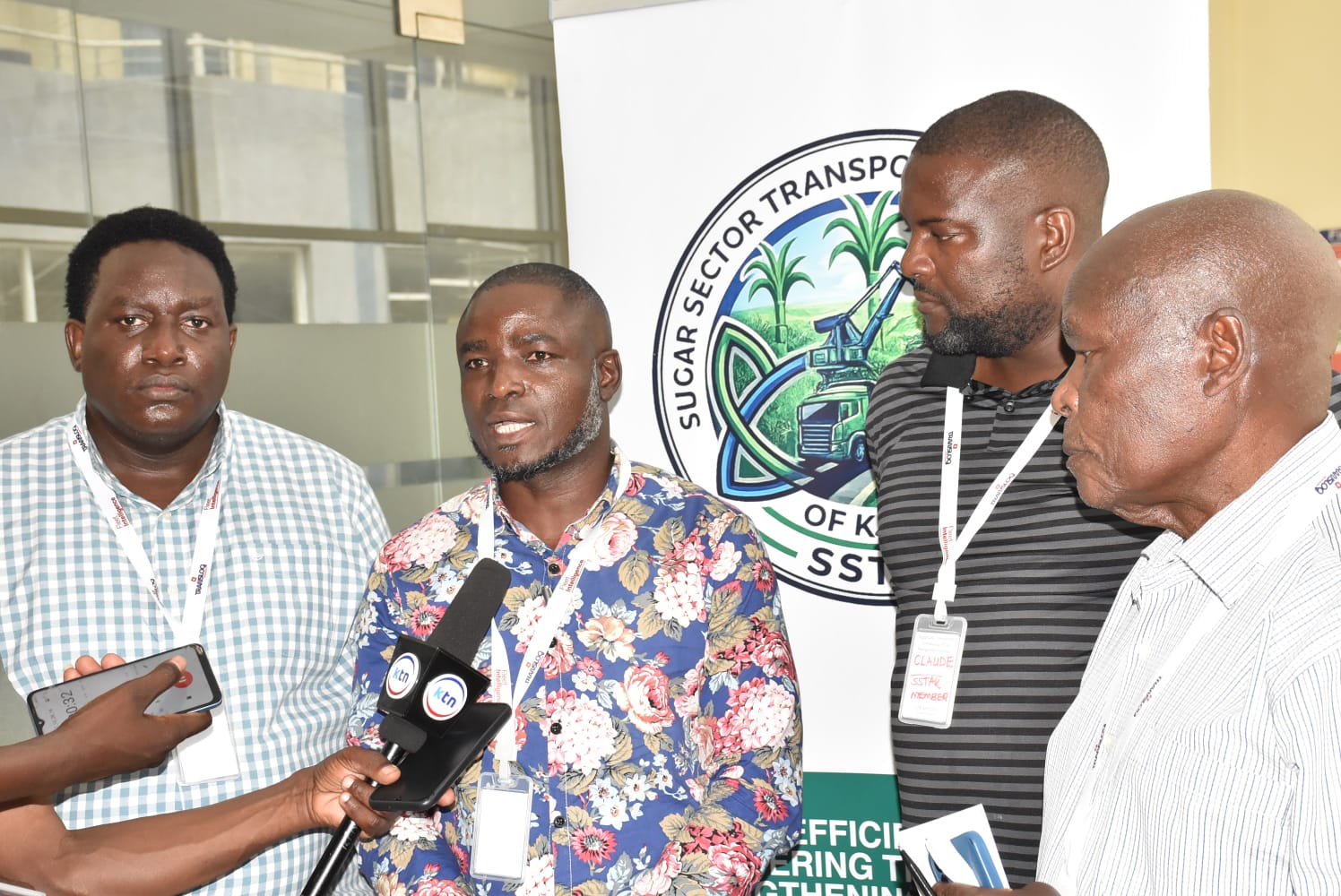
Transporters in the sugar sector now want the Kenya Sugar board to come up with regulations in order to make cane farming ventures more profitable.
Led by the National Chairman of the Sugar Sector Transporters Association of Kenya (SSTAK) Dr. Paul Orengo, they said the regulations will go a long way in weeding out cartels who have been exploiting cane farmers for many years.
“Already President William Ruto has signed the Sugar bill into law hence making it an Act of Parliament. The KSB is therefore supposed to come up with regulations aimed at streamlining the sector.” He said
Speaking in Kisumu during a stakeholder’s engagement Orengo said all those concerned should move with immediate speed in coming up with the transport regulations.
He said the Ministry of Agriculture should take the lead towards that end with other stakeholders.
Orengo lamented that transport charges in the sugar sector is still the high in the country hence making cane farming extremely expensive.
He said the regulations should be crafted as a matter of priority given that the COMESA safeguards which used to cushion the local industry have come to an end hence making it more lebarl than before.
“A much lower transport will at the end of the day make cane farming less expensive and more profitable and even efficient,” Orengo said.
ALSO READ:
Meru residents urged to support the Amended Meru County Cooperative Act for progress and stability
Once the regulations are in place, Orengo said local Sugar will become more competitive locally, continentally and even globally, noting that the issue is extremely critical given that local sugar factories have been leased out.
Orengo noted that pricing in the transport sector especially within the sugar belt is critical given the nature of activities there adding that transporters who double up as farmers while there are also independent transporters.
The chairman said there are not set prices or fees charged hence leaving farmers more vulnerable than ever before.
Prize setting, regulation ethical standards and general regulations, Orengo said, must be there moving forward.
The current rise in fuel and related products, he added makes the issue even more urgent.
He observed that fee guidelines in the transport sector in sugar belt are fragmented thereby making it a free for all to the detriment of both farmers and vehicle owners.
Orengo said middlemen or the so called brokers have taken advantage of the confusion to exploit farmers and millers.
The director of Tran slog David K’opiyo said transporters should now diversify how they operate in the wake of new challenges.
Kopiyo said they should resort to electric vehicles, use biogas and solarization to beat odds.
Earlier Orengo termed reports of industrial sugar being repackaged and sold for domestic use as deeply troubling, citing serious systemic failures.
He pointed to regulatory lapses, weak enforcement, and policy gaps, questioning how imported sugar meant strictly for industrial use ends up in the consumer market, and called for a coordinated multi-sectoral approach to protect consumers.
By Fredrick Odiero
Get more stories from our website: Sacco Review.
For comments and clarifications, write to: Saccoreview@
Kindly follow us via our social media pages on Facebook: Sacco Review Newspaper for timely updates
Stay ahead of the pack! Grab the latest Sacco Review newspaper!