- Fall armyworm infestations now affect more than 40 per cent of Kenya’s maize-growing areas.
- FAO warns that the pest could cause significant crop losses and threaten food security.
- Farmers trained under a three-year project are adopting safer pest monitoring and control methods.
More than 40 per cent of Kenya’s maize-growing areas now carry fall armyworm infestations, according to the Food and Agriculture Organisation of the United Nations (FAO). The agency warns that the pest is still spreading.
In affected fields, the caterpillar can wipe out as much as 30 per cent of a crop. That leaves maize farmers exposed to heavy losses at a time when the country is trying to raise food production.
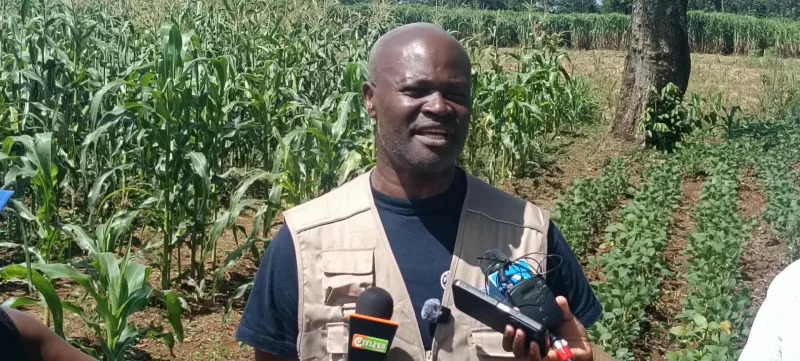
FAO pest management expert George Ong’amo described the problem as serious and said the damage estimates have held at about 30 per cent. He spoke at Mabanga Agricultural Training Centre (ATC) in Bungoma county, where a three-year project on integrated and sustainable fall armyworm management formally wound up.
Kenya is far from alone. The pest comes from the Americas but has since reached more than 80 countries across Africa, Asia, the Pacific and Europe. FAO says it can cut maize yields by up to 73 per cent. Across Africa, the bill is put at about $9.4 billion.
Backed by the FAO-China South-South Cooperation Programme, the project taught farmers how to spot, monitor and control the pest without harming the environment. Training took place through demonstration plots and farmer field schools.
READ ALSO:
Ong’amo said the approach has sharpened farmers’ ability to handle infestations. He also pressed those who attended to keep using the methods and pass them on to neighbouring communities.
The need was clear from the start. Since the pest first appeared in Kenya in 2017, many growers have struggled to recognise it. Some turned to unsuitable pesticides or applied them poorly, and Ong’amo said this fuelled resistance.
FAO agricultural officer Maged Elkahky, who works with the project’s Plant Health Cluster, explained why Kenya was picked. Together with Ghana, it served as a testing ground for control technologies across different agro-ecological zones. Maize is also the country’s staple, so protecting it matters for livelihoods and food security.
Elkahky said the project placed particular weight on surveillance, monitoring and early warning systems, so that farmers can catch outbreaks before they spread. He added that the Mabanga plots showed methods that cut reliance on chemicals. The priority, he said, was to keep practices affordable for farmers while safeguarding human health and the environment.
As the project closes, he urged beneficiaries to scale up what they have learnt and share it with other farmers.
Local officials also noted a change on the ground. Bungoma chief officer for Agriculture and Irrigation Magrina Mayama said farmers can now identify and manage fall armyworm better. They can also tell it apart from other maize pests, such as the stalk borer.
By Benedict Aoya
Get more stories from our website: Sacco Review.
For comments and clarifications, write to: Saccoreview@
Kindly follow us via our social media pages on Facebook: Sacco Review Newspaper for timely updates
Stay ahead of the pack! Grab the latest Sacco Review newspaper!