- Sacco Deposit Guarantee Fund promises members protection of up to Ksh100,000
- Proposed legal changes seek to unlock the fund nearly two decades after its creation
- Lawmakers question whether the current compensation limit adequately protects members’ savings
Members of a collapsed Savings and Credit Cooperative Society (Sacco) have no payout to rely on, though the law promised one in 2008.
Lawmakers are now advancing a Bill meant to change that. The promise sits in the Sacco Societies Act, which created a Deposit Guarantee Fund to protect member deposits, though not shares, when a deposit-taking Sacco collapses. Nearly two decades on, the fund has never paid out. Members of a failed society instead wait for a liquidation process that can run for years.
Section 59 protects deposits up to Ksh100,000 per member, and a protected deposit is the total credit balance in a member’s accounts minus anything the member owes the Sacco. Loans therefore come first. For illustration, a member holding Ksh150,000 in deposits with a Ksh60,000 loan would see the deposits clear the debt, leaving Ksh90,000 to claim. The same offset applies to the deposits of anyone who guaranteed a loan.
Claims go through the Sacco Societies Regulatory Authority (SASRA) once a society is insolvent. The fund’s trustees can demand documentary proof and may refuse payment to anyone who was responsible for the collapse or benefited from it. Claims must also be lodged within two years of the trustees announcing that payments have begun, unless the member had good reason for the delay. Every Sacco is required to contribute to the fund each year, in amounts the trustees set.
Banks already operate this way, at a higher level. Kenya raised its bank deposit cover from Ksh100,000 to Ksh500,000 in July 2020, after three banks collapsed in quick succession. The Kenya Deposit Insurance Corporation (KDIC) still lists Ksh500,000 as its active limit, though it has proposed doubling bank coverage to Ksh1 million. Sacco savers, once the fund works, would therefore initially get a fifth of the current bank cover.
Legal and policy constraints have kept the fund idle since 2008, and the Sacco Societies (Amendment) Bill, 2025, is meant to clear them. It restructures the board of trustees and lets a member claim once a Sacco’s licence is revoked, rather than waiting for full insolvency. It would also give the fund time to build up money before it starts paying.
READ:
Cooperatives Cabinet Secretary Wycliffe Oparanya has said the fund would be incubated within KDIC while it matures, with SASRA and KDIC expected to settle the operational details. Under the proposed framework, Saccos will also pay premiums increasingly tied to their own risk profile.
SASRA told Parliament that regulated Saccos held 18.95 million deposit accounts worth Ksh832.8 billion at the end of December 2025, and that about 92 per cent of those accounts hold Ksh100,000 or less. Those savers would be fully covered. Yet accounts above Ksh1 million make up just 0.81 per cent of the total but hold 38.38 per cent of all deposits.
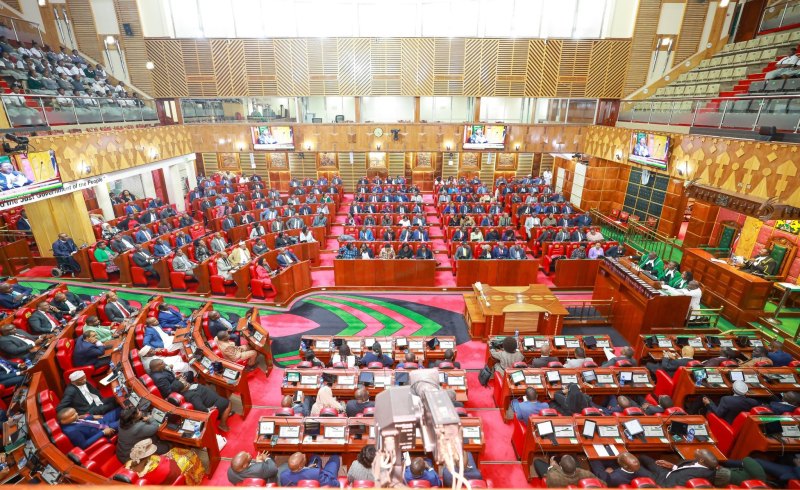
Members of the National Assembly’s Departmental Committee on Trade, Industry and Cooperatives have raised concerns that the cap could leave many savers exposed, and Credence Africa has urged a review so that members can recover their savings more fully. While Oparanya has expressed support for eventually raising the limit to Ksh500,000 to match banks, SASRA says the trustees should revisit the cap periodically once the fund is running.
Some money will stay outside the net regardless. Shares are excluded, and only deposits in licensed, regulated, deposit-taking Saccos have a chance of protection.
Having concluded public participation, the Bill has progressed to the Committee Stage in the National Assembly. Because it is classified as a Money Bill under Article 114 of the Constitution, it does not require Senate approval and will head straight for presidential assent once passed by the National Assembly. Until then, and until the fund collects its first premiums, the cover remains a promise on paper.
By Benedict Aoya
Get more stories from our website: Sacco Review.
For comments and clarifications, write to: Saccoreview@
Kindly follow us via our social media pages on Facebook: Sacco Review Newspaper for timely updates
Stay ahead of the pack! Grab the latest Sacco Review newspaper!