Kenya and UNOPS have signed a five-year partnership to expand irrigation and improve agricultural productivity.
The partnership supports the government’s target of bringing an additional one million acres under irrigation by 2035.
The initiative aims to boost food security, attract private investment, increase farmers’ incomes and reduce reliance on rain-fed agriculture.
Kenya has entered into a five-year partnership with the United Nations Office for Project Services (UNOPS) to accelerate irrigation development, strengthen agricultural productivity and attract private investment into the country’s agricultural sector.
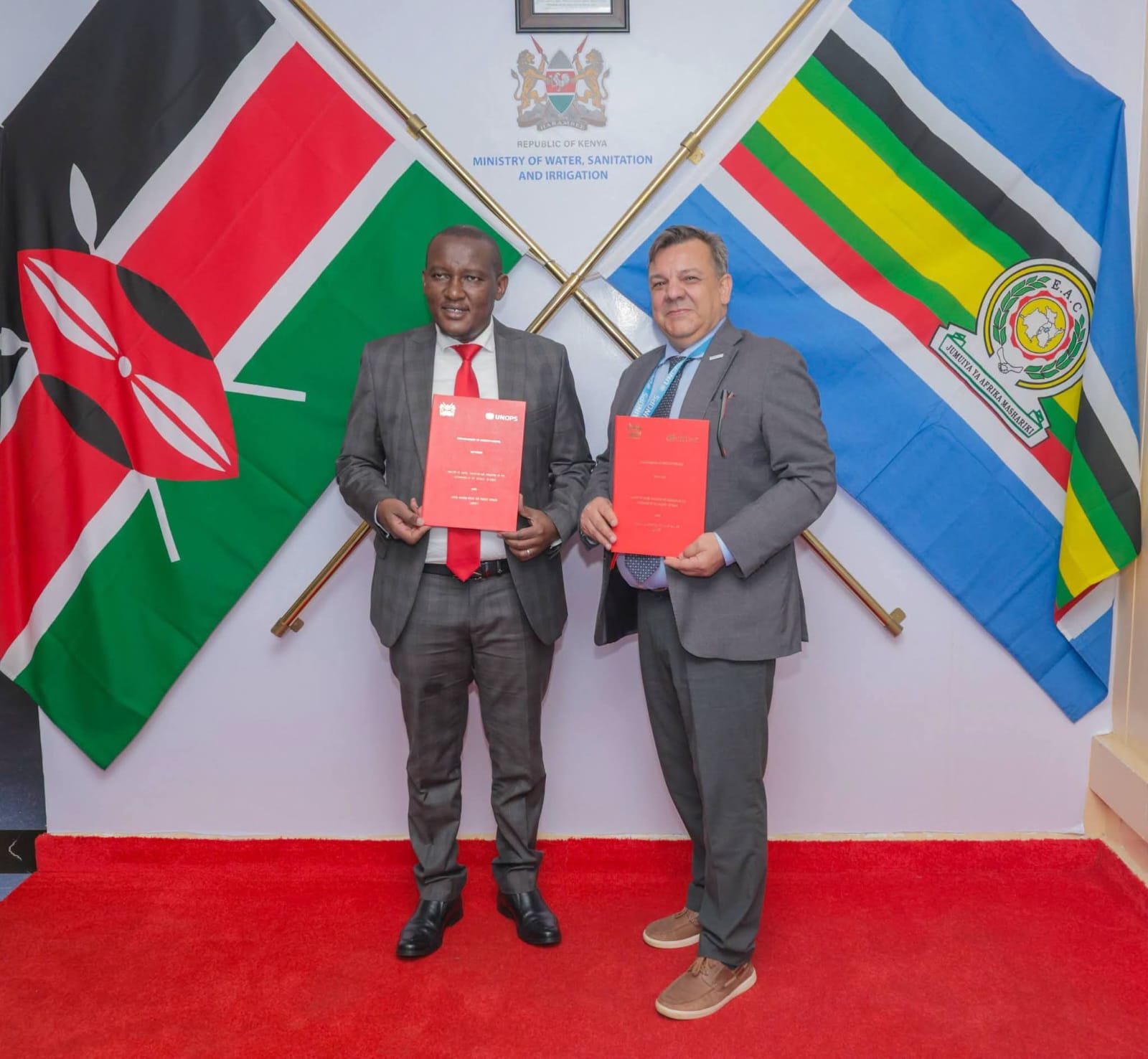
The agreement, signed on November 23, 2026, between the State Department for Irrigation and UNOPS, seeks to support the implementation of the National Irrigation Sector Investment Plan (2025–2035), which targets bringing an additional one million acres of land under irrigation.
The partnership was formalised by Principal Secretary for Irrigation Ephantus Kimotho and UNOPS Director for East and Southern Africa Multi-Country Office, Massimo Diana, during a signing ceremony held at the Ministry of Water, Sanitation and Irrigation boardroom in Nairobi.
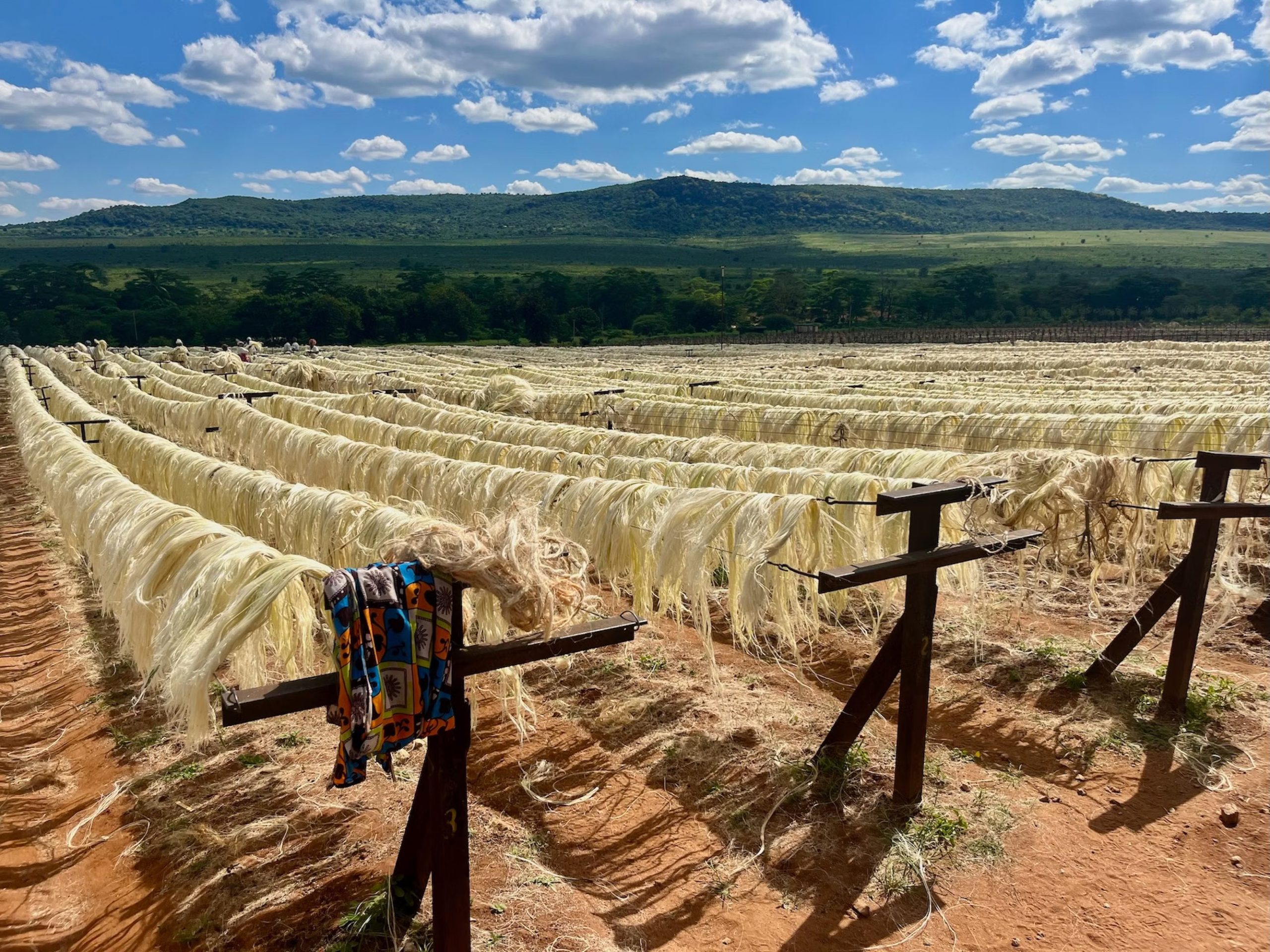
The collaboration comes as Kenya seeks to strengthen its agricultural resilience by reducing overreliance on rain-fed farming, which has increasingly exposed farmers to unpredictable weather patterns, prolonged dry spells and climate-related disruptions.
Through the agreement, the two institutions will work together to develop viable irrigation projects, improve technical planning and create an enabling environment for increased investment in irrigation infrastructure.
Speaking after the signing, Kimotho described the partnership as an important milestone in the country’s efforts to expand irrigated agriculture and unlock opportunities for both farmers and investors.
He noted that the collaboration would focus on strengthening project preparation through feasibility assessments, technical designs and improved planning to ensure irrigation initiatives are sustainable, climate-resilient and attractive to potential financiers.
A key component of the partnership will be the development of bankable irrigation projects capable of attracting funding through public-private partnerships (PPPs) and blended financing arrangements.
ALSO READ:https://saccoreview.co.ke/afa-rolls-out-new-regulations-for-fibre-crops-subsector/
This approach is expected to provide opportunities for private-sector players to participate in the development and management of commercially viable irrigation schemes, while complementing government efforts to expand agricultural infrastructure.
Kimotho explained that the arrangement would not involve direct financial transfers to the State Department for Irrigation, but rather provide a technical cooperation framework aimed at improving the quality, preparation and implementation of irrigation projects.
The distinction is significant as the government seeks to move beyond identifying irrigation needs to developing well-structured projects that can attract investors and deliver measurable economic benefits.
For farmers, the planned expansion of irrigation is expected to create opportunities for year-round agricultural production, improve crop yields and reduce dependence on seasonal rainfall.
Increased access to reliable water for farming could also enable farmers to diversify into high-value crops, improve household incomes and create employment opportunities along agricultural value chains.
Beyond individual farmers, the initiative is expected to contribute to the country’s broader food security agenda by increasing domestic food production and reducing dependence on imported agricultural commodities.
Kenya’s agricultural sector remains heavily influenced by weather conditions, making irrigation development a critical component of efforts to stabilise food supplies and cushion farmers against climate shocks.
The one-million-acre target under the National Irrigation Sector Investment Plan is therefore central to the government’s ambition of transforming agriculture into a more productive, competitive and resilient sector.
The involvement of UNOPS is expected to strengthen the technical capacity required to prepare and implement large-scale irrigation investments, particularly in project design, infrastructure development and implementation planning.
UNOPS provides infrastructure, procurement and project management services to governments and development partners, supporting the delivery of projects in sectors such as water, energy, health and climate resilience.
Through the five-year arrangement, the organisation will work alongside the State Department to strengthen the technical foundation of irrigation projects and support the development of infrastructure that can withstand changing climatic conditions.
The partnership also presents an opportunity to strengthen cooperation between the public and private sectors in addressing infrastructure gaps that have historically constrained agricultural production.
ALSO READ:https://saccoreview.co.ke/boresha-sacco-declares-vacancies-in-board-and-delegate-seats/
By preparing investment-ready projects, the government hopes to attract more private capital into irrigation development, reducing the pressure on public resources while accelerating the expansion of agricultural infrastructure.
The agreement further aligns with Kenya’s broader efforts to modernise agriculture, improve rural livelihoods and strengthen its capacity to respond to growing food demand.
As implementation progresses, the success of the partnership will largely depend on the ability of the two institutions to translate technical cooperation into viable projects that can be financed, constructed and accessed by farmers.
With an additional one million acres targeted for irrigation by 2035, the government is betting on stronger partnerships and improved investment planning to reshape agricultural production and secure the country’s food future.
By Lizzy Aluga
Get more stories from our website: Sacco Review.
For comments and clarifications, write to: Saccoreview@
Kindly follow us via our social media pages on Facebook: Sacco Review Newspaper for timely updates
Stay ahead of the pack! Grab the latest Sacco Review newspaper!