
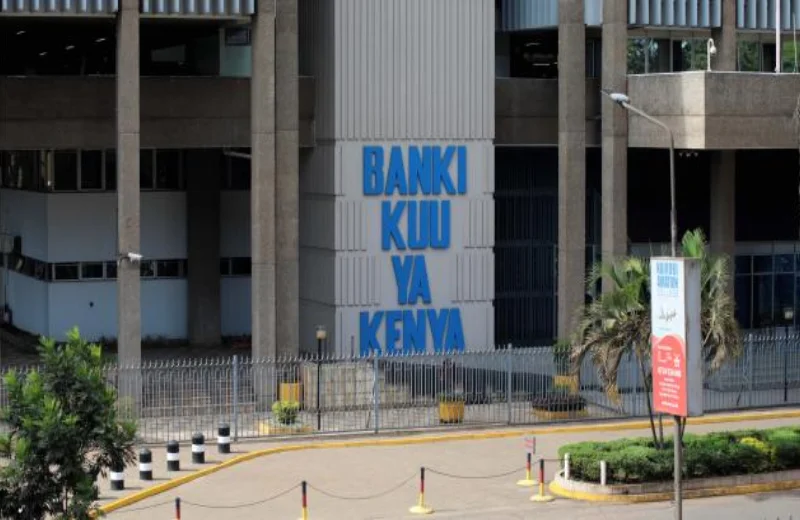
- Bad loans in Kenya’s banking sector have dropped to their lowest level in nearly four years.
- Private-sector credit has expanded, raising questions about who is benefiting from increased lending.
- Lower lending rates offer relief, but household incomes and business cash flow remain critical to loan repayment.
Banks record a sharp improvement in loan performance as private-sector credit expands, but the billions still owed by struggling borrowers expose the fragile relationship between lending, household incomes and business survival.
Kenya’s banking sector is witnessing a significant shift: bad loans are declining while lending to the private sector continues to expand, creating fresh optimism about the country’s credit market even as households and businesses grapple with the cost of borrowing and the pressure of meeting financial obligations.
The reported fall in non-performing loans to a 44-month low, alongside private-sector credit reaching a record Ksh4.40 trillion in September 2026, signals improving conditions for commercial banks. Yet beneath the encouraging figures lies a more complicated economic reality in which access to credit is expanding, but the capacity to repay debts remains uneven across households and businesses.
Although the downward movement in bad loans is encouraging, the outstanding value of defaulted credit remains substantial.
Central Bank of Kenya (CBK) figures showed gross non-performing loans falling to Ksh688.2 billion in June 2026, from Ksh728.5 billion a year earlier. The September figure was subsequently reported at approximately Ksh646.35 billion, pointing to further improvement in the banking sector’s loan portfolio.
Non-performing loans are facilities whose repayment has deteriorated significantly under applicable regulatory classification rules. They generally include loans that have remained unpaid for 90 days or more, although other circumstances can also trigger classification.
For banks, a reduction in non-performing loans can ease pressure on earnings, reduce recovery costs and improve their capacity to extend fresh credit. For the wider economy, it may indicate that some borrowers are gradually regaining the ability to meet their financial obligations.
READ:
Bad-loan balances can change because of repayments, recoveries, restructuring, write-offs and other adjustments. Meanwhile, a growing volume of new lending can reduce the ratio of non-performing loans to total credit without necessarily resolving the difficulties faced by existing defaulters.
Kenya’s bad-loan problem has been particularly visible in trade, real estate, manufacturing, and personal and household lending.
Trade businesses require regular cash flow to purchase stock, pay employees, meet rent and settle suppliers. When sales decline, operating expenses increase or customers delay payments, businesses can struggle to honour bank obligations.
In real estate, developers and property investors face risks associated with construction costs, slower sales, delayed projects and inadequate rental income. Manufacturing enterprises must contend with production expenses, market competition, working-capital requirements and the cost of financing equipment and raw materials.
Households face a different but equally consequential challenge. When income stagnates while the cost of food, transport, rent, education and healthcare rises, loan repayments can compete directly with essential family expenditure.
The concentration of bad debts in these sectors highlights the connection between banking performance and conditions in the real economy. A bank may be financially sound, but its loan portfolio remains exposed to the fortunes of the businesses and families it finances.
The reported expansion of private-sector credit to Ksh4.40 trillion in September 2026 marks a significant development in Kenya’s financial system.
Credit enables enterprises to purchase inventory, acquire equipment, expand operations and finance investments that might otherwise be delayed. Households also rely on borrowing for property purchases, consumer goods and other major expenses.
Stronger lending can therefore stimulate economic activity, support employment and improve the circulation of money through the economy.
However, the size of the credit market does not reveal how evenly financing is distributed. Large, established companies may have better access to affordable loans than smaller enterprises, which often face higher financing costs, limited collateral and stricter lending conditions.
The critical issue is whether credit expansion is reaching productive businesses and viable borrowers or accumulating in areas where repayment capacity remains weak.
A growing loan portfolio is economically beneficial only when borrowers can generate sufficient income to repay their obligations without undermining their long-term financial stability.
The decline in commercial bank lending rates has provided some relief to borrowers after a prolonged period of expensive credit.
The average lending rate stood at 14.4 per cent in September 2026, compared with 17.2 per cent in November 2024. The Central Bank Rate was maintained at 8.75 per cent following the monetary policy decision announced on October 7, 2026.
Lower lending rates can reduce repayment costs for customers whose facilities are repriced accordingly. They may also encourage businesses to borrow for expansion and investment.
However, the benchmark monetary policy rate and the average commercial lending rate are not interchangeable. Individual borrowers pay rates determined by their lenders, creditworthiness, loan structures and applicable charges.
For small businesses and households already struggling with existing obligations, even a moderate reduction in interest rates may not be enough to restore financial stability if income remains weak.
The benefits of monetary easing therefore depend on whether lower financing costs translate into more affordable credit and improved repayment capacity.
By Hillary Muhalya
Get more stories from our website: Sacco Review.
For comments and clarifications, write to: Saccoreview@
Kindly follow us via our social media pages on Facebook: Sacco Review Newspaper for timely updates
Stay ahead of the pack! Grab the latest Sacco Review newspaper!