- Kaimosi centre to equip farmers with modern farming skills and technology.
- Training will promote climate smart practices and boost productivity.
- Government says innovation and skills are key to Kenya’s food security.
The Government has commissioned the Kaimosi Agricultural Training Centre, a move officials say will equip farmers with modern skills and climate-smart practices as Kenya works to make agriculture more productive and resilient.
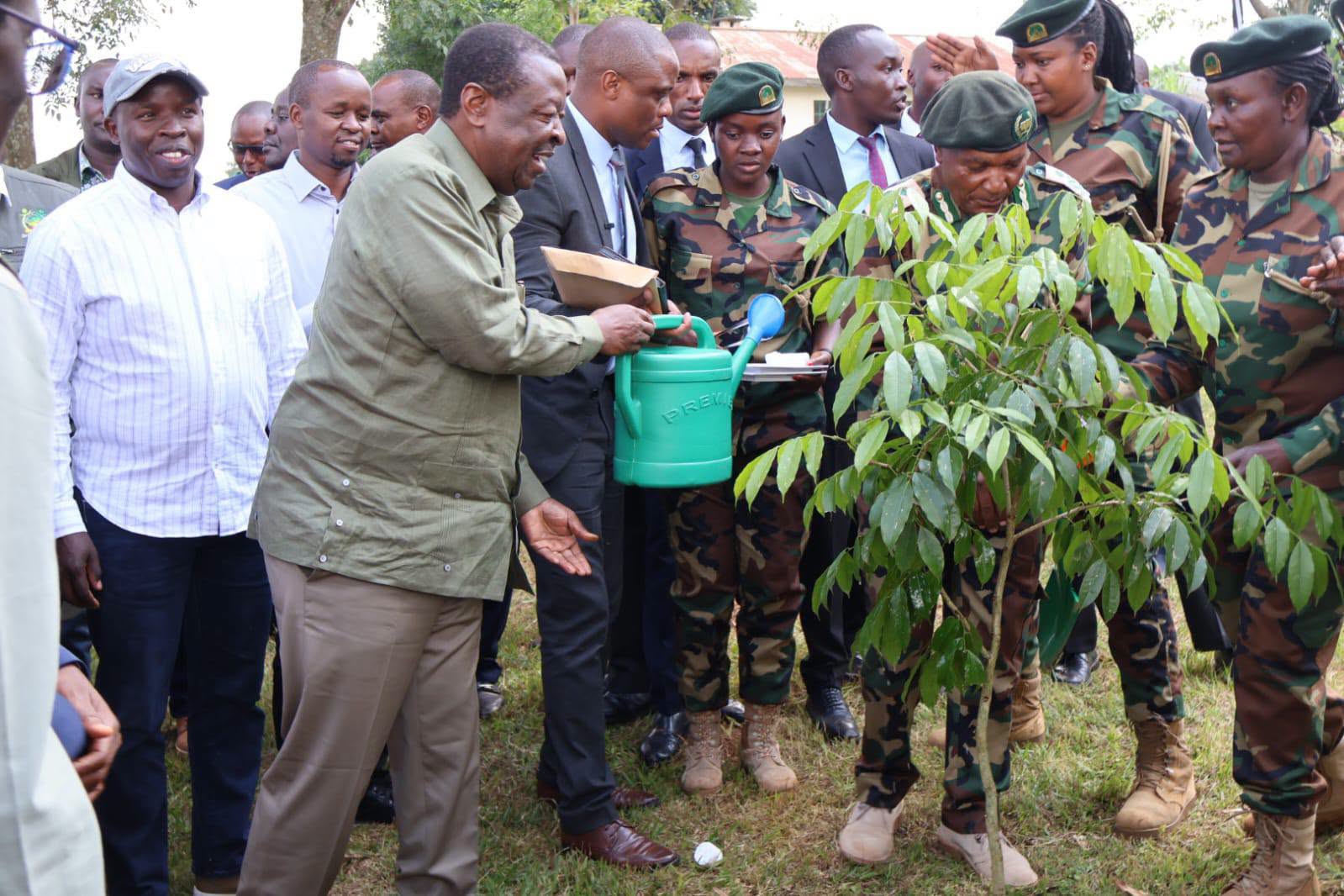
The facility was launched during the closing ceremony of the Kenya Agricultural and Livestock Research Organization Training Centre (KARTC) Expo, an event that drew senior national and county officials, development partners, researchers and other stakeholders from agriculture, environment and forestry circles.
Prime Cabinet Secretary Musalia Mudavadi presided over the event and reaffirmed the Government’s commitment to building a more productive, profitable and resilient agricultural sector. He described agriculture as a major pillar of the economy and a critical source of livelihoods, arguing that investment in farmer knowledge and skills is essential to the country’s wider economic transformation.
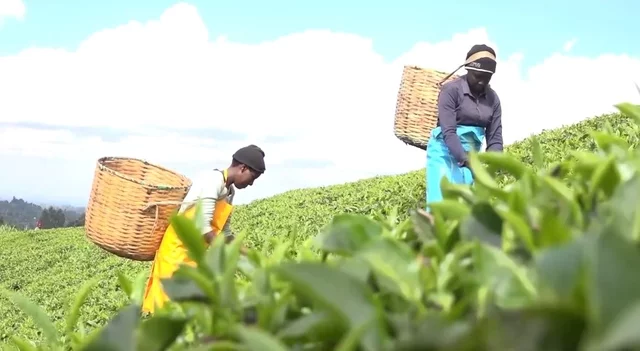
The commissioning arrives at a difficult moment for Kenyan farmers. Unpredictable weather, climate change, rising production costs, declining soil fertility, water shortages and shifting markets are forcing many to rethink how they produce food and earn a living. Traditional farming knowledge, on its own, may no longer be enough.
That gap is precisely what agricultural training is meant to close. Kaimosi is expected to give farmers practical knowledge and modern technologies that can lift productivity while helping them adapt to climate pressures. In that sense, the centre is more than a new institution — it represents an opportunity to professionalise farming through access to skills, innovation and commercially viable technology.
Mudavadi stressed the importance of institutions that can arm farmers with the knowledge needed to build a resilient sector. This matters because agricultural transformation cannot rest on inputs alone. Farmers also need to know how to use those inputs efficiently, read changing weather patterns, manage soils, control pests, adopt suitable technologies and identify profitable markets. Training, therefore, has to sit at the centre of agricultural policy, not at its margins.
Chief of Staff and Head of the Public Service Felix Koskei highlighted some of the modern technologies on offer at Kaimosi, including drones and other tools designed to simplify farming. Their introduction reflects how quickly the sector is becoming technology-driven, with digital tools now able to monitor crops, flag problems early, improve farm management and sharpen the use of resources.
Still, technology only delivers value when farmers know how to apply it — which is why training remains the bridge between innovation and real transformation on the ground.
Koskei urged farmers nationwide to take advantage of the opportunities at Kaimosi and build up their skills. He also called for greater investment in coffee and cocoa production, while pointing to a future in which farmers and livestock keepers can access formal agricultural training and certification.
Such a shift could change how farming is perceived in Kenya. For decades, agriculture has often been seen as a fallback for people with few other options. A stronger training system could help reposition it as a profession requiring specialised knowledge, technical skill, business planning and continuous learning.
A well-trained farmer, after all, is better placed to make informed decisions, cut losses, embrace innovation and respond to market opportunities — the kind of farmer Kaimosi hopes to cultivate.
READ ALSO:
Boresha Sacco funds electric motorbikes for Sabatia milk riders
Climate resilience is just as central to the centre’s mission. Unpredictable rainfall, prolonged dry spells, floods, soil degradation and shifting pest and disease patterns are already affecting production, and farmers will need to adapt.
Climate-smart agriculture offers a way to raise productivity while building resilience and limiting environmental damage. Training in water conservation, soil management, crop diversification and other climate-resilient practices is likely to matter more as Kenya works to protect its food production.
The event also underscored how closely agriculture is tied to environmental conservation. The Kenya Forest Service’s involvement pointed to the relationship between forests, watersheds, climate resilience and food security. Healthy forests sustain the water systems farms depend on, while degraded catchments, soil erosion and dwindling water resources eventually hit farms and livestock. Protecting the environment, then, is not just an ecological duty; it is an investment in agriculture’s future.
Partnerships between national and county governments, research institutions, training centres, conservation agencies and development partners will be critical going forward. Kenya already has considerable research and innovation capacity in agriculture; the real challenge lies in getting knowledge from laboratories and research institutions into the hands of farmers in a practical, usable form.
Training centres can provide that missing link, translating research into lessons farmers can act on and demonstrating technologies they can learn by doing.
The KARTC Expo reinforced this same point: the sector cannot be transformed if researchers work in isolation from farmers, or if innovations stay confined to exhibitions and policy papers. Real impact comes only when farmers adopt useful innovations and convert them into higher yields, lower costs and better incomes.
For that reason, Kaimosi’s success should not be measured by the commissioning of its facilities alone. Its true test will be the number of farmers trained, the technologies adopted, the productivity gains achieved and the livelihoods improved.
Smallholder farmers, in particular, must be able to access training without unnecessary barriers, and receive knowledge that speaks to the realities of their farms.
Government support will also need to extend beyond training itself. Training cannot make farming profitable on its own if farmers still lack affordable finance, quality inputs, reliable markets, storage, transport and extension services. Agricultural transformation depends on all these pieces working together, and Kaimosi could become an important platform for making those connections.
The centre’s potential also stretches beyond its immediate region. If properly developed and supported, it could serve farmers from across Kenya and become a model for modern agricultural training nationally.
Ultimately, the future of Kenyan agriculture will hinge on the quality of knowledge available to farmers. The country has the land, the labour and the potential — what remains is a stronger system for converting that potential into productivity, profitability and resilience. That conversion starts with training.
The commissioning of the Kaimosi Agricultural Training Centre therefore signals more than the opening of a facility. It reflects a recognition that Kenya’s agricultural future must be built on knowledge, skills, technology and innovation, and that the farmer of the future will need to be more than a producer. Increasingly, they will need to be learners, businesspeople, technology users and stewards of the environment.
If Kaimosi succeeds in shaping that kind of farmer, its impact could reach far beyond its training grounds, helping redefine agriculture as a professional, technology-driven and profitable sector — one capable of creating jobs, strengthening rural economies, protecting the environment and securing Kenya’s long-term food supply.
By Hillary Muhalya
Get more stories from our website: Sacco Review.
For comments and clarifications, write to: Saccoreview@
Kindly follow us via our social media pages on Facebook: Sacco Review Newspaper for timely updates
Stay ahead of the pack! Grab the latest Sacco Review newspaper!