- Kenya and Australia explore new areas of agricultural research cooperation
- Researchers examine technology and data-driven approaches for farmers
- Soil health and livestock feed emerge as key areas for collaboration
Kenya’s agricultural research sector could see stronger international cooperation in soil health, digital farming and livestock feed following talks between the Kenya Agricultural and Livestock Research Organisation (KALRO) and Australia’s agricultural research agency, the Australian Centre for International Agricultural Research (ACIAR).
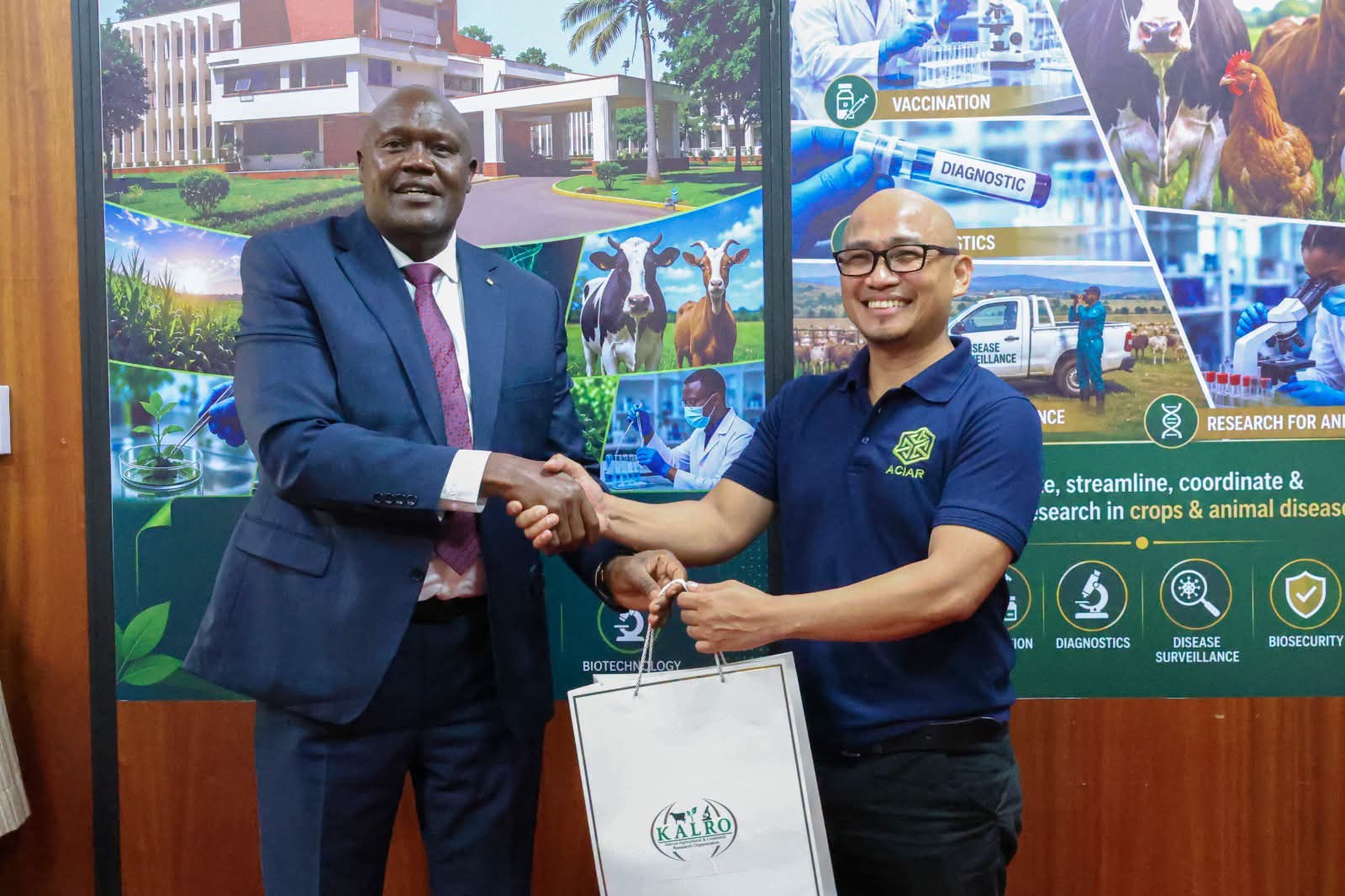
A delegation from ACIAR visited KALRO Kabete to explore areas where the two institutions can work together to strengthen agricultural research and develop solutions that can benefit farmers.
The delegation was received by KALRO Director General Dr Patrick Ketiem, who said partnerships were key to advancing research and turning scientific findings into practical solutions for farmers.
During the visit, the ACIAR team toured KALRO’s research facilities and soil laboratories, where it was briefed on ongoing work in soil health, digital soil mapping and forages for animal feed.
READ:
Eight tea staff held in Bureti over suspected weighing fraud
Digital soil mapping attracted particular interest as it provides information on soil characteristics and fertility, helping farmers and agricultural practitioners make better decisions on soil management and fertiliser use.
KALRO has already undertaken digital soil fertility mapping work in Kiambu County. During a pilot exercise, 26 agripreneurs from Kiganjo and Kiamwangi wards were trained on soil sampling and the use of digital applications to collect soil data.
The exercise resulted in 204 soil samples being collected from the two wards — 111 from Kiganjo and 93 from Kiamwangi — for laboratory analysis.
The findings from soil testing can help establish the nutrient status of farms and identify deficiencies, allowing farmers to receive more targeted fertiliser recommendations.
The ACIAR delegation also examined KALRO’s research into forages for animal feed, an area aimed at improving the availability and quality of feed for livestock farmers.
The talks come as agricultural researchers increasingly turn to technology and scientific data to address challenges facing farmers, including declining soil fertility, high input costs and livestock feed shortage.
By Lizzy Aluga
Get more stories from our website: Sacco Review.
For comments and clarifications, write to: Saccoreview@
Kindly follow us via our social media pages on Facebook: Sacco Review Newspaper for timely updates
Stay ahead of the pack! Grab the latest Sacco Review newspaper!