
- Kenya is stepping up efforts to close its rice production gap and reduce dependence on imports.
- Kisumu and Homa Bay counties are pursuing irrigation investments to bring more farmland under cultivation.
- Farmers are being urged to strengthen collective marketing and local milling to secure better returns.
The government has intensified efforts to boost local rice production through increased distribution of quality seeds, technical assistance and investment in irrigation infrastructure as Kenya seeks to reduce its heavy dependence on imported rice.
Agriculture and Food Authority (AFA) chairman Cornelly Serem says Kenya continues to face a substantial rice production deficit, importing approximately 900,000 tonnes annually against a national demand of about 1.1 million tonnes.
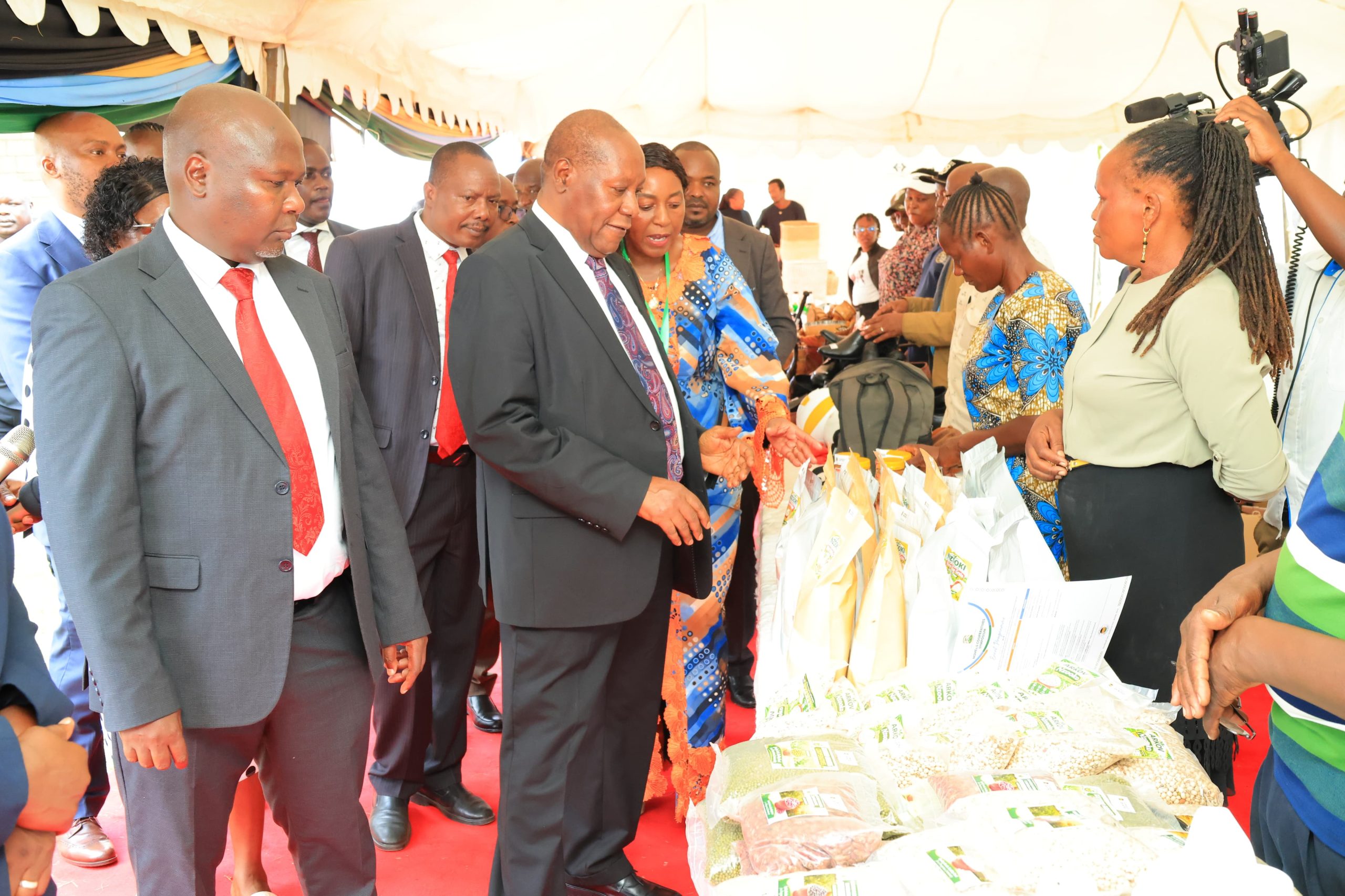
Speaking during a rice stakeholders’ conference in Kisumu that brought together farmers, millers and marketers, Serem said domestic rice production had risen from 192,000 tonnes in 2022 to a record 305,000 tonnes last year.
Despite the improvement, Kenya still imported approximately 800,000 tonnes of rice last year to bridge the gap between local supply and national consumption.
Serem said the government was prioritising access to quality seeds and technical support to strengthen productivity and reduce spending on food imports. The authority had procured 333,000 kilogrammes of rice seeds for distribution to farmers this year, with plans to increase the supply to one million kilogrammes next year.
He identified inadequate access to quality seeds and the growing effects of climate change as major obstacles facing rice farmers. Unpredictable rainfall, prolonged dry spells and flooding continue to disrupt farming, particularly in areas that depend on irrigation.
Serem called for stronger collaboration between national and county governments to improve irrigation infrastructure and agricultural support services, and stressed the need to address flooding that destroys crops in major rice-growing regions.
Beyond production, Serem challenged the government and private investors to expand Kenya’s rice-milling capacity so that more value is retained within the country. He expressed concern that Kenya was exporting paddy rice to neighbouring Uganda for processing, only for the milled rice to return to the Kenyan market.
The AFA chairman also challenged rice farmers to establish a strong national organisation to champion their interests and engage the government. He said such a body would help protect producers from exploitation by brokers and cartels while strengthening their bargaining power.
Serem further called for rice importation policies to take into consideration harvesting seasons, warning that poorly timed imports could flood the market when local farmers were harvesting, undermining prices and discouraging domestic production.
IN CASE YOU MISSED IT:
Harambee Sacco opens Nanyuki branch, targets 350,000 members
Meanwhile, Kisumu County has outlined plans to increase rice production through investments in irrigation infrastructure, cooperative societies and affordable credit.
County Executive Committee Member for Agriculture Kenneth Onyango said the administration was expanding community irrigation schemes through county resources and partnerships with development agencies.
The county is also strengthening cooperative societies to enable farmers to aggregate their produce, negotiate better prices and reduce exploitation by middlemen. Onyango said it was providing grants to cooperatives to support affordable lending to farmers struggling to access expensive commercial credit.
The administration has also invested in desilting irrigation canals and is pursuing solarisation of water-pumping systems at Ahero to reduce electricity costs, with funding from the Hungarian government and implementation already underway.
In neighbouring Homa Bay County, the area under rice cultivation has increased to 3,000 acres, but another 7,000 acres of potentially productive land remain underutilised because of incomplete irrigation infrastructure.
County Executive Committee Member for Agriculture Joash Aloo attributed the challenge to delays in completing the Lichkemere Irrigation Scheme, which was initially supported by the African Development Bank. He said several sections of the project were still receiving inadequate water, exposing farmers to losses whenever rainfall became unreliable.
Aloo appealed to the National Irrigation Authority to expedite the completion of the scheme, noting that bringing the additional 7,000 acres under production would significantly increase the county’s contribution to national rice supplies.
He observed that although agriculture is a devolved function, county governments face financial constraints when implementing large-scale irrigation projects that require substantial national government investment.
Aloo further warned that continued dependence on imported food was pressuring foreign exchange reserves and increasing the financial burden on households.
By Hillary Muhalya
Get more stories from our website: Sacco Review.
For comments and clarifications, write to: Saccoreview@
Kindly follow us via our social media pages on Facebook: Sacco Review Newspaper for timely updates
Stay ahead of the pack! Grab the latest Sacco Review newspaper!