- National campaign targets better soil management by farmers
- New partnerships seek to improve soil testing and fertiliser decisions
- KALRO laboratories set for upgrades to support faster soil analysis
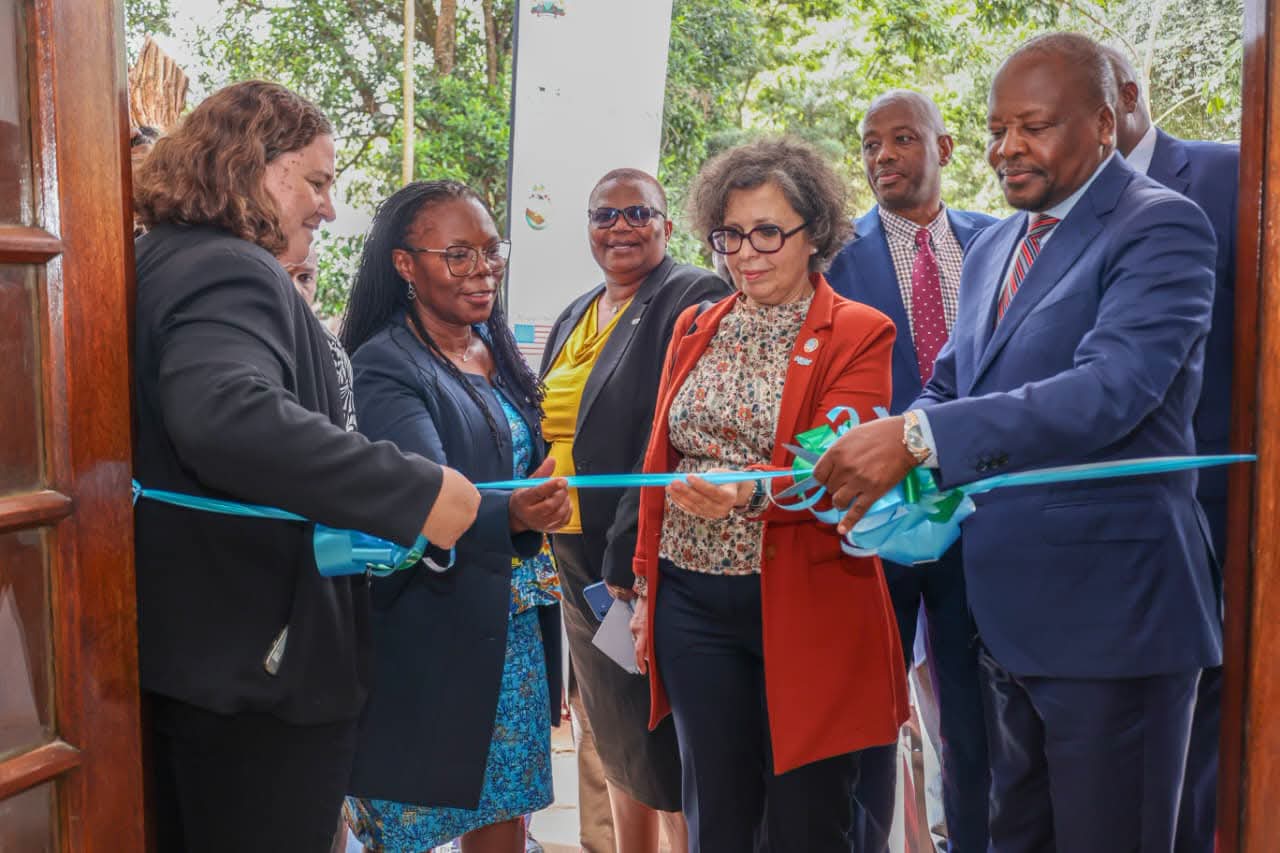
Agriculture and Livestock Development Cabinet Secretary Mutahi Kagwe has launched a national soil health campaign aimed at helping farmers make better fertiliser decisions based on the condition of their soils.
Speaking at the Kenya Agricultural and Livestock Research Organization (KALRO) Kabete centre, Kagwe launched the National Soil Partnership, the National Soil Laboratory Network and the national rollout of the Global Soil Doctors Programme. He also handed over Ksh220 million for the refurbishment of KALRO’s soil chemistry laboratories.
“A bag of the wrong fertiliser, delivered on time, at half the price, to the wrong soil, is still the wrong fertiliser,” Kagwe said. “Subsidy without a soil test is sympathy. It is not strategy.”
Kagwe said his own experience as a farmer had shown him the importance of soil testing after he discovered that he had been applying nutrients his land already had while neglecting those it lacked.
“I was not farming. I was gambling. I was farming blind,” he said.
The Cabinet Secretary said about 63 per cent of Kenya’s arable land is acidic, with nearly seven million acres classified as strongly acidic. He warned that applying fertiliser without addressing soil conditions could leave farmers spending more without achieving better yields.
More than eight million farmers are registered on the Kenya Integrated Agriculture Management Information System (KIAMIS), while over 180,000 bags of subsidised fertiliser were distributed daily through National Cereals and Produce Board (NCPB) stores and registered outlets during the peak planting season.
READ:
Kagwe directed KALRO to continue analysing about 77,000 soil samples from 45 counties and publish county-level soil fertility maps. The ministry also plans to link soil test results with KIAMIS to help make fertiliser support more responsive to individual soil needs.
The refurbished Kabete laboratory is expected to speed up soil testing and delivery of results to farmers.
“A soil result that arrives after the rains have come is a historical document, not a farming decision,” Kagwe said.
The National Soil Partnership will bring together the national and county governments, KALRO, universities and private sector players, while the laboratory network will promote common testing standards.
Kagwe also urged counties to support soil testing, encouraged farmers to use lime in acidic soils and called for greater efforts to restore organic matter. He warned that the government would continue cracking down on counterfeit and substandard farm inputs.
He further appealed to the Public Service Commission to allow KALRO to recruit more researchers to operate 170 pieces of research equipment expected at the institution.
“We cannot invest in equipment and then lack the people to put it to work. KALRO needs sufficient researchers to turn that investment into practical solutions for our farmers,” Kagwe said.
By Lizzy Aluga
Get more stories from our website: Sacco Review.
For comments and clarifications, write to: Saccoreview@
Kindly follow us via our social media pages on Facebook: Sacco Review Newspaper for timely updates
Stay ahead of the pack! Grab the latest Sacco Review newspaper!