
In September 2025, the Kenyan government dropped a regulatory bombshell on the cooperative sector: small Savings and Credit Cooperatives (Saccos) with assets under Sh100 million must merge with larger entities or face dissolution.
This directive, ostensibly aimed at bolstering financial stability and operational resilience in a sector plagued by inefficiencies and vulnerabilities, has ignited a firestorm of debate among industry stakeholders.
As a financial analyst with a keen eye on emerging market dynamics, I argue that while mergers and acquisitions (M&A) in the Sacco space hold transformative potential, they are fraught with perils that could erode member value, destabilize institutions, and exacerbate economic inequalities if not executed with surgical precision.
This is no mere consolidation exercise; it’s a high-wire act where misalignment spells catastrophe.
Let’s dissect the rationale behind the government’s edict. Kenya’s Sacco industry, a cornerstone of grassroots financial inclusion, manages over Sh1.5 trillion in assets and serves millions of low- to middle-income earners.
Small Saccos, often community-rooted and agile, have historically punched above their weight in providing affordable credit and savings options. However, their diminutive scale exposes them to systemic risks: inadequate capital buffers, high non-performing loan (NPL) ratios, and vulnerability to economic shocks like inflation spikes or agricultural downturns.
ALSO READ:
Kenyan shilling strengthens to 17‑month high of 128.96 against dollar
The KSh100 million asset threshold, roughly equivalent to $775,000 at current exchange rates, serves as a crude litmus test for viability. Proponents of the merger mandate contend it will foster economies of scale, enhance risk diversification, and improve access to technology-driven services, aligning with Vision 2030’s push for a robust financial ecosystem.
Yet, this top-down approach reeks of regulatory overreach, potentially steamrolling the unique value propositions of smaller Saccos.
Mergers aren’t panaceas; they’re complex transactions demanding rigorous due diligence. Cooperative executives must prioritize member-centric evaluations over hasty compliance.
First and foremost, assess the financial synergies: Does the merger amplify the combined entity’s asset base, reduce funding costs through better bargaining power with lenders, and optimize liquidity ratios?
A mismatched union could inflate operational expenses, diluting return on assets (ROA) and eroding net interest margins. Consider the case of past Kenyan bank mergers, like the 2019 NIC Bank-CBA Group tie-up, which yielded cost savings but also sparked integration headaches and customer churn.
Saccos, with their member-owned ethos, face amplified risks, alienating depositors who value personalized service over corporate gloss.
ALSO READ:
Beyond balance sheets, institutional value hinges on operational alignment. Larger Saccos often boast sophisticated core banking systems, AI-driven credit scoring, and diversified portfolios spanning agribusiness to real estate.
Small players merging into these behemoths must scrutinize compatibility: Will the acquirer’s digital infrastructure integrate seamlessly, or will legacy systems from the target create IT silos, ballooning integration costs?
Efficiency gains are illusory without addressing these frictions. A McKinsey report on global financial mergers highlights that 70 percent fail to deliver projected synergies due to overlooked operational mismatches. I
n Kenya’s context, where many small Saccos operate in rural niches with high-touch models, forced amalgamations could disrupt loan disbursement cycles, spike delinquency rates, and undermine trust, a currency more valuable than any asset class in cooperative banking.
Cultural fit emerges as the silent killer in Sacco M&A. These institutions aren’t faceless corporations; they’re member-driven cooperatives rooted in shared values, often tied to ethnic, professional, or geographic communities.
A merger between a teacher-focused Sacco and a farmer-oriented giant might look appealing on paper, promising cross-selling opportunities and broader risk pools. But cultural clashes—differing governance styles, risk appetites or even dividend payout philosophies—can fracture boards and alienate members.
Imagine the fallout: heightened agency conflicts, where executives prioritize short-term deal metrics over long-term stakeholder welfare.
The government’s directive, while well-intentioned, ignores this nuance, treating Saccos as interchangeable widgets rather than organic entities. Hard-hitting truth: Without cultural due diligence, including employee surveys and alignment workshops, mergers devolve into value-destroying quagmires, as evidenced by the botched 2018 merger of two mid-tier Kenyan Saccos that led to a 25 percent membership exodus.
Regulatory compliance adds another layer of scrutiny. The Sacco Societies Regulatory Authority (SASRA) mandates stringent capital adequacy ratios currently 10 percent for core capital to total assets and merger approvals hinge on demonstrating enhanced prudential standards.
Executives must forecast post-merger metrics: Will the deal push the entity’s tier 1 capital above thresholds, mitigating deposit insurance premiums? Or will hidden liabilities, like off-balance-sheet exposures from the smaller Sacco, trigger regulatory red flags?
In a market where cyber threats and climate risks loom large, mergers must incorporate stress testing for scenarios like prolonged droughts affecting agricultural loans.
Failure here isn’t just operational; it’s existential, inviting SASRA interventions or forced liquidations that ripple through local economies.
Critics might dismiss these concerns as resistance to progress, but the data paints a stark picture. A 2024 World Bank study on African financial cooperatives revealed that only 40 percent of mergers achieve sustained profitability gains, with many succumbing to integration failures.
Kenya’s policy risks creating oligopolistic structures, where a handful of mega-Saccos dominate, stifling competition and innovation.
Small Saccos, often more nimble in serving underserved segments like women entrepreneurs or youth startups, could vanish, widening the financial inclusion gap.
This isn’t hyperbole; it’s a foreseeable outcome in a sector where 60 per cent of Saccos are below the asset threshold, per recent SASRA filings.
RELATED:
CS Oparanya calls for merger of small SACCOs to boost their competitiveness
To navigate this minefield, Sacco executives must adopt a strategic playbook. Start with a comprehensive valuation exercise: Employ discounted cash flow (DCF) models to quantify synergies, factoring in net present value (NPV) of cost savings and revenue uplifts.
Engage independent advisors for unbiased audits, uncovering contingent liabilities that could torpedo the deal.
Member engagement is non-negotiable town halls to gauge sentiment, ensuring the merger enhances, not erodes, benefits like lower loan rates or higher dividends. Post-merger, prioritize change management: Invest in training to bridge cultural gaps and deploy KPIs to track integration milestones.
In conclusion, the Kenyan government’s merger mandate is a double-edged sword, potentially catalyzing a more resilient Sacco sector but equally capable of unleashing chaos if mishandled.
Executives must view M&A not as a regulatory checkbox but as a pivotal strategic pivot. The stakes are immense: success breeds enhanced member value, operational efficiencies, and institutional longevity; failure invites disruption, value erosion, and sectorial fragmentation. In this era of economic volatility, Saccos can’t afford complacency.
It’s time for bold, evidence-based decisions that safeguard the cooperative spirit while embracing scale. Anything less is a betrayal of the members who built these institutions brick by brick.
By David Kipkorir
Get more stories from our website: Sacco Review.
For comments and clarifications, write to: Saccoreview@
Kindly follow us via our social media pages on Facebook: Sacco Review Newspaper for timely updates
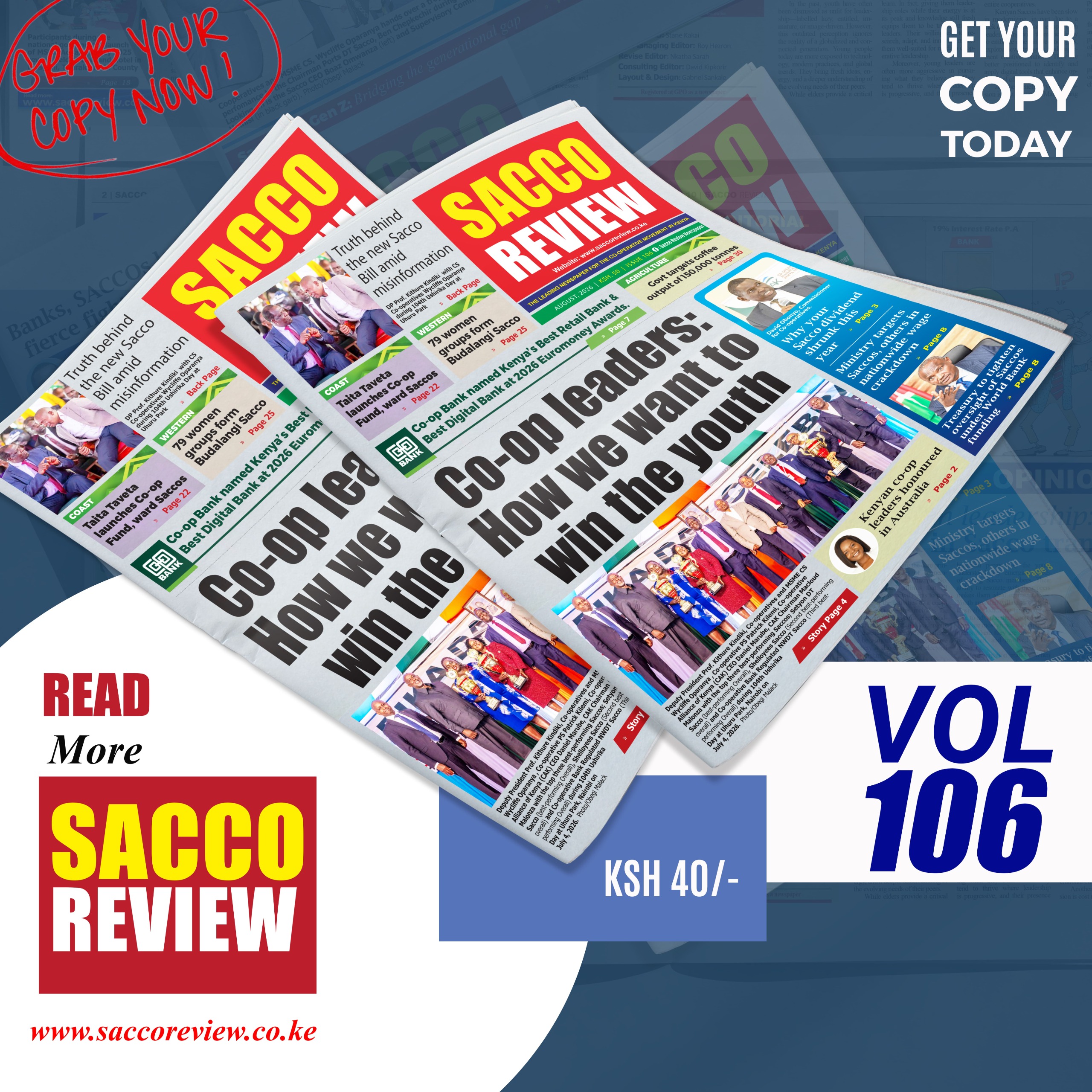
Stay ahead of the pack! Grab the latest Sacco Review newspaper!