
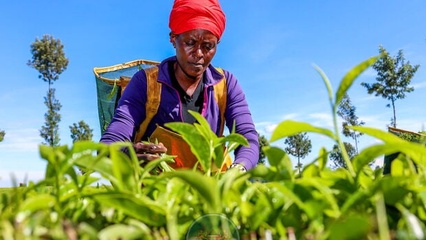
Tea farmers in Kirinyaga County have come out strongly against a proposed levy by the Tea Board of Kenya, describing it as punitive and ill‑timed. At an emergency meeting, growers warned that the new charge would worsen their already fragile economic situation and erode Kenya’s competitiveness in global markets.
The protest was led by John Mithamo Wasusana, chairman of Ndima Tea Factory and Zone 5, who said farmers were struggling to stay afloat amid declining sales. He cited Monday’s auction where only 2.1 per cent of tea offered by Rukuriri Tea Factory was sold, despite the factory being recognised last year for producing Kenya’s highest‑quality tea. “We are completely killing the Kenyan tea farmer. The levy is making buyers prefer even lower‑quality teas because Kenyan tea has become more expensive,” Wasusana said.
Farmers argued that the levy would push buyers away from Kenyan tea, forcing them to settle for cheaper alternatives. They urged the government to grant them access to idle storage facilities in Sagana, formerly used for coffee and maize, to enable direct exports.
“Why does the government want to oppress us? Let us export from Sagana directly instead of Mombasa,” said farmer John Mwangi.
Other speakers pressed for reforms to allow direct sales of tea and other cash crops, saying this would help cushion them against the proposed levy. “We need direct sales to counter the intended levy, and we are asking CS Mutahi to allow direct sales for all cash crops,” said Maina Murimi.
ALSO READ:
Co-operative Model Savings culture Key to Sacco members empowerment
The meeting came in response to assurances from the Ministry of Agriculture and Livestock, which has insisted that the levy will not burden farmers. Officials say all revenue collected will be reinvested into the sector to support marketing, branding, and research.
Under the draft framework, tea exports will attract a 0.8 per cent tax on either their auction or customs value for direct sales, while imported bulk tea will face a 100 per cent levy.
Despite these assurances, Kirinyaga farmers remain unconvinced. They argue that the levy will undermine their earnings, discourage buyers, and weaken Kenya’s position in the international tea market.
By Frank Mugwe
Get more stories from our website: Sacco Review.
For comments and clarifications, write to: Saccoreview@
Kindly follow us via our social media pages on Facebook: Sacco Review Newspaper for timely updates
Stay ahead of the pack! Grab the latest Sacco Review newspaper!
.