
- Mobile money and Sacco records could help informal workers qualify for housing loans
- Government targets a major expansion of Kenya’s mortgage market
- Lenders push for wider financing options to turn affordable housing projects into home ownership
Millions of Kenyans working outside formal employment could soon have a better chance of accessing affordable housing loans if lenders begin using mobile money records, Sacco savings and other alternative financial information to assess their ability to repay.
Housing and Urban Development PS Charles Hinga said the Government is considering a shift from traditional mortgage assessments that largely depend on payslips and formal employment records.
The proposed approach would allow banks and other lenders to consider mobile money transactions, Sacco savings, rental payment histories, utility bills and business transactions when determining whether an applicant qualifies for a housing loan.
Hinga said the current system has largely favoured salaried workers with predictable monthly incomes, leaving out traders, farmers, small-business owners, freelancers and other self-employed Kenyans who may have the ability to repay loans but lack conventional proof of income.
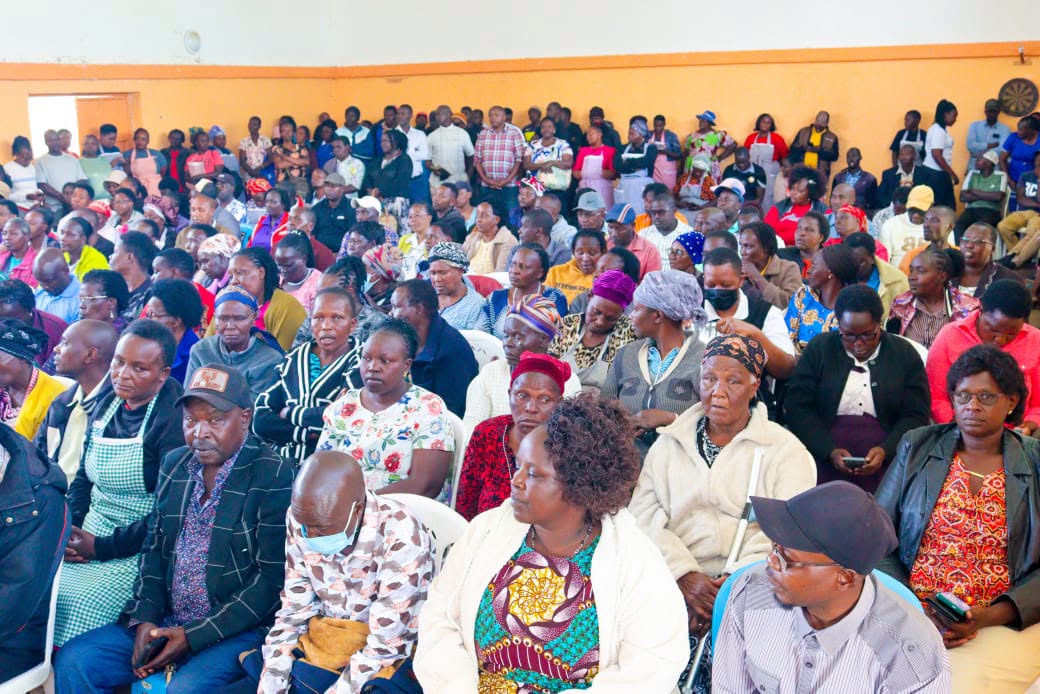
“Ownership is not a single door. It should be a corridor with several doors, each opening onto the same outcome,” Hinga said during the fifth Kenya Affordable Housing Conference in Naivasha.
The proposal comes as the Government seeks to expand the country’s mortgage market from about 30,000 loans to one million, while increasing the number of Kenyans able to purchase affordable homes.
Hinga said alternative financial records could help lenders establish the actual income and spending patterns of borrowers whose earnings are not captured through formal payslips.
The Government is also seeking to create a standardised affordable housing mortgage with common requirements for borrower eligibility, documentation, valuation, underwriting and loan servicing.
READ ALSO:
Such a system could make it easier for lenders to package and refinance mortgages, while allowing institutions such as the Kenya Mortgage Refinance Company (KMRC) to mobilise long-term funding from pension funds, insurers and other investors.
“The goal is to move Kenya from approximately 30,000 mortgages towards one million by building not only houses, but the market that places Kenyans inside them,” Hinga said.
The need for wider access to housing finance comes as more than 280,000 affordable housing units valued at about Ksh731.5 billion are under construction across the country.
A further 45,000 units are expected to be completed by December, increasing the supply of homes available to potential buyers.
However, the Government faces the challenge of ensuring that the growing number of units can be matched with buyers who can secure financing.
The Boma Yangu platform, which has more than 1.29 million registered Kenyans, could provide a ready pool of prospective homeowners if it is better linked with banks, Saccos and other financial institutions.
Financial institutions have also called for a broader approach to housing affordability.
KCB Bank Senior Manager for Affordable Housing George Laboso said lenders should consider the entire housing journey rather than focusing only on financing the purchase of a completed house.
“We are looking at the entire housing journey while seeking to make these solutions more accessible and responsive to evolving customer needs,” he said.
Laboso said high construction costs, limited investment finance and inadequate serviced land continue to increase the cost of housing.
He added that affordability should also take into account expenses such as transport, water, energy and sanitation.
KMRC chief executive Johnstone Oltetia said the country must address both the shortage of affordable houses and limited access to financing.
“This year’s theme speaks to both the scale of the challenge and the promise before us: to close the twin gaps that constrain access at scale,” Oltetia said.
He called for practical measures involving banks, Saccos, microfinance institutions and other players to turn housing projects into actual home ownership.
“Let this be the conference where we stop measuring housing by what we plan, and start measuring it by what we deliver,” Oltetia said.
Shelter Afrique Development Bank Managing Director Thierno-Habib Hann said the challenge extends beyond Kenya, noting that many African economies have large informal sectors whose workers are excluded from conventional mortgage systems.
He said housing finance should reflect how people actually earn and save rather than relying entirely on formal employment records.
By Jonathan Mwinzi
Get more stories from our website: Sacco Review.
For comments and clarifications, write to: Saccoreview@
Kindly follow us via our social media pages on Facebook: Sacco Review Newspaper for timely updates
Stay ahead of the pack! Grab the latest Sacco Review newspaper!