- Nasukuta Abattoir gets a fresh push after years of delays.
- West Pokot eyes feedlots to boost livestock supply and quality.
- Private investment could turn the facility into a major meat hub.
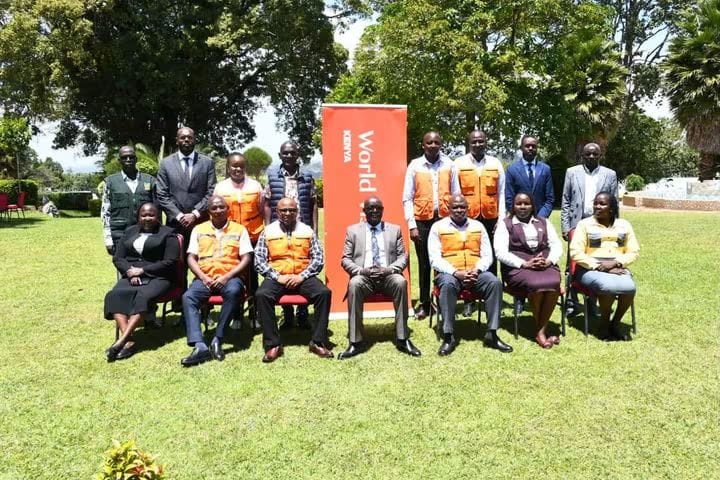
A high-level delegation from the Office of the President, led by Dr. David Kios, Advisor on Livestock, has undertaken a technical assessment of the long-delayed facility, signalling a fresh push to turn Nasukuta Abattoir into a major livestock-processing and investment hub.
For years, Nasukuta Abattoir has represented both promise and frustration for the people of West Pokot. Now, the long-awaited facility is getting a fresh push.
The delegation visited Nasukuta for a technical assessment aimed at evaluating the facility’s readiness for operationalisation and private-sector investment. Dr. Kios was accompanied by Geoffrey Owino, Head of Food Safety; Rajab Obama of the Food Systems Resilience Project; and Brian Ptoton.
Their visit could mark an important turning point for a project that has overstayed its original timeline but remains central to West Pokot’s ambitions of transforming its livestock economy.
The assessment comes as the National Government advances a strategic plan to operationalise nine regional abattoirs clustered across different counties. Following Isiolo, West Pokot, Turkana and Lamu are positioned as the next frontier in the development of regional livestock-processing infrastructure.
For West Pokot, this is more than an infrastructure project; it is an opportunity to change the economics of pastoralism.
READ:
The county has a strong livestock base, with thousands of households depending on cattle, goats, sheep and other livestock for their livelihoods. Yet for years, farmers have largely operated within informal markets where they have limited control over prices and capture only a fraction of the value generated by their animals.
Nasukuta Abattoir could fundamentally change that equation. A fully operational facility would provide a structured commercial market for livestock while creating opportunities for slaughtering, meat processing, packaging, cold-chain logistics, transportation and other businesses.
Instead of animals leaving West Pokot mainly as live livestock, the county could increasingly capture value from the processing and marketing of livestock products. That is the economic transformation the county administration is now seeking.
“Nasukuta has overstayed its timeline and my administration is fully committed to seeing this project up and running to empower our pastoralist communities and transform local livelihoods,” the county leadership said.
The administration believes West Pokot is naturally positioned to become a major meat hub because of its livestock heritage and its strategic position within the pastoralist economy.
Operationalising the abattoir, however, is only one part of the equation. The bigger challenge is ensuring that Nasukuta has a reliable and consistent supply of quality livestock.
This is where the county’s ambitious feedlot strategy comes in. West Pokot is aligning with national framework plans to strengthen critical livestock infrastructure, including the targeted rollout of one feedlot per ward across the county.
The proposed network could help improve animal finishing, quality and weight while creating a predictable supply of livestock for commercial slaughter. It would also help farmers transition from selling animals whenever they need cash to participating in a more organised and commercially driven livestock value chain.
Overall, the vision is bigger than Nasukuta Abattoir itself. It is about creating an interconnected system linking pastoralists to feedlots, livestock aggregators, transporters, processors, traders and consumers.
If properly implemented, the system could create a powerful economic chain stretching from the pastoralist’s homestead to national and potentially regional markets.
Private sector holds the key
The private sector will be critical to making that vision a reality. Government can provide infrastructure and policy support, but sustainable commercial operations require investors with capital, technology, management expertise and market connections to take the facility to the next level.
READ ALSO:
The technical assessment led by Dr. Kios is therefore significant because it could help identify what remains to be done before Nasukuta can attract and accommodate serious private-sector participation.
For investors, a functioning livestock ecosystem would be a major attraction. For farmers, it could mean a dependable market. For young people, it could mean jobs and new businesses. For the county, it could mean a stronger local economy and increased value addition. And for the national livestock sector, it could mean another important pillar in the transition from traditional livestock trading to modern meat production and processing.
Nasukuta, however, must not become another development project trapped in the cycle of promises, assessments and delayed timelines. The latest technical mission must ultimately lead to concrete action.
West Pokot has already waited long enough. The county has the livestock, the pastoralist communities and the production potential. What has been missing is an efficient commercial infrastructure capable of connecting that production to profitable markets.
Nasukuta could provide that missing link. Its success, however, will depend on much more than the physical facility. Roads, water, veterinary services, animal health, feed production, aggregation centres, market information, financing and cold-chain infrastructure will all have to work together.
The planned ward-level feedlots could provide another critical piece of the puzzle by helping guarantee a steady supply of animals for the abattoir. That would make Nasukuta not simply a slaughter facility, but the centre of a broader livestock economy.
The ultimate goal should be to ensure that the wealth generated from West Pokot’s livestock remains within the local economy for longer. A farmer who sells an animal should benefit not only from the sale itself, but from the economic activity that follows — from transportation and processing to packaging, marketing and distribution. That is how livestock can move from being primarily a traditional livelihood to becoming a modern commercial asset.
For generations, livestock has been central to the identity and survival of West Pokot communities, and the next chapter should be about converting that heritage into economic power. Nasukuta Abattoir can become a catalyst for that transformation, but the opportunity must now be matched with urgency.
If the facility is finally operationalised, supported by reliable livestock supply and backed by credible private-sector investment, its impact could extend far beyond the abattoir’s gates. It could create jobs, strengthen farmer incomes, open new markets and establish West Pokot as one of Kenya’s major livestock and meat-processing hubs.
The message from the county administration is therefore unmistakable: West Pokot does not want to remain a supplier of raw livestock while others capture the greater value. The county wants to produce, process and profit from its livestock wealth, and at the centre of that ambition stands Nasukuta Abattoir.
After years of waiting, the facility now has another chance to become what it was always intended to be — a gateway through which West Pokot’s livestock wealth is transformed into jobs, investment, food security and better livelihoods. The livestock are already here, the market opportunity is waiting, and the challenge now is to make Nasukuta work.
By Hillary Muhalya
Get more stories from our website: Sacco Review.
For comments and clarifications, write to: Saccoreview@
Kindly follow us via our social media pages on Facebook: Sacco Review Newspaper for timely updates
Stay ahead of the pack! Grab the latest Sacco Review newspaper