
- Hillary Muhalya examines how South Korean aluminium formwork technology could reshape Kenya’s housing sector.
- He highlights the potential for faster construction, reduced waste and stronger local manufacturing.
- He argues that technology transfer and affordability must remain central to Kenya’s housing ambitions.
From conventional masonry to industrialised construction, a building system inspired by South Korea is introducing a new approach to delivering quality homes faster, reducing construction waste and creating opportunities for local manufacturers.
Kenya’s affordable housing ambitions are bringing construction technology into the national conversation. Beyond land, financing and materials, delivering homes at scale will depend on how efficiently they are designed, manufactured and built.
An emerging example is South Korean aluminium formwork technology, associated with manufacturer Kumkang. It is changing how walls, floors and structural components are built in large residential developments. It also shows how housing can move from labour intensive, sequential masonry towards standardised, industrialised production.
The concept is simple. Instead of building walls with masonry blocks, contractors assemble precision engineered aluminium panels, reinforce the structure with steel and pour concrete into the moulds. Once the concrete hardens sufficiently, the panels are removed and reused in the next cycle.
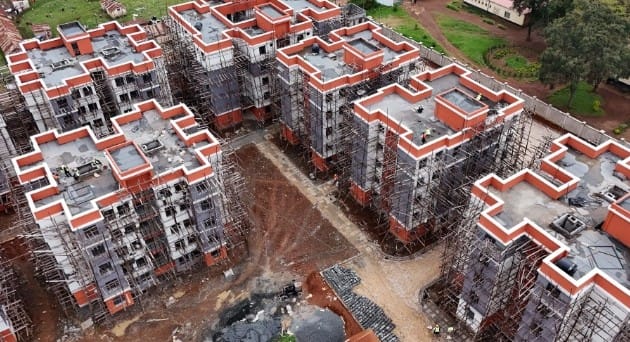
The 1,042 unit affordable housing development at Konza Technopolis shows how the technology can be deployed in Kenya. The project comprises 11 residential blocks using aluminium formwork supplied through Kumkang.
Reports indicate engineers have adopted 160 millimetre concrete walls and are targeting cycles of about seven days per floor. They say the wall specifications have also reduced concrete and reinforcement needs in the foundations, given the soil conditions at the site. About 78 floors had been completed by the time of the reported assessment.
READ:
Its significance goes beyond the number of apartments. It offers a chance to test whether industrialised construction can make large scale housing delivery more predictable, efficient and economically sustainable. Rather than treating every wall as a separate task, the system lets contractors repeat standardised operations across floors and blocks, which suits repetitive apartment designs.
A key attraction is that the system combines several construction activities into one coordinated process. Under masonry, contractors buy and transport blocks, build walls, apply plaster and do additional finishing. Aluminium formwork replaces that sequence by casting walls and other components in reusable moulds.
The panels are made to precise measurements, producing uniform wall thicknesses, straight surfaces and consistent openings. The system also reduces reliance on timber and plywood shuttering. Because the panels can be reused many times, their cost is spread across numerous units.
However, the benefits depend on project size, design repetition, equipment costs, concrete and reinforcement requirements and how well the contractor manages the process.
For ordinary households, the key question is whether innovation will translate into lower prices and more affordable rent. Faster construction can cut overheads, equipment hire and financing costs. Less masonry, shuttering and plastering can also generate savings.
Yet aluminium formwork does not automatically guarantee cheaper homes. The equipment demands substantial initial investment, specialised expertise and careful planning. Imported equipment, transport, maintenance, concrete and reinforcement all feed into the budget.
Government and developers therefore need to provide transparent cost comparisons with conventional construction. More importantly, efficiency gains should reach buyers and tenants rather than being absorbed into developers’ margins. Affordable housing must be measured by what an ordinary household can realistically pay, not by how quickly a contractor completes an apartment block.
The technology also opens opportunities for Kenyan manufacturers and artisans. Standardised designs create predictable demand for doors, windows, fittings and other aluminium products. Local Jua Kali enterprises can supply compatible components, while larger firms can explore fabrication, installation and maintenance.
IN CASE YOU MISSED IT:
Kenya Sugar Board grower representatives poll date announced
Jobs can also emerge in steel reinforcement, electrical installation, plumbing, logistics, concrete production and technical supervision. Partnerships between South Korean providers, Kenyan universities, technical institutions and local manufacturers could transfer knowledge and build a skilled workforce. The aim is for Kenyan engineers, technicians and artisans to eventually operate, maintain and manufacture systems suited to local conditions.
Delivering about 200,000 units annually, the national ambition, cannot rest on mobilising contractors and identifying sites alone. It requires standardised designs, reliable supply chains, affordable project financing, modern equipment, skilled workers and effective supervision.
Aluminium formwork could contribute, particularly in high density developments with repetitive designs, but it should form part of a wider strategy. Government can support the shift through technology transfer agreements, equipment financing, stronger technical training and local production of materials. The Kenya Building Research Centre and other regulators must also ensure innovative systems meet safety, durability and performance standards.
Speed must not override quality and safety. Aluminium formwork is not a universal replacement for conventional methods. Its advantages are clearest in large projects with repetitive designs, and smaller developments with varied layouts may not recover the investment as efficiently.
The system demands meticulous planning. Conduits, plumbing, door openings and window positions must be built into the formwork design before concrete is poured, and changes after casting can be costly and complicated.
Structural engineers must also independently determine wall thicknesses, reinforcement, concrete specifications and foundation designs from geotechnical investigations and building loads. A seven day floor cycle is therefore a productivity target, not permission to compromise concrete strength, curing or inspections.
Kenya must also avoid excessive dependence on imported equipment and foreign expertise. The true test of technology transfer is whether local institutions and enterprises can sustain the system independently.
Ultimately, Konza raises a fundamental question: can Kenya move from predominantly conventional construction towards an industrialised sector capable of producing quality homes at scale? The answer will depend on how well innovation is integrated with local manufacturing, workforce development, financing and responsible regulation.
If the model proves viable under different Kenyan conditions, it could shape future residential developments. But technology alone will not solve the housing challenge, as land prices, infrastructure, access to finance and household incomes remain decisive.
The real revolution will come when faster construction delivers genuinely affordable homes, durable buildings, sustainable jobs and a stronger domestic construction industry. Kenya must look beyond importing aluminium panels and acquire the knowledge, manufacturing capacity and technical expertise to make modern construction technology part of its own industrial development.
By Hillary Muhalya
Get more stories from our website: Sacco Review.
For comments and clarifications, write to: Saccoreview@
Kindly follow us via our social media pages on Facebook: Sacco Review Newspaper for timely updates
Stay ahead of the pack! Grab the latest Sacco Review newspaper!