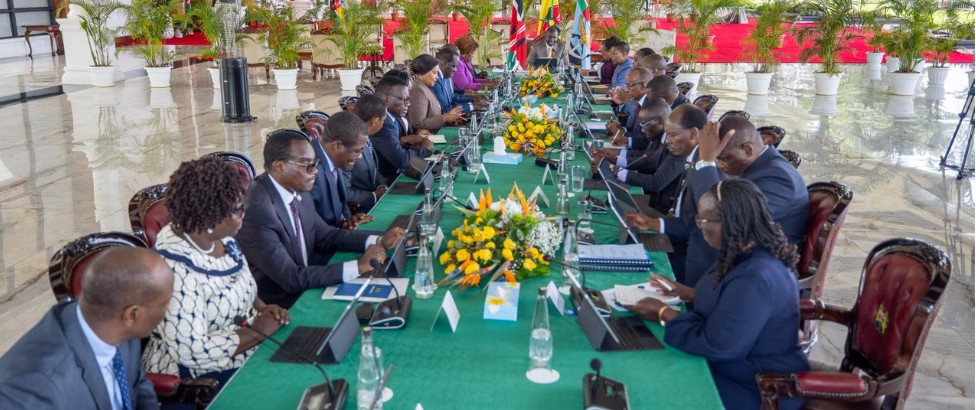
The Cabinet has approved a KSh9.7 billion Livestock Value Chain Support Project (LVSP), a new programme aimed at improving dairy productivity, reducing post-harvest losses, and increasing farmer incomes across the country.
The project is funded by the Government of Kenya and supported by a tied-aid credit agreement from the Polish Government.
According to the Ministry of Agriculture, the project’s core objective is to enhance dairy productivity, reduce extensive post-harvest losses, and ultimately increase incomes for agro-pastoral communities and farmers nationwide. The investment shall also enhance value addition, improve market access, and boost the overall competitiveness of the country’s dairy and cereal investments.
The project’s impact is designed to be felt nationwide, specifically targeting 45 counties, including key agricultural regions like Kiambu, Nakuru, Uasin Gishu, Trans-Nzoia, and pastoral areas such as Garissa, Marsabit, and Turkana
ALSO READ:
Kisumu to enforce mandatory SACCO membership for all 20,000 bodaboda riders
Last month, Agriculture Cabinet Secretary Mutahi Kagwe and Livestock PS Jonathan Mueke met officials from the Kenya National Chamber of Commerce and Industry (KNCCI) to strengthen collaboration on dairy and beef exports. Kagwe said Kenya is shifting its dairy strategy from volume to value‑added products such as butter, cheese and milk powder. “KNCCI is a key partner in linking Kenyan producers to global markets and investors,” he said.
With Kenya currently producing 5.4 billion litres of milk annually, Principal Secretary Jonathan Mueke emphasized that the focus must now shift to exports as domestic consumption is nearing capacity.
This ambitious external market drive is also boosted by a new KSh26 billion, 25-year beef export deal with China under the Origin Prime Kenyan banner, a contract expected to create 135,000 jobs and fund a KSh2 billion upgrade of the Kenya Meat Commission.
To ensure successful implementation, the government is emphasizing on securing affordable financing for farmers and aligning policy with private sector needs.
Kagwe urged financial institutions to offer agricultural financing at below a 10% interest rate to make dairy and livestock enterprises financially viable. Furthermore, the revival of the Agriculture Sector Working Group aims to deepen collaboration between the government and the private sector, with the Kenya National Chamber of Commerce and Industry (KNCCI) identified as a critical partner in linking local producers to global markets and investors.
ALSO READ:
Nationwide MSME training programme concludes as 94 business clusters begin mentorship phase
On the positive side, in the 2025/26 budget, the government allocated KSh47.6 billion to food security and agricultural productivity across fisheries, horticulture, food crops, livestock and rangeland development. Treasury CS John Mbadi said the government will scale up input financing, subsidies and extension services to move the country from food deficit to surplus. Of the allocation, KSh8 billion will go to the fertiliser subsidy programme, KSh10.2 billion to the National Agricultural Value Chain Development Project, and KSh5.8 billion to the Food Systems Resilience Project.
Since February 2024, 6.5 million farmers have directly benefited from the fertiliser subsidy, cutting production costs by 67% and increasing maize output by 38.9 per cent.
By Masaki Enock
Get more stories from our website: Sacco Review.
For comments and clarifications, write to: Saccoreview@
Kindly follow us via our social media pages on Facebook: Sacco Review Newspaper for timely updates
Stay ahead of the pack! Grab the latest Sacco Review newspaper!