Kenya and other African nations are being pressed to rethink how they fund agriculture and food systems, amid shrinking donor support, global economic uncertainty, and intensifying climate risks. Experts warn that without stronger local financing structures, millions of farmers and small businesses could be left vulnerable.
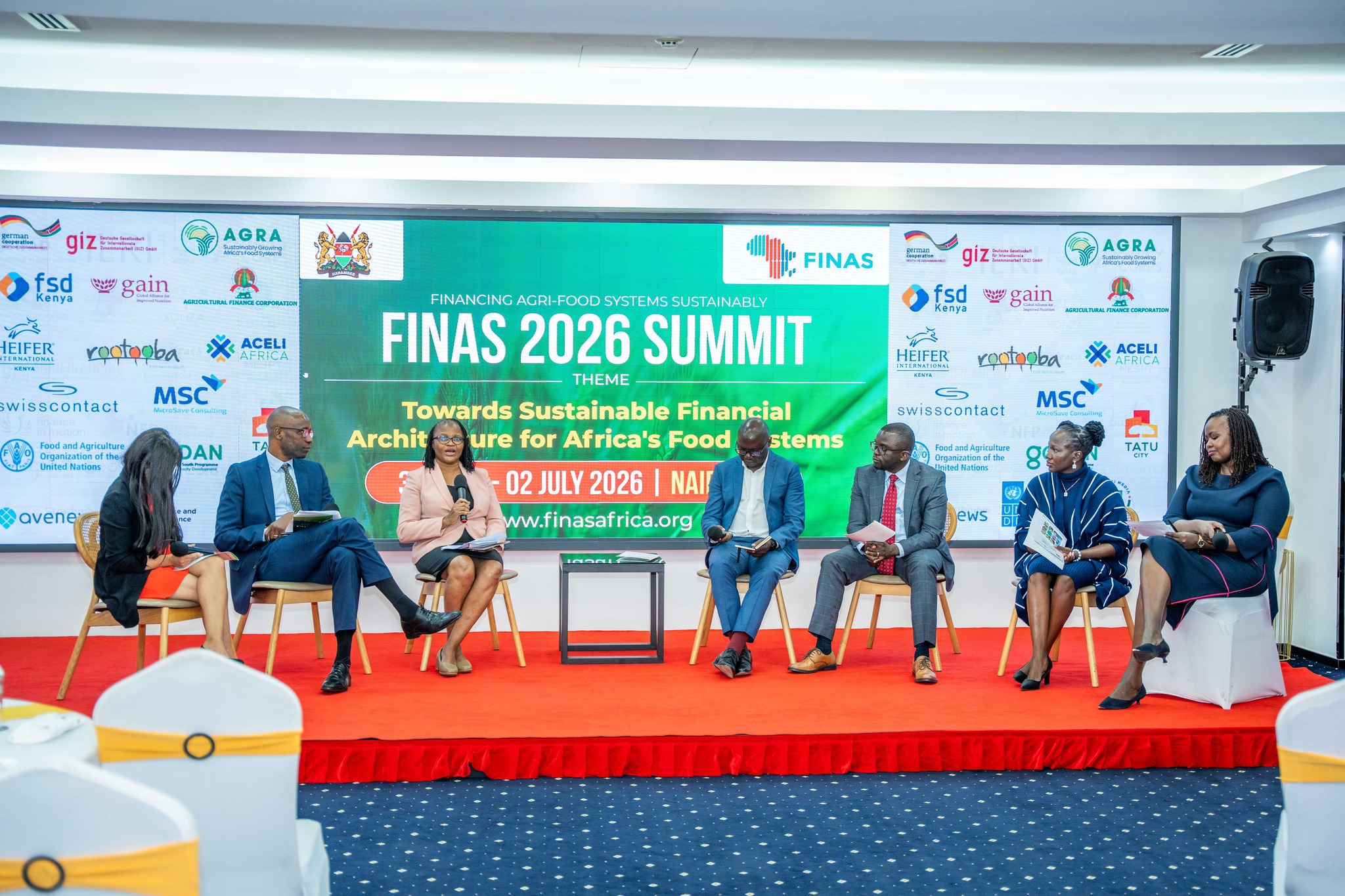
Speaking during the Financing Agri‑Food Systems Sustainably (FINAS) 2026 forum, Financial Sector Deepening Kenya (FSD Kenya) Agriculture Finance Lead Jared Ochieng said the continent must design resilient financial systems that reduce dependence on external aid.
“What this means for Kenya and Africa is that we must start designing systems that cushion us from these shocks and create a financial architecture that works for us,”
Agriculture Finance Lead Jared Ochieng
According to the Kenya National Bureau of Statistics (KNBS), the industry employs more than 40 per cent of the population and over 70 per cent of rural communities, yet access to affordable credit remains one of its biggest challenges.
Ochieng noted that recent global policy shifts have exposed the fragility of African economies reliant on donor funding. Several European governments and development agencies have cut aid budgets, redirecting resources to defence and domestic priorities. The Organisation for Economic Co‑operation and Development (OECD) has projected further tightening of aid flows, raising the cost of capital and reducing liquidity for developing countries.
He stressed that agriculture financing must go beyond loans to improve the overall financial health of farmers, women and small enterprises. “We care about how these groups manage day‑to‑day needs, manage risks and invest in their futures,” he said.
ALSO READ:
Kericho farmers abandon maize, embrace coffee cultivation as profits decline
To bridge the gap, Ochieng highlighted the importance of blended finance and de‑risking solutions. Blended finance uses public or donor funds to attract private investment into sectors deemed risky but vital for economic growth. “It is about deploying public resources to catalyse private investment,” he explained.
Experts argue that financing is critical to transforming Kenya’s food systems, especially as climate change continues to erode productivity. The 2025 Planetary Health Check Report shows that seven of nine planetary boundaries have already been breached globally, signaling worsening environmental degradation. Ochieng said this calls for greater investment in green and climate‑smart agriculture.
Kenya has already taken steps toward green financing. In 2019, it became the first East African country to issue a green bond, raising Sh4.3 billion through Acorn Holdings for sustainable student housing projects. The government has since promoted sustainability‑linked loans and other mechanisms to support environmentally friendly investments.
Future agricultural financing models, Ochieng said, must place farmers and livelihoods at the centre while aligning investments with climate and biodiversity goals. “It cannot be a top‑down process. Finance must reflect lived realities and socio‑economic conditions of the people we work with,” he added.
By Masaki Enock
Get more stories from our website: Sacco Review.
For comments and clarifications, write to: Saccoreview@
Kindly follow us via our social media pages on Facebook: Sacco Review Newspaper for timely updates
Stay ahead of the pack! Grab the latest Sacco Review newspaper!