
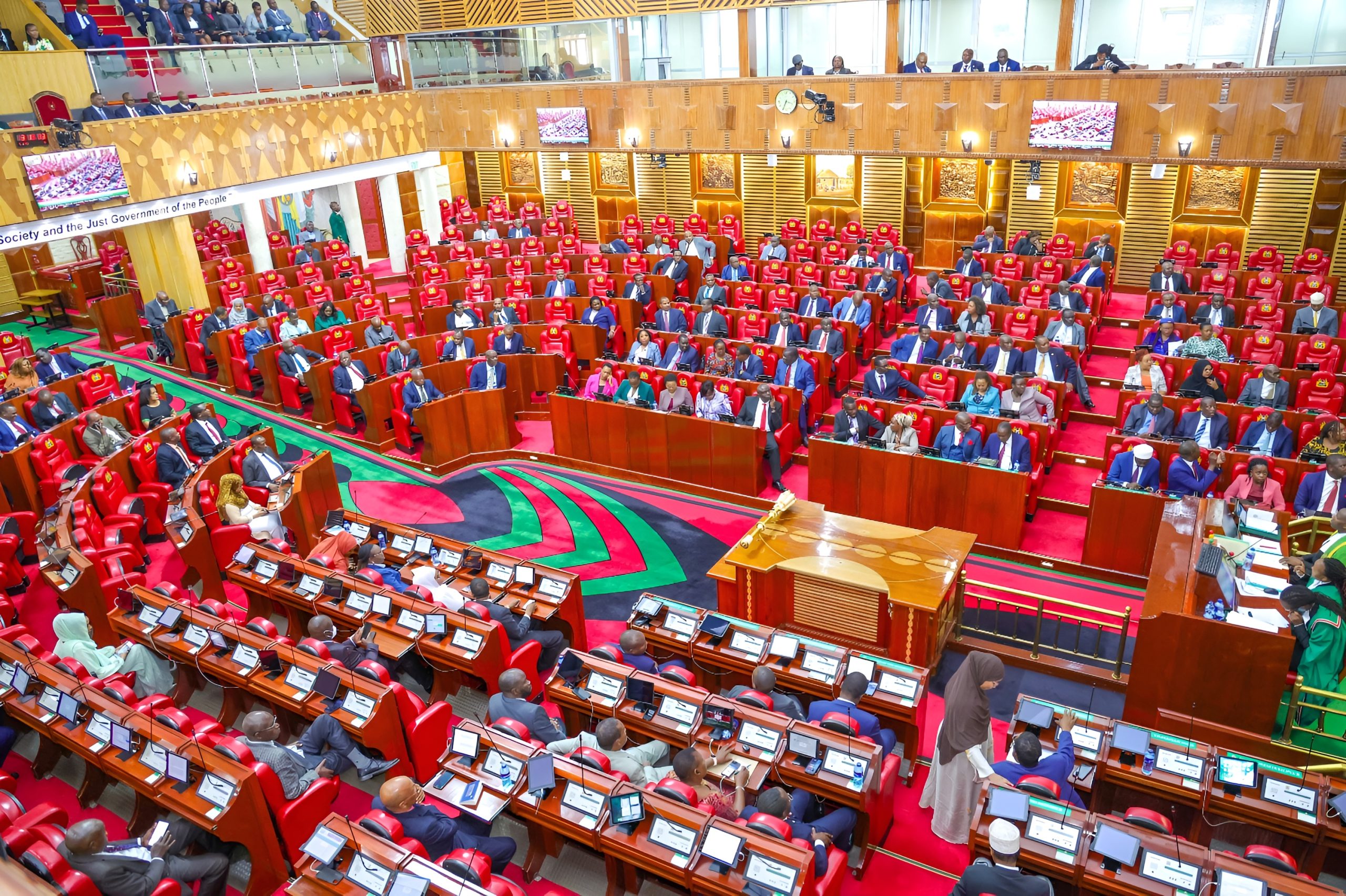
- Parliament has opened fresh talks to resolve disputes over the Cooperatives Bill, 2024.
- The mediation committee is seeking agreement on regulatory powers between national and county governments.
- The proposed law aims to establish clearer rules for cooperative societies and strengthen sector oversight.
Kenya’s cooperative sector could soon have a clearer division of regulatory powers between the national and county governments. Parliament is moving to resolve a legislative standoff over the Cooperatives Bill, 2024, as it works to establish uniform rules for the registration, supervision and management of cooperative societies.
A mediation committee bringing together members of the National Assembly and the Senate met at Parliament Buildings on Thursday, October 8, 2026. Its task was to reconcile provisions on which the two Houses adopted different positions, setting the stage for a fresh attempt to agree on how the sector should be governed.
The outcome could have far-reaching implications for farmers’ cooperatives, savings and credit cooperative societies (Saccos) and other member-owned institutions. It will determine regulatory responsibilities, coordination between the two levels of government and the standards governing their operations.
Chaired by Senator Jackson Mandago, the committee is mandated to build consensus on the disputed provisions before the Bill can advance through the remaining parliamentary stages.
The Cooperatives Bill (National Assembly Bill No. 7 of 2024) seeks to establish a legal framework for a sustainable and competitive cooperative sector within Kenya’s devolved system of government. Its objectives include strengthening the promotion, registration, regulation and supervision of cooperative societies, while setting uniform norms and standards to guide their operations.
The legislation also seeks to define the respective responsibilities of the national and county governments, including areas of joint jurisdiction. Resolving these questions is critical to ensuring that cooperative societies operate under a predictable regulatory framework, without unnecessary duplication of functions or uncertainty over which level of government is responsible for particular decisions.
READ:
Tea bonus disparities leave Murang’a farmers seeking answers
For farmers, traders, savers and other cooperative members, the effectiveness of the final law will depend on whether it promotes accountability, protects members’ interests and supports the growth of their institutions.
Devolution sits at the centre of the debate. A major objective of the proposed legislation is to establish an intergovernmental relations framework and mechanisms for consultation and cooperation among counties. Such arrangements could improve coordination where cooperative activities cross county boundaries or require common regulatory standards.
However, the challenge is to strike a balance between uniform national standards and the constitutional distribution of responsibilities under devolution. Poorly defined mandates could create overlapping administrative requirements, delays and disputes over regulatory authority. Conversely, a clearly coordinated framework could improve supervision, reduce uncertainty and promote consistency in the treatment of cooperative societies across the country.
The mediation process therefore provides an opportunity to reconcile competing legislative positions while safeguarding effective cooperation between the two levels of government.
The committee is specifically mandated to consider provisions that were passed in different forms by the National Assembly and the Senate, and to negotiate an agreed position. Its work is intended to resolve the differences between the two Houses rather than simply endorse the position taken by either side.
Mandago chaired the meeting, with Marianne Jebet Kitany serving as vice chairperson. Other members present were Senator Betty Montet, Beatrice Adagala, Senator Esther Okenyuri, Robert Gichimu Githinji and Senator Miraj Abdullahi.
The committee’s deliberations are an important stage in the legislative process, because the disputed provisions must be reconciled before the Bill can proceed in accordance with parliamentary procedures. However, the meeting does not mean that the disagreements have already been resolved or that the proposed law has come into force.
By Hilllary Muhalya
Get more stories from our website: Sacco Review.
For comments and clarifications, write to: Saccoreview@
Kindly follow us via our social media pages on Facebook: Sacco Review Newspaper for timely updates
Stay ahead of the pack! Grab the latest Sacco Review newspaper!