
The Agriculture and Livestock Development Cabinet Secretary (CS) Mutahi Kagwe has called for intensified farmer sensitization on pest control issued to safeguard Kenya’s macadamia sector.
According to the Chairperson for Macadamia Association of Kenya, Jane Maigua, he has warned that harmful pesticides and aggressive pest attacks are destroying up to 40% of national production, an economic blow valued at Ksh 2.88Billion each year.
Speaking during a high-level meeting attended Pyrethrum Processing Company of Kenya Ag. CEO Njoroge Wachira, and the CEO of Pest Products Board Fredrick Muchiri, the CS said that farmers are suffering unprecedented crop losses as destructive pests, now more widespread due to climate change, attack flowering nuts, bore into kernels, cause severe leaf damage, and trigger widespread premature nut drop.
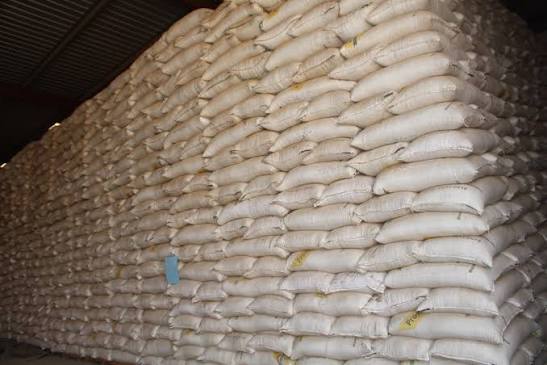
According to Maigua, Kenya produces 45,000MT of macadamia annually, with 44,100 MT being marketable, yet 17,640 MT are lost to insect damage, including 2,222.64 MT of high-value exportable kernels, translating into billions in lost revenue.
She noted that the industry also spends heavily on electricity and labour at processing facilities as workers sort out insect-bitten nuts, further compounding the economic burden.
According to Kenya Plant Health Inspectorate Service-Kephis, stink bugs are the most destructive threat, followed closely by nut borers, lace bugs, moths, rats, and thrips. The agency explains that stink bugs inject saliva into nuts during flowering, causing internal kernel damage and discoloration, while nut borers penetrate shells to feed on the kernels.
ALSO READ:
Lace bugs attack the underside of leaves, leading to yellowing and premature leaf drop, whereas moths damage the fruit before the husk hardens, causing nuts to fall early. Rising temperatures have also driven the spread of thrips, which damage flowers and reduce nut set, while rats remain a major vertebrate pest, causing further losses across plantations.
KEPHIS emphasizes that climate change has intensified these attacks, making existing chemical pesticides both ineffective and risky due to the danger of surpassing international residue limits.
In response, the Pest Control Products Board outlined a legal emergency provision that allows the swift authorization of organic and pyrethrum-based pest control products.
PCPB confirmed that once PPCK and KEPHIS identifies the specific pest pressure, the Board can immediately approve emergency-use options, conduct local efficacy trials, determine scientific application rates, and work with county teams to sensitize farmers on proper use to avoid export-threatening residue violations.
The PCPB CEO assured the CS that pyrethrum-based products would be fast-tracked as long as they meet efficacy and safety requirements, underscoring the importance of shifting away from over-dependence on imported chemical pesticides, now exceeding 20M kilograms annually.
ALSO READ:
Court orders for fresh public participation on coffee regulation 2024
CS Kagwe directed AFA, KEPHIS, PCPB, and county governments to intensify farmer sensitization through radio programs and field extension services, promote Integrated Pest Management practices, reduce reliance on imported synthetic pesticides, and adopt safer, residue-compliant solutions that protect Kenya’s premium export markets.
He stressed the need to rebuild the country’s pyrethrum value chain so that local farmers and processors such as PPCK can offer reliable, affordable pest control alternatives that protect both yields and market standards.
The CS further issued strict instructions on protecting the intellectual property of the Pyrethrum Processing Company of Kenya (PPCK), noting that any private company using PPCK’s scientific formulation data must pay for access or have their letters of access withdrawn immediately.
Kagwe emphasized that PPCK’s scientific data is a valuable national asset and a potential revenue stream that must be safeguarded as the country strengthens its domestic pesticide solutions.
By Juma Ndigo
Get more stories from our website: Sacco Review.
For comments and clarifications, write to: Saccoreview@
Kindly follow us via our social media pages on Facebook: Sacco Review Newspaper for timely updates
Stay ahead of the pack! Grab the latest Sacco Review newspaper!