Kenya’s electricity sector is set for a historic shake-up after the Energy and Petroleum Regulatory Authority (EPRA) developed regulations that will crack open the power distribution market to private investors, dismantling Kenya Power and Lighting Company’s (KPLC) grip on electricity supply that has held for decades.
The draft Energy (Electricity Market, Bulk Supply and Open Access) Regulations, 2024 will apply to the generation, importation, exportation, transmission, distribution and retail supply of electrical energy upon gazettement.
The proposed regulations were developed following a petition by Independent Power Producers (IPPs) to allow open access to power transmission and distribution. Currently, IPPs are only allowed to sell power to the state-owned electricity utility Kenya Power and Kenya Electricity Transmission Company (KETRACO).
Kenya Power, however, says it is not rattled by the incoming competition. Chief Executive Officer (CEO) Joseph Siror said the utility firm sees the opening up of the market as an opportunity rather than a threat.
“We welcome the new regulations on the electricity market, bulk supply and open access as gazetted by the Energy and Petroleum Regulatory Authority last week. The cake is big enough for more players,” Siror said.
ALSO READ:
2NK Sacco allocates Ksh80 million for new headquarters in Nyeri
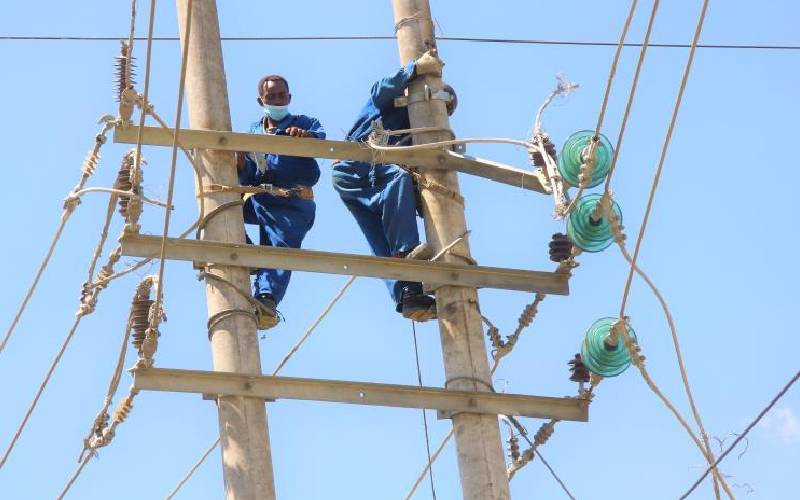
The new reforms will also allow wheeling of electricity using the distribution and transmission network of KETRACO and Kenya Power, estimated at 4,660 kilometres and 310,618 kilometres respectively.
Speaking during a public participation workshop in Nairobi, EPRA Director General Daniel Kiptoo Bargoria said investors will be at liberty to participate in power generation, transmission and distribution infrastructure business, enabling them to supply bulk electricity to private retail vendors who will, in turn, oversee last-mile connectivity and billing to consumers.
Bargoria said the open access principle marks a turning point for the country’s energy sector. He said the introduction of electricity wheeling holds the potential to unlock new investment opportunities, enhance grid reliability and ultimately deliver greater value to consumers who can enjoy lower power bills, fewer outages and more choices of electricity suppliers.
Key to the reforms is the open access principle, which lets eligible consumers and companies use electricity networks, giving them more choices and fostering competition. The regulations support renewable energy and mini-grids, encouraging new investments and require compliance with grid codes and environmental standards to ensure a stable and reliable electricity system.
The regulations will allow private energy companies the opportunity to build, operate and maintain systems meant to generate electricity, approval to build, operate and maintain infrastructure meant for power transmission and a retail supply licence to sell, bill and collect revenue.
Under the proposed regulations, bulk supply shall be defined as the supply of electrical energy by a licensee to another licensee, and not directly to a consumer. EPRA will prescribe generation and retail tariffs and charges for network service, wheeling, use of system and ancillary services.
Licensees will be required to apply to EPRA for tariff approval and will be able to recover capital costs, operations and maintenance costs, depreciation, return on equity, other finance costs and taxes from the approved tariffs.
On market oversight, EPRA is required to conduct a market review in consultation with the Cabinet Secretary responsible for energy, involving stakeholders, within three years. Subsequent reviews must be undertaken at least once every five years.
Upon conclusion, EPRA is required to publish a report in the Kenya Gazette within 30 days and thereafter issue guidelines on the structure of the electricity market within six months.
The regulations are expected to drive increased investment by creating a more transparent and competitive market, attracting both local and international investors. They also encourage innovation in energy production and distribution, fostering technological advancements and operational efficiency.
Consumers seeking to sell power are required to first agree with EPRA before being allowed to connect to the grid, by applying for a retail licence to enhance compliance with the regulations. Kenya Power will take an average of 60 days to consider such applications, during which technical, economic, legal and environmental feasibility studies will be conducted.
By Benedict Aoya
Get more stories from our website: Sacco Review.
For comments and clarifications, write to: Saccoreview@
Kindly follow us via our social media pages on Facebook: Sacco Review Newspaper for timely updates
Stay ahead of the pack! Grab the latest Sacco Review newspaper!