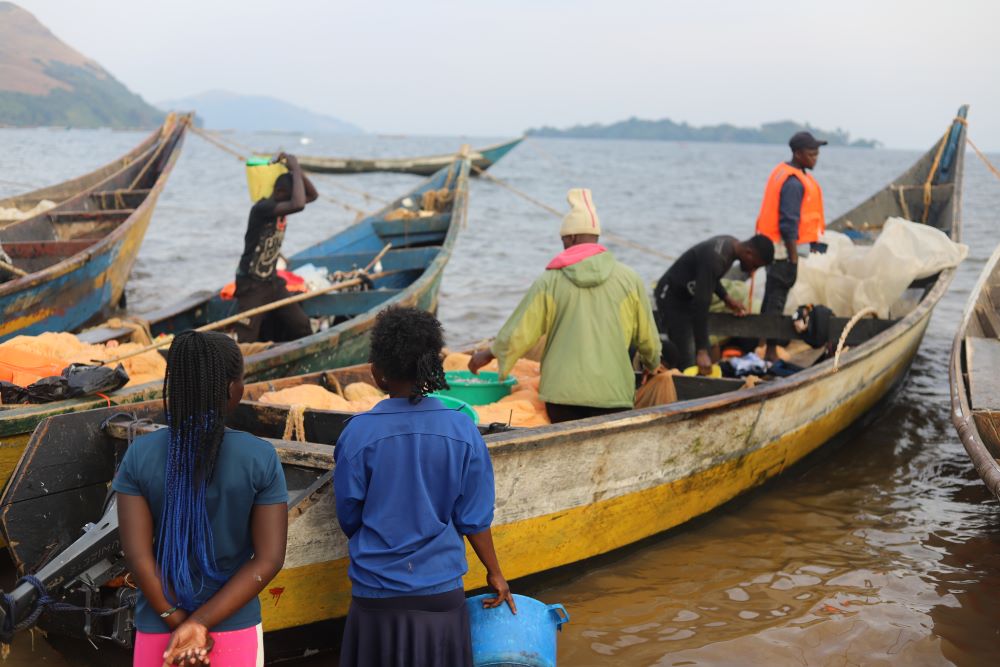
Fishermen in Homa Bay have formed a Savings and Credit Cooperative Society (Sacco) to boost their income and promote sustainable fishing.
This comes after President William Ruto, during the Blue Economy Summit at Tom Mboya University on May 31, gave the Homa Bay Beach Management Unit Sacco Ksh5 million to strengthen its financial base.
During the Summit the President noted that while the blue economy currently contributes 0.4 per cent of Kenya’s GDP – about Ksh30-40 billion annually – fisheries have the potential to generate up to 10 times more.
“We are far from achieving our target, but we are taking steps to reach our potential,” said Dr Ruto, urging fishermen to stop harvesting immature fish and encroaching on breeding zones. He said his administration is banking on fishermen as key players in food security and pledged support in forming cooperatives, with 450 BMUs already registered.
The Sacco launch which was observed by Governor Gladys Wanga brought together fishermen from different beaches who shared their joy and willingness to save with the Sacco for development.
Governor Wanga encouraged fishermen to use the Sacco to access loans for proper fishing gear. “Blue economy is a major sector for this country.” Fishermen can sustain their livelihoods and the economy if they practice correct fishing,” she said, adding that the county has already contributed Ksh1 million to the Sacco.
ALSO READ:
Kakamega’s IG Sacco opens recruitment drive to reinforce workforce
County leader said the fund will improve fisheries infrastructure, establish landing sites, and enhance fish value addition. “Let fishermen engage in sustainable fishing so that future generations can benefit from the lake,” Wanga added.
Homa Bay BMU chairman Edward Oremo said the Sacco plans to elect officials and set up an office to coordinate activities. “We envisage this becoming the best cooperative society in Homa Bay,” he said.
Deputy Governor Oyugi Magwanga said the Sacco could grow into a national cooperative. “Some of the largest cooperatives began as small groups. This one can also reach that level, depending on members’ savings and borrowing discipline,” he said.
Beyond loans, fishermen said they hope the Sacco will shield them from exploitative middlemen who dictate prices at landing beaches. By pooling resources, they believe they can bargain collectively and sell fish directly to bigger markets.
ALSO READ:
10 Machakos groups receive business kits in NGAAF empowerment drive
Experts at the summit noted that climate change has worsened fish breeding patterns in Lake Victoria, making sustainable practices and financial discipline even more urgent. They warned that unless local fishermen embrace modern methods, Kenya could remain dependent on fish imports from China.
The government also announced plans to train youth in aquaculture, with special focus on cage farming, fish feed production, and cold chain management. Officials said this would not only create jobs but also reduce post-harvest losses that cost fishermen millions every year.
For communities along the lake, the Sacco represents more than financial inclusion. Leaders said it is also a vehicle for social cohesion, allowing fishermen to unite around shared goals, protect their resources, and secure a future for the next generation.
By Juma Ndigo
Get more stories from our website: Sacco Review.
For comments and clarifications, write to: Saccoreview@
Kindly follow us via our social media pages on Facebook: Sacco Review Newspaper for timely updates
Stay ahead of the pack! Grab the latest Sacco Review newspaper!