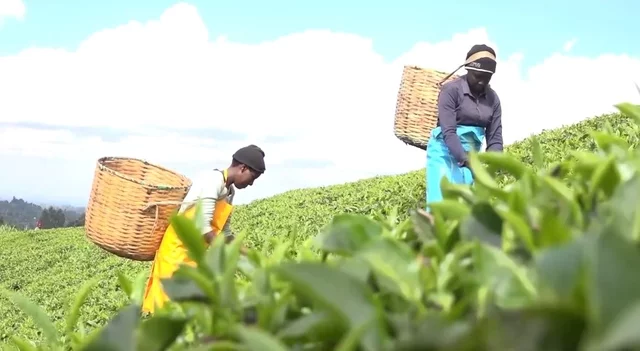
A parliamentary inquiry into tea pricing and farmer bonuses has exposed deep divisions between East and West Rift Valley producers, with western growers demanding fair representation and a review of the grading system.
Farmers raised key concerns like the perceived bias in factory classifications, the dominance of multinationals in the West Rift and the unequal distribution of bonuses despite higher production levels in Western countries.
The National Assembly Committee on Agriculture and Livestock is expected to table its report on Tuesday, concluding a two-week series of meetings with stakeholders across the country. The committee, chaired by Tigania West MP John Mutunga, was tasked by the House to investigate complaints over low bonuses and unfair pricing after several MPs from tea-growing areas petitioned the Speaker.
According to the schedule, the committee began drafting its report on Thursday, with members set to hold a final adoption meeting. The inquiry examines how tea pricing is conducted, identifies value chain costs and looks at measures to reduce operational inefficiencies in both the East and West of the Rift Valley.
Tea-growing zones east of the Rift include Murang’a, Kiambu, Embu, Kirinyaga, Nyeri and Tharaka Nithi, while western counties under the study cover Kericho, Bomet, Nandi, Bungoma and Trans Nzoia. The committee will investigate why tea from the East Rift typically commands higher prices and why West Rift factories face higher operational costs despite producing more tea.
One contentious issue raised by West Rift stakeholders is the grading system used by the Kenya Tea Development Agency (KTDA). Currently, KTDA relies on a traditional sensory evaluation method, commonly known as “tongue testing,” to grade tea quality. Growers argued that this method is subjective, proposing for a scientific approach to ensure accuracy.
ALSO READ:
Coffee cooperatives reject Government’s direct pay to farmers
“The West produces more tea than the East, yet they feel underrepresented. These are issues that need addressing because there is now a serious demand for equal representation, with some calling for separation,” Mutunga told KTDA management during a meeting.
Growers also highlighted the perceived inequities in KTDA’s factory classification system, where East Rift factories fall under Class A, while West Rift factories are placed in Classes B and C. They argued that this arrangement is discriminatory, urging the committee to ensure all factories are treated equally.
Equitable representation on the KTDA board emerged as another key concern. Western producers, despite being the majority, hold only five of the 12 board seats, while East Rift counties, which produce less tea, hold a greater share.
KTDA chairman Chege Kirundi warned against any moves to split the association.
“There is a need to protect the aggregation of KTDA because without it, it does not exist,” he told the committee, warning that separation could threaten the agency’s stability.
West Rift factory managers also blamed the KTDA board for allowing a surge of multinational and private factories in the region. They argued that these firms create an uneven playing field, as many do not pay tea bonuses like local factories, further disadvantaging Western producers.
The committee is expected to present its report on Tuesday, outlining recommendations on pricing, factory classifications, grading methods and governance of KTDA to address long-standing grievances between the regions.
By Our reporter
Get more stories from our website: Sacco Review.
For comments and clarifications, write to: Saccoreview@
Kindly follow us via our social media pages on Facebook: Sacco Review Newspaper for timely updates
Stay ahead of the pack! Grab the latest Sacco Review newspaper!