Savings and Credit Cooperative Societies (SACCOs) engaged in the deposit-taking business have maintained the trend of looking internally when seeking to replace retired senior executives.
The most recent such top management change occurred at the Meru-based Solution Deposit-Taking SACCO, which saw its long-serving Chief Executive Officer, Daniel Kinyua Marete, retire from the business. His place has now been taken by another insider Esther Ebuthania Javani, who was until May this year the Deputy Chief Executive Officer at Solution DT SACCO.
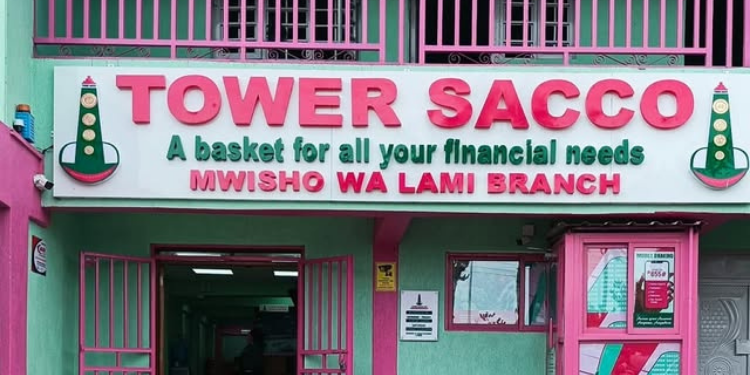
At Tower DT SACCO, Patrick Kibuika Njenga is now the new CEO, taking over from Gabriel Njihia, who retired after being at the helm of the Society for close to 22 years.
The highly experienced Marete was previously the Solution SACCO Finance Manager before his appointment as CEO to replace Justus Mburugu, who retired.
Marete leaves Solution SACCO after being the driving force in designing the Society’s focus on promoting financial inclusion and community welfare, while also offering innovative and cutting edge financial solutions and education to its members.
The retired Marete has also been instrumental in crafting Solution SACCO’s strategic planning and transformation programs that seek to turn the Society into a modern and effective financial institution that fully addresses the needs of its members.
ALSO READ:
Standard Bank appoints Dr. Oigara as East Africa Regional Chief Executive
Other SACCOs that have adopted an internal recruitment mechanism to replace its CEOs include Ukulima SACCO, which picked on Richard Nyaanga- a previous internal auditor, finance manager and deputy Chief Executive Officer at Ukulima SACCO, to become its CEO. Nyaanga replaced Henry Nakaya who retired from Ukulima SACCO.
According to Human Resource Experts, an insider has a deeper insight on where an organization has come from and is headed, including an understanding of its cultural background and history as well as a vast cache of institutional memory.
When Alex Ndegwa retired as CEO of Mentor DT SACCO, his replacement took the form of Mrs Joyce Waceke Ndegwa, who was picked by the Board to take over the c-suite of Mentor SACCO.
The current CEO of Imarisha DT SACCO, Mathew Rotich, is also an insider who was appointed by the Society’s Board of Directors in 2017 to replace long serving Kipruto Sigei.
Allan Kawa, the current CEO of Keystone DT SACCO, formerly KITE SACCO, was previously an internal auditor at the same Society before being recruited to head the organization, replacing Joseph Oganga.
Esther, who has taken over at Solution DT SACCO, has been actively involved in initiatives focused on financial inclusion and digital solutions within the Sacco. Esther also has experience in gender mainstreaming and women’s access to finance.
Esther has been key to Solution SACCOs drive to introduce digital solutions to improve member experience while also being part of those involved in the launch of the Society’s new products and services. She has a vast experience in financial inclusion, particularly focused on women’s access to finance, which she brings into Solution SACCO.
ALSO READ:
Trans Nzoia Governor opposes Nzoia Sugar company redundancy plan
Njenga, the new boss at Tower DT SACCO is a certified public accountant and a member of the Institute of Certified Public Accountants of Kenya.
He has previously held senior positions at the Society since 2005 until recently when he was elevated to the Deputy CEO and Head of Finance, before becoming the CEO. He takes over from Gabriel Njihia Waweru, the long serving tower Sacco Chief executive, who has retired.
Njihia joined Tower SACCO in 1989 as the Deputy CEO and has played a significant role in accelerating its growth since he took the helm in 2014.
In recent years, Tower SACCO has been a familiar face at the annual Ushirika Awards walking away with numerous trophies including that of Best in Risk Management and Best in Use of ICT. It has also registered one of the highest growth rates in balance sheet size as well as members’ deposits over the last three years.
According to experts, internal recruitment allows companies to identify and develop high-potential employees for future leadership roles. This ensures a smooth transition when key positions become vacant and helps maintain organizational knowledge and expertise.
An internally picked CEO already possesses valuable knowledge about the company’s operations, goals, and challenges. This can lead to quicker adaptation and improved performance in their new roles.
Internal recruitment is defined as the process of hiring from within the business. This process is considered more efficient as internal candidates are already part of the team and understand the company’s culture and policies.
However, over-reliance on internal recruitment can have negative side-effects, such as creating resentment or leading to an inflexible culture.
Internally hired CEOs, while familiar with current processes, may resist innovative approaches leading to stifled innovation. External candidates often bring new ideas that challenge the status quo.
By Jackson Okoth
Get more stories from our website:Sacco Review.
For comments and clarifications, write to: Saccoreview@
Kindly follow us via our social media pages on Facebook:Sacco Review Newspaperfor timely updates
Stay ahead of the pack! Grab the latest Sacco Review newspaper!