
Tea farmers have a reason to smile after earnings from this week’s Mombasa auction rose slightly. According to data from Tea Brokers East Africa Ltd, tea factories earned Ksh 904.1 million, up from Ksh 902 million last week, following the sale of 3.72 million kilos of tea.
The sale, held in Mombasa, saw increased demand and participation from buyers, giving hope to small scale growers who rely heavily on tea sales for income. The tea was sold through the Mombasa Tea Auction, one of the largest black tea auctions in the world.
Several factories emerged top in terms of earnings; Mungania Tea Factory led the pack with Ksh 33.48 million, followed by Ndima Ksh 31.5 million, Mununga (Ksh 28.1 million), Rukuriri (Ksh 25.6 million) and Gathuthi (Ksh 23.5 million). Others included Gacharage (Ksh 20 million), Kangathariri (Ksh 16.9 million), Githongo (Ksh 17 million), Imenti (Ksh 14.6 million) and Kionyo (Ksh 12.8 million).
ALSO READ:
SASRA decries SACCOs slow adoption of credit scores in loan appraisals
KTDA Zone Six Board Member Enos Njeru said farmers in Embu County have continued producing high-quality tea, which is gaining attention in the international market. He encouraged growers to remain consistent with quality to sustain better prices.
In total, 7.9 million kilograms of tea from five East African countries were offered for sale. Kenya led with 6.3 million kilograms, followed by Uganda (1.026 million kg), Rwanda (485,886 kg), Tanzania (26,936 kg) and Burundi (19,218 kg).
The auction attracted 45 buyers. Among the top purchasers were Global Tea with 18,540 packets, Mitchell Cotts (12,260 packets), LAB International (10,940 packets), Aditya Birla Global (8,639 packets) and Chai Trading (6,900 packets). Other companies took smaller volumes, with the least being Capital Tea Traders, who bought 20 packets.
The Mombasa Tea Auction continues to serve as a key marketplace for regional producers, and even slight changes in price can have significant effects on the livelihoods of smallholder farmers.
By Benedict Aoya
Get more stories from our website: Sacco Review.
For comments and clarifications, write to: Saccoreview@
Kindly follow us via our social media pages on Facebook: Sacco Review Newspaper for timely updates
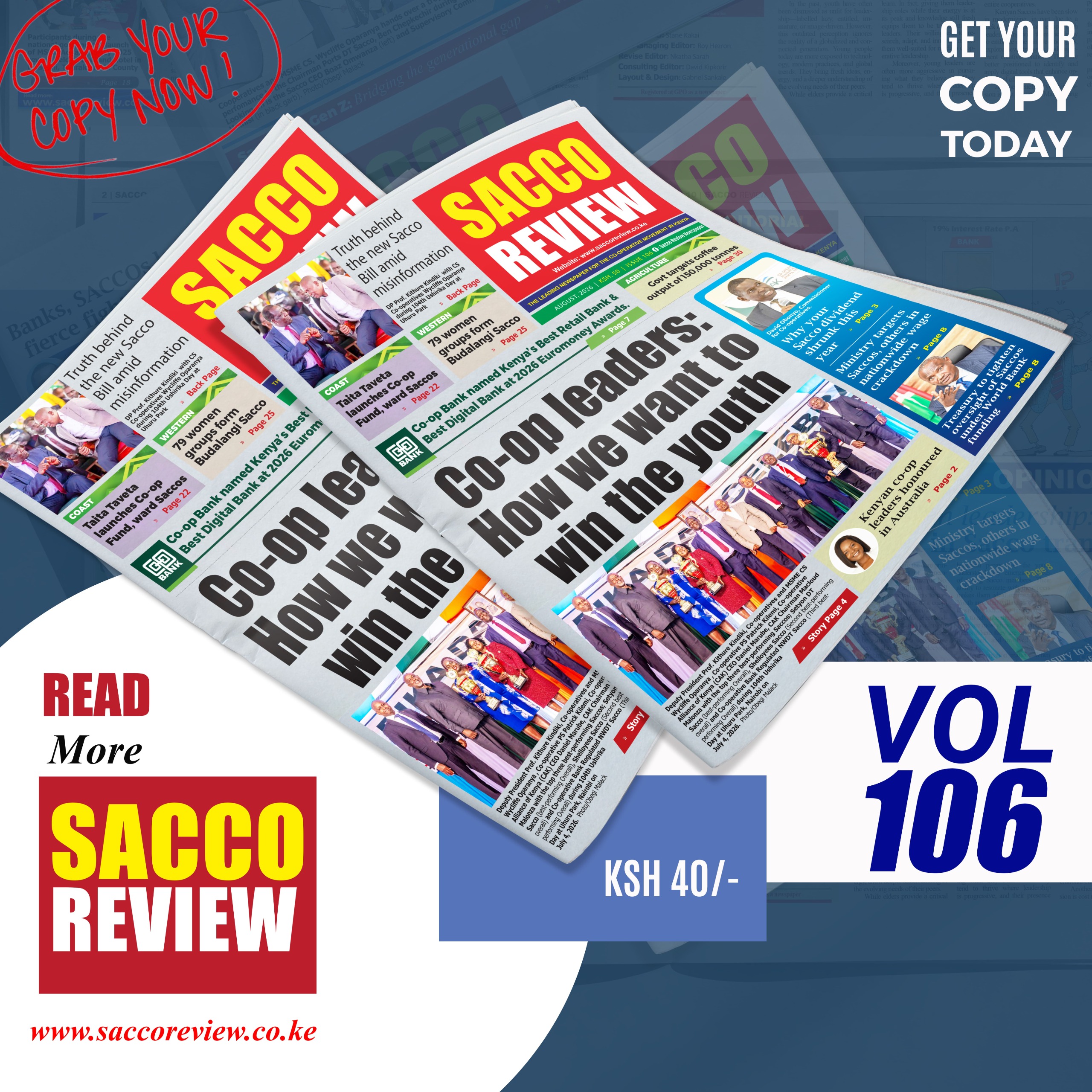
Stay ahead of the pack! Grab the latest Sacco Review newspaper!