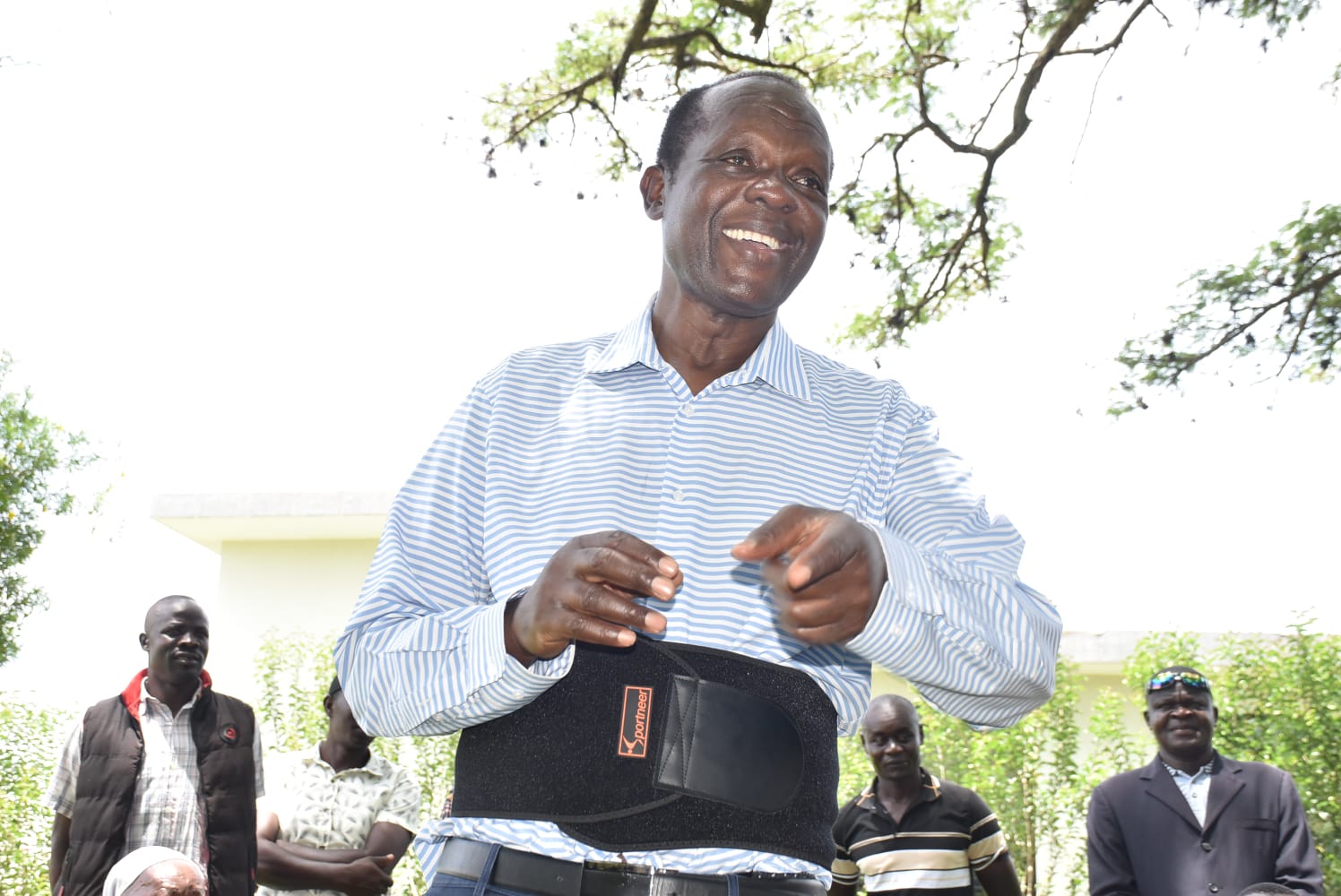
Former Cabinet Secretary Raphael Tuju has insisted that proper health safeguards must be put in place before a Nuclear power project that is scheduled for Siaya County takes effect.
Tuju noted that issues such as nuclear wastes, pollution and environmental safeguards must be taken into consideration first.
Speaking in Siaya while flanked by area Governor James Orengo, Tuju said many countries are now discarding the use of nuclear energy due to its inherent risks.
The former Rarieda Member of Parliament pointed out that some countries such as Japan have closed rivers for fishing after it was discovered that they had been polluted by radioactive materials.
He called for a broader environmental impact assessment report before the project takes root.
But Orengo however said the use of nuclear power depends on who is using it.
Orengo said countries such as Germany and France were ramping up use of nuclear energy.
The project is a 1,000 MW nuclear power plant and will be located in Rarieda, Siaya County, with construction beginning in 2027 and a projected cost of KSh 500 billion ($3.8 billion).
ALSO READ;
Govt, stakeholders launch initiative to boost forest conservation efforts in Kajiado
The project, which relocated from Kilifi due to opposition, aims to diversify Kenya’s energy mix and support industrialization, targeting 6,638 MW from nuclear by 2037.
The project is planned within Lwanda Kotieno in Rarieda, Siaya County, identified as a leading candidate site due to its proximity to Lake Victoria.
Construction is set to commence in 2027, with the facility intended to be operational by 2030.
The initial plant is expected to generate 1,000 MW, with long-term goals of up to 20,000 MW by 2040.
The project involves the Nuclear Power and Energy Agency (NuPEA) and partnerships with local academic institutions like Jaramogi Oginga Odinga University of Science and Technology.
The plant is essential for bolstering Kenya’s energy supply, which currently relies on hydro, geothermal, and solar, to support the Vision 2030 development agenda.
The project has faced scrutiny regarding environmental risks to Lake Victoria, the handling of radioactive waste, and potential community displacement.
Local leaders and elders have raised concerns about safety and the need for public participation, with some calling for alternative energy sources to be exhausted first.
ALSO READ;
High stakes as stakeholders review experts’ report on Sacco reforms
NuPEA is conducting stakeholder engagements with the Lake Region Economic Bloc (LREB) and local leaders to address safety and land concerns.
The government intends to leverage private sector funding to support the construction.
The project, which is considered high-risk, is required to undergo environmental, social, and regulatory approval processes in line with the Energy Act, 2019 and Environmental Management and Co-ordination Act (EMCA), 1999.
By Fredrick Odiero
You can also follow our social media pages on Twitter: Education News KE and Facebook: Education News Newspaper for timely updates.
>>> Click here to stay up-to-date with trending regional stories
>>> Click here to read more informed opinions on the country’s education landscape