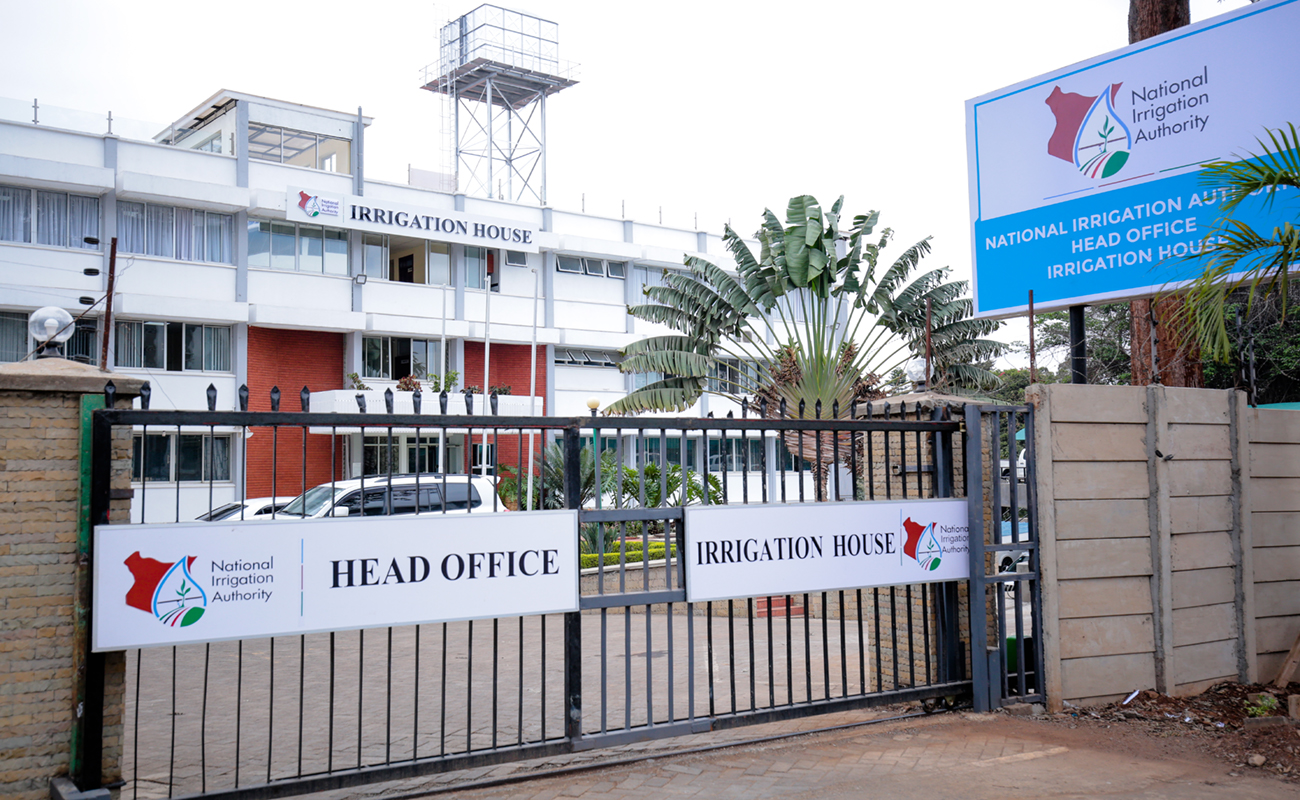
Members of the National Assembly’s Public Investments Committee on Commercial Affairs and Energy have directed the National Irrigation Authority (NIA) to urgently complete several delayed community irrigation projects, some of which have stalled for up to six years.
The concerns emerged during a committee session reviewing NIA’s financial records following queries raised by the Office of the Auditor General for the period between the 2018/2019 and 2024/2025 financial years.
Chaired by David Pkosing, the committee attributed the delays to a range of issues including payment challenges, land ownership disputes, and the authority’s failure to hand over completed projects to county governments.
Among the projects flagged were the Water for Household Project Phase II in Mwatate, rehabilitation works for Kerwa Dam in Mbeere South, the Kathanje Earth Dam in Tharaka Nithi County, and the Iganjo/Silanga Water Pan in Murang’a County.
Lawmakers also raised concerns over delays in rehabilitating major irrigation schemes such as the Bura Irrigation and Settlement Scheme and the Lower Nzoia Irrigation Scheme, as well as the slow completion of the Thiba Dam.
Pkosing noted that prolonged delays have deprived communities of essential water and irrigation services while also limiting employment opportunities. He emphasized the importance of completing and handing over the projects to relevant government agencies to ensure accountability and value for public funds.
“Engage host counties, especially where maintenance responsibilities lie, to ensure sustainability and proper service delivery,” Pkosing said.
ALSO READ:
Kenya launches World Agriculture Forum Council to drive AI‑powered farming transformation
The committee also highlighted governance and accountability concerns within NIA, including the failure to operationalize an internal Audit Management System. Despite a contract valued at KSh6.49 million and payments totaling over KSh5.5 million, the system remains unused.
Additionally, auditors flagged gaps in documentation, including missing ownership records and valuation details for property, plant, and equipment.
To address these issues, the committee recommended that NIA’s legal team collaborate with relevant government agencies to finalize ownership transfer agreements where necessary.
By Obegi Malack
Get more stories from our website: Sacco Review.
For comments and clarifications, write to: Saccoreview@
Kindly follow us via our social media pages on Facebook: Sacco Review Newspaper for timely updates
Stay ahead of the pack! Grab the latest Sacco Review newspaper!