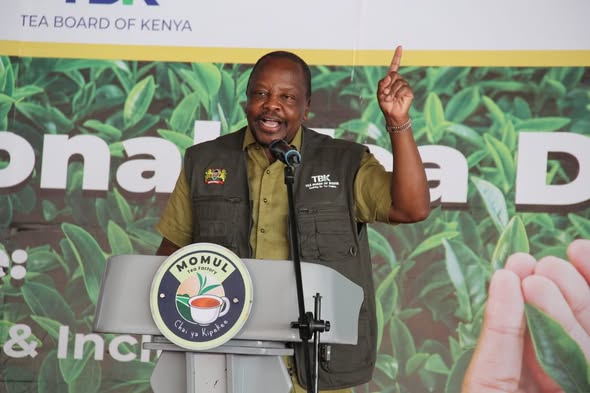
Agriculture Cabinet Secretary Mutahi Kagwe has defended the Tea Levy Regulations 2026, describing the measure as a strategic investment aimed at securing the long‑term competitiveness of Kenya’s tea industry.
Speaking on Thursday, May 21, 2026, Kagwe said the levy is not intended to burden farmers or businesses but to ensure that proceeds from tea exports are reinvested into marketing, branding, research, and value addition.
“This initiative is not intended to impose unnecessary burdens on tea farmers or all businesses but rather is intended to ensure that some of the proceeds from tea exports are ploughed back into the development, protection and competitiveness of the tea sector,” he stated.
Kagwe criticised governance lapses within some tea factories, accusing directors of mismanaging farmers’ money, engaging in reckless borrowing, and using court action to stall reforms. He argued that the levy would help restore accountability while strengthening oversight in the sector.
The CS praised tea’s role in supporting millions of livelihoods and earning foreign exchange, noting that Kenya remains a global leader in tea exports.
“Tea remains one of Kenya’s most strategic agricultural commodities and a key pillar of our economy. It supports millions of Kenyans directly and indirectly and remains among our leading foreign exchange earners,” he said.
ALSO READ:
Kagwe wants export of raw agricultural produce banned, pushes for value addition
The reforms introduce a 0.8 per cent export levy on tea, designed to fund global marketing, research and development, infrastructure in tea‑growing regions, and industry regulation. In addition, a 100 per cent levy on imported tea has been introduced as a protective measure to shield local producers.
Kagwe emphasised that the levy will be borne by exporters and importers, not farmers, effectively positioning it as a consumer‑side cost.
“For too long, Kenya has produced some of the best tea in the world, but invested too little in marketing it. That changes now,” Kagwe said.
The Tea Board of Kenya will launch an e‑commerce B2B marketplace, directly linking producers to global buyers and bypassing traditional trading bottlenecks. At the same time, Kenya is deepening trade diplomacy under frameworks such as the African Continental Free Trade Area (AfCFTA), securing value‑addition opportunities in markets like Egypt’s Alexandria Free Zone and expanding bilateral trade channels.
By Masaki Enock
Get more stories from our website: Sacco Review.
For comments and clarifications, write to: Saccoreview@
Kindly follow us via our social media pages on Facebook: Sacco Review Newspaper for timely updates
Stay ahead of the pack! Grab the latest Sacco Review newspaper!