- Traders win relief as the cargo benchmark is cut to Ksh2 million.
- New rules aim to ease cargo clearance while improving compliance.
- Lower rail charges are set to reduce import costs.
President William Ruto has directed the Kenya Revenue Authority (KRA) to lower the customs benchmark for general consolidated cargo to Ksh2 million, following talks with traders over rising import costs.
President Ruto held talks with representatives of traders and stakeholders in the consolidated cargo sector on Wednesday, September 2, 2026, at State House, Nairobi, following the disagreements over taxation, clearance and handling of consolidated imports.
Government and traders reach agreement
Following the consultations, the Government and traders reached an agreement to resolve the outstanding issues while strengthening compliance, transparency and accountability in the sector.
KRA will reduce the applicable benchmark for general consolidated cargo from Ksh2.5 million to Ksh2 million. Existing rates for ready-made garments, footwear and fabrics will remain unchanged, while the newly negotiated rates for air cargo will remain in effect.
The Advance Cargo Declaration requirement will also be removed to streamline cargo clearance and facilitate legitimate trade.
Conditions attached to the deal
The agreement will be implemented subject to several mutually agreed conditions.
KRA will develop and publish an exclusion list of goods that will not qualify for clearance under the general consolidated cargo framework, informed by the value and nature of the goods, applicable specific tax rates, excisable goods and other customs and revenue considerations. The government says this will give traders and consolidators certainty on which goods qualify for consolidation.
All cargo consolidators will be vetted and registered afresh by KRA and required to submit a comprehensive list of the individual traders and importers whose goods they consolidate. The deadline for completing this registration, vetting and disclosure process is October 15, 2026.
The Government will also facilitate the establishment of designated de-consolidation centres in Nairobi and Mombasa, intended to allow consolidated cargo to be separated efficiently for individual traders, improve handling and clearance, and cut logistical and administrative costs.
READ ALSO:
Nasukuta Abattoir gets fresh push from Office of the President delegation
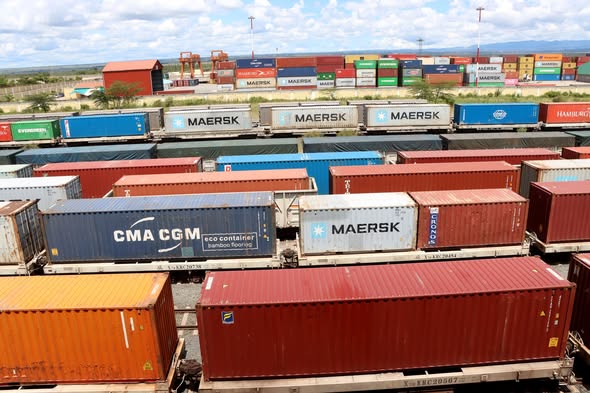
As an immediate measure to lower the cost of moving goods, Kenya Railways will cut the charge for transporting cargo from the Inland Container Depot (ICD) to the Bomaline De-consolidation Centre from Ksh58,000 to Ksh10,000, with immediate effect.
Wider trade policy commitments
Beyond the cargo benchmark, the Government committed to expanding existing legislation to reserve retail trade and specified lower-level jobs for Kenyans, while clearly defining areas open to foreign participation.
Foreign investment bringing capital, technology, value addition and quality jobs will continue to be encouraged.
The National Government will also work with county governments to create a conducive business environment for traders, leveraging the County Aggregation and Industrial Parks (CAIPs) programme, while protecting legitimate businesses from harassment, intimidation and disruption.
A multi-stakeholder committee chaired by the Cabinet Secretary for Investments, Trade and Industry will be constituted, bringing together KRA, relevant government agencies, traders, consolidators and other stakeholders. The committee will oversee implementation of the agreed measures, address emerging issues and report quarterly to the President.
The Government said it recognises traders, importers, manufacturers, logistics operators and micro, small and medium enterprises (MSMEs) as an essential pillar of Kenya’s economy, describing the agreement as a new partnership built on consultation, predictability, compliance and mutual responsibility.
Traders and consolidators, in turn, are expected to comply with customs and tax requirements and operate within the agreed framework.
By Benedict Aoya
Get more stories from our website: Sacco Review.
For comments and clarifications, write to: Saccoreview@
Kindly follow us via our social media pages on Facebook: Sacco Review Newspaper for timely updates
Stay ahead of the pack! Grab the latest Sacco Review newspaper!