The Agriculture and Food Authority (AFA) has identified the cotton value chain as a critical engine for job growth, particularly for the youth, and is urging Kenyans to embrace locally produced fabrics over imports.
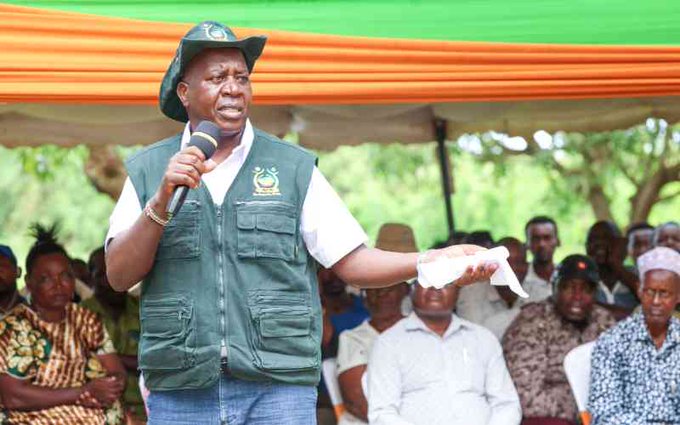
Speaking during a stakeholders’ meeting in Lamu, AFA Chairman Cornelly Serem challenged citizens to rethink their consumption habits. “When you are asking the government to create jobs for your children while you are wearing clothes imported from Turkey, China or the UK, are you really serious?” Cornelly posed.
The Kenya Institute of Public Policy Research and Analysis (KIPPRA), cotton farming currently supports about 140,000 smallholder farmers, yet the industry is operating at only 10 percent of its potential. Chronic seed cotton shortages and operational constraints have left ginneries and mills running far below capacity, undermining the sector’s ability to meet domestic demand.
Despite these challenges, the cotton value chain already sustains a wide range of enterprises. KIPPRA’s 2025 research notes that 170 garment companies and 75,000 Small and Micro Enterprises (SMEs) are engaged in design, tailoring, sewing, and quality control. In addition, 29 Export Processing Zones (EPZ) units employ 37,750 people in packaging, logistics, and marketing. Overall, the industry provides 21,000 jobs in the formal sector and 31,000 in the informal sector, underscoring its potential as a major employer if fully harnessed.
ALSO READ:
Understanding how Sacco dividends and rebates are calculated
Industry leaders argue that schools and government institutions can play a pivotal role in expanding the reach of local textiles. Tejal Dhodhia, Chief Executive Officer of Thika Cloth Mills, emphasized that learning institutions should stop importing fabrics for school uniforms and instead source locally manufactured materials. “Doing so would create employment opportunities for students after graduation and strengthen the textile industry,” she said.
Dhodhia further urged politicians to lead by example by sourcing campaign apparel from Kenyan textile firms. She noted that Thika Cloth Mills already produces many of the uniforms worn by Kenya’s disciplined forces, demonstrating the capacity of local manufacturers to meet large‑scale demand.
“Many uniforms worn by Kenya’s disciplined forces are produced by Thika Cloth Mills,” she added, expressing gratitude to the government for recent contracts but calling for broader support across sectors.
By Frank Mugwe
Get more stories from our website: Sacco Review.
For comments and clarifications, write to: Saccoreview@
Kindly follow us via our social media pages on Facebook: Sacco Review Newspaper for timely updates
Stay ahead of the pack! Grab the latest Sacco Review newspaper!