- KDC has launched a green financing strategy, placing co-operatives and Saccos at the centre of climate finance.
- KDC plans to establish a dedicated green fund offering debt and equity to sustainable businesses.
- Its SAFER project has financed 41,741 MSMEs through 11 financial institutions, mainly Saccos.
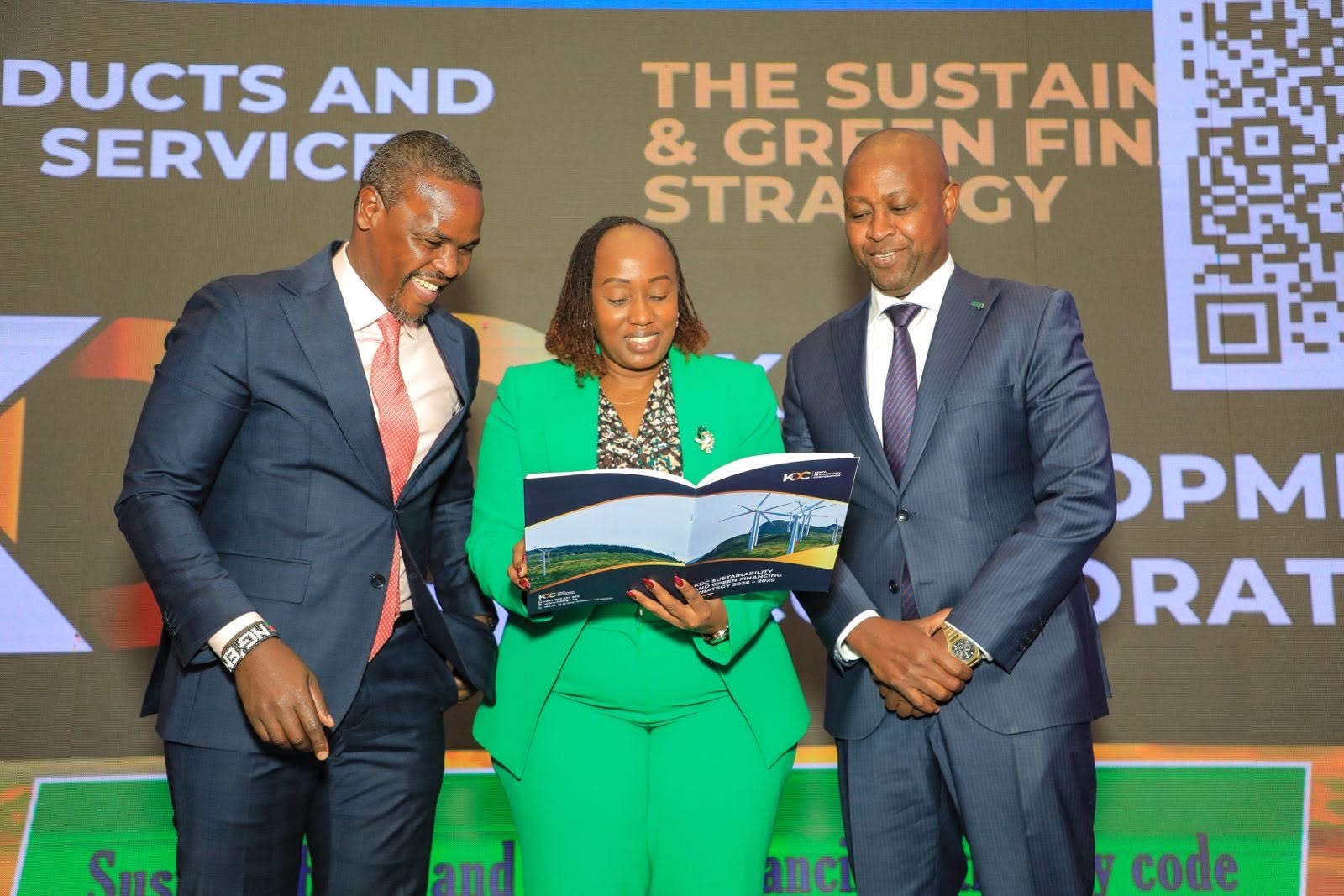
Kenya Development Corporation (KDC) has launched a new Sustainability and Green Financing Strategy alongside fresh financial products, having already mobilised USD42 million (approximately Ksh 5.4 billion) for green investments and positioning co-ops and Saccos as key partners in bridging the country’s widening climate finance gap.
The strategy was unveiled at an event in Nairobi led by Environment and Climate Change PS Eng. Festus Ng’eno, alongside KDC Director General Norah Ratemo. It integrates climate considerations, sustainability standards and green investment principles into the corporation’s development finance activities, embedding them across investment decisions, product development, risk management and stakeholder engagement, rather than confining them to a specialised sustainability team.
According to global climate change experts cited at the launch, the world needs about $4 trillion annually to combat emerging climate change challenges, while Kenya alone requires roughly $62 billion every year. Out of that figure, the National Treasury can only raise about 13 percent of the necessary resources, leaving an 87 percent funding gap. Kenya is also estimated to be losing between 3 and 5 percent of its Gross Domestic Product to climate change.
Consequently, the country’s Development Finance Institutions (DFIs) are being called upon to step in and prioritise green initiatives. KDC, the country’s single largest DFI, has announced plans to establish Kenya’s first dedicated green fund in the coming months, targeting environmentally friendly businesses that have long lacked access to funding.
The National Treasury said funding has been the missing link, and that the entry of cooperative societies and DFIs will play a critical role in accelerating growth and providing a platform for more institutions to contribute to the country’s development.
Saccos are already central to KDC’s on-lending model. Under the World Bank-backed Supporting Access to Finance and Enterprise Recovery (SAFER) project, which KDC implements, 11 participating financial institutions, primarily Saccos, have provided financing that benefited 41,741 micro, small and medium enterprises (MSMEs) as at the end of November 2025.
Of these, 38.7 percent were women-owned businesses and 4.2 percent supported the green economy, with 27,330 jobs created in the process.
READ ALSO:
Saccos access these funds through KDC at a rate of about eight percent and are restricted from on-lending to small businesses at more than 11 percent, a cap designed to keep credit affordable for MSMEs.
Ratemo said the corporation is seeking accreditation with the Green Climate Fund (GCF) to expand its capacity to mobilise resources. The new green fund will provide both debt and equity financing to businesses adopting sustainable practices, a dual approach Ratemo said was necessary given how highly leveraged many businesses already are.
KDC and the World Bank have been advancing a Green Investment Fund, with the global lender channelling $43 million (Ksh 5.5 billion) toward SME financing in electric mobility and transport, energy-efficient and green buildings, sustainable agriculture, and waste management.
Ratemo said KDC is delivering tangible results through the Kenya Jobs and Economic Transformation (KJET) project and SAFER by crowding in private capital, strengthening financial intermediaries, and expanding access to patient and affordable finance for SMEs. Under both initiatives, KDC has enhanced its Environmental and Social Management Systems (ESMS) to ensure compliance with national regulations and international good practice.
PS Ng’eno said the shift reflects a broader national mindset change, with sustainability increasingly treated as an economic priority rather than solely an environmental concern.
By Benedict Aoya
Get more stories from our website: Sacco Review.
For comments and clarifications, write to: Saccoreview@
Kindly follow us via our social media pages on Facebook: Sacco Review Newspaper for timely updates
Stay ahead of the pack! Grab the latest Sacco Review newspaper!