
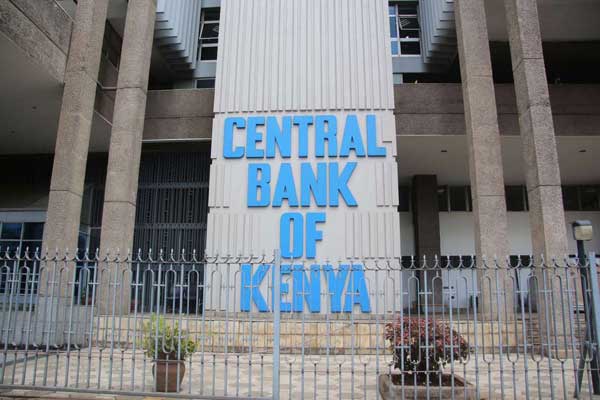
Kenya’s financial sector remained resilient in 2024 and the first half of 2025, even as lending slowed and credit risks increased, according to the latest Financial Sector Stability Report released by the Central Bank of Kenya (CBK).
The sector comprised thirty-eight commercial banks, one mortgage finance institution, and fourteen deposit-taking microfinance banks (MFBs), all under CBK regulation.
The number of digital credit providers (DCPs) licensed by the CBK also grew significantly following the enactment of new regulatory laws. Licensed DCPs rose from 52 in mid-2024 to 85 in the first half of 2025.
Other financial institutions regulated by CBK include credit reference bureaus, foreign exchange bureaus, money remittance firms, representative offices of foreign banks, and mortgage refinance companies.
Despite a challenging macroeconomic environment, the banking sector maintained stability and strong capital buffers in 2024. However, lending remained subdued even after monetary policy easing, as asset quality continued to weaken. Banks tightened lending standards in response to elevated risk premiums, rising credit risks, and increasing operational risks particularly those linked to cybercrime.
The sector’s capital position strengthened over the year, with core capital rising from Ksh 893.63 billion in December 2023 to Ksh 989.2 billion in December 2024. Total capital increased from Ksh 1,075.80 billion to Ksh 1,118.7 billion over the same period. Correspondingly, the ratios of Core Capital and Total Capital to Total Risk-Weighted Assets improved to 18.6 percent and 19.6 percent, respectively well above the statutory minimums of 10.5 percent and 14.5 percent.
ALSO READ:
Moyale residents urge govt to fast track reopening of Hillo gold mine
CBK noted that the improvement reflects a continued build-up of capital as banks position themselves to comply with the Ksh 3 billion minimum capital requirement by December 2025.
However, the sector experienced a contraction in total net assets, which declined by 1.6 percent from Ksh 7,690.7 billion in 2023 to Ksh 7,568.0 billion in 2024. This was primarily driven by a 2.7 percent drop in net loans and advances as banks tightened credit standards. Loans and advances accounted for nearly half of the sector’s total assets.
External balances also fell sharply, with funds due from institutions abroad decreasing from Ksh 516.2 billion in 2023 to Ksh 380.24 billion in 2024, largely due to the strengthening of the Kenya Shilling against the US Dollar. Meanwhile, banks increased their investment in government securities by 12.3 percent, rising from Ksh 1,882.9 billion to Ksh 2,114.75 billion.
Aggregate liabilities also declined, driven by reductions in balances due to the Central Bank, local banks, borrowed funds, and customer deposits. Customer deposits, which form the backbone of bank funding, fell by 2.1 percent from Ksh 5,595.8 billion in December 2023 to Ksh 5,480.8 billion in December 2024.
The sector’s asset composition continued to shift in response to policy and economic shocks. Before the COVID-19 pandemic, banks had faced the 2015–16 financial stress and the introduction of the 2016 interest rate cap, which forced them to rely more on government securities. The repeal of the cap in 2019 revitalized private-sector lending, supported by CBK-approved risk-based pricing models.
The onset of COVID-19 heightened credit risks again, prompting banks to increase investments in government securities. However, rising public debt levels and higher interest rates between 2022 and 2024 driven by monetary tightening to curb inflation resulted in reduced holdings of government securities to avoid valuation losses. Banks instead increased lending to take advantage of higher interest rates and relatively stable deposit costs.
Economic conditions remained tight through 2024, limiting households’ and firms’ ability to borrow and repay loans. This led to a rise in non-performing loans (NPLs), with the NPL ratio increasing from 15.6 percent in December 2023 to 17.1 percent in December 2024. The contribution of performing loans to overall loan growth fell sharply from 9.8 percent in 2023 to 4.7 percent in 2024, reflecting reduced credit uptake and slowed economic activity.
Analysts warn that elevated credit risks, high interest rates, delayed government payments, and an unfavorable business environment will continue to pose challenges for the sector in the short term. Nonetheless, CBK maintains that the banking industry remains adequately capitalized and well-positioned to withstand shocks and support economic recovery.
By Obegi Malack
Get more stories from our website: Sacco Review.
For comments and clarifications, write to: Saccoreview@
Kindly follow us via our social media pages on Facebook: Sacco Review Newspaper for timely updates
Stay ahead of the pack! Grab the latest Sacco Review newspaper!