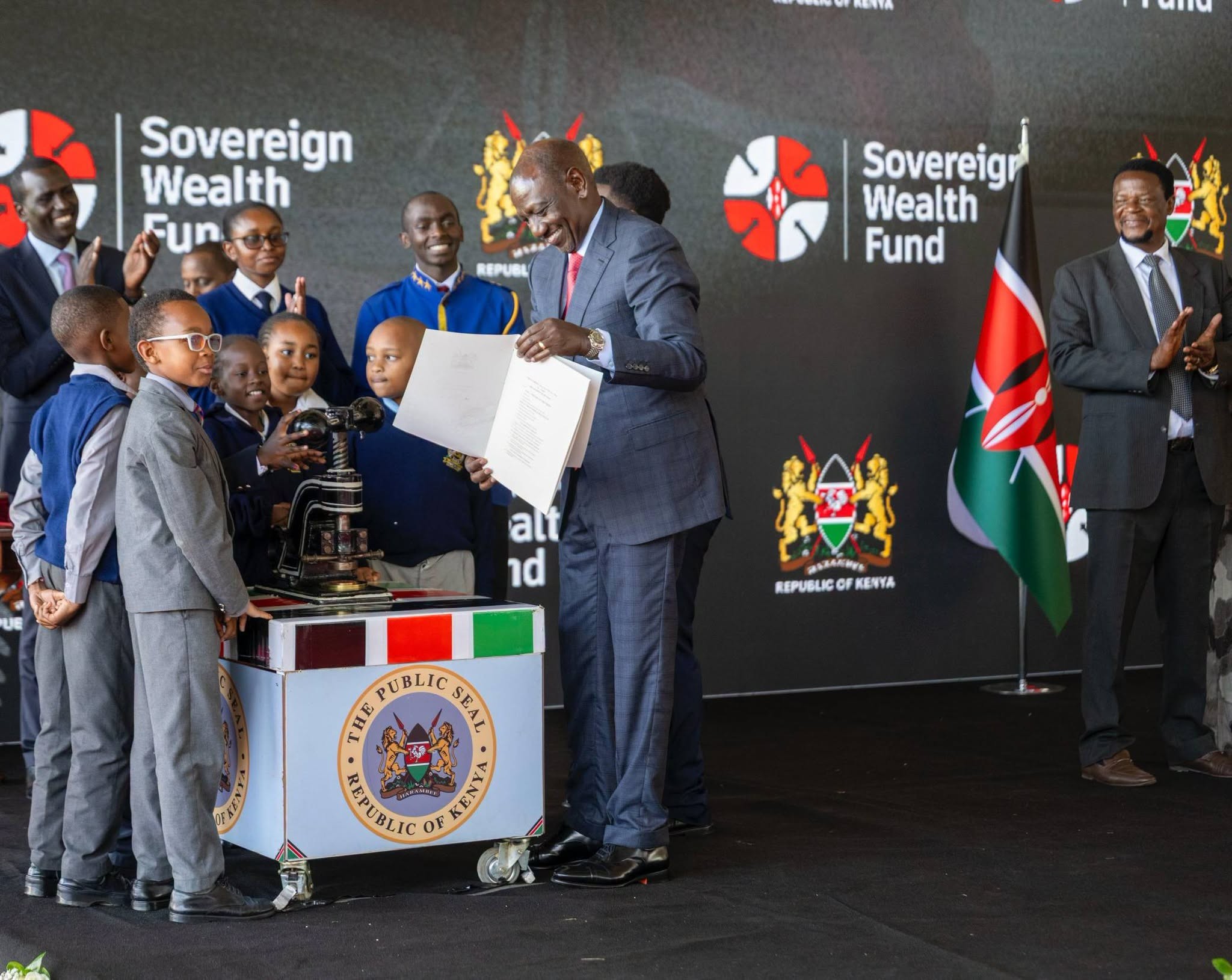
President William Ruto has signed the Sovereign Wealth Fund Act into law, marking a new chapter in Kenya’s economic journey. The name sounds technical and complicated, but the idea behind it is actually quite simple. It is about saving today so that the country can have a better tomorrow.
Imagine a family that receives an unexpected windfall. It could be an inheritance, a large bonus or the sale of a valuable piece of land. A wise family does not spend all the money at once. Instead, it pays urgent bills, invests some of the money and saves the rest for future needs. The investments continue to earn income, helping not only the parents but also their children and grandchildren.
That is exactly what a sovereign wealth fund does, except that instead of a family, it is a country doing the saving.
A sovereign wealth fund is a government-owned investment fund. The government puts money into the fund instead of spending every shilling immediately. The money is then invested in different businesses, shares, bonds, property and other income-generating projects. As these investments grow, they earn profits. Those profits can later be used to support the country’s development.
Why is this important?
Every country has resources that may not last forever. Kenya has minerals and has discovered oil in some parts of the country. These resources can generate huge amounts of money, but once they are exhausted, they are gone forever. If all the income from these resources is spent immediately, future generations will inherit empty mines and dry oil wells. They will have nothing left to benefit from.
A sovereign wealth fund changes that story. Instead of consuming everything today, the country saves and invests part of the income. Years later, even after the natural resources are gone, the investments will still be earning money for Kenyans.
Think of it like planting a fruit tree instead of eating all the fruits you harvest. If you plant more trees, they continue producing fruit year after year. The harvest becomes sustainable.
ALSO READ:
https://saccoreview.co.ke/laikipia-county-disburses-ksh-100-million-to-boost-cooperative-societies-growth/
The new law creates three separate funds, each with a different purpose.
The first is the Future Generations Fund, also called the Urithi Fund. This is the country’s savings account for tomorrow. A portion of money earned from petroleum and mineral resources will be deposited here. The purpose is to ensure that future Kenyans also benefit from resources being extracted today.
The second is the Stabilisation Fund. Life is unpredictable, and so are economies. Countries sometimes face droughts, pandemics, wars, financial crises or sudden drops in the prices of exports. During such difficult times, governments often borrow heavily to keep services running. A stabilisation fund acts like an emergency savings account. Instead of rushing to borrow money whenever there is a crisis, the government can use part of these savings to cushion the economy.
The third is the National Infrastructure Fund. Kenya still needs more roads, dams, hospitals, schools, railways, electricity projects and digital infrastructure. Investing in such projects creates jobs, supports businesses and improves people’s quality of life. The fund will help finance some of these important national projects.
Many people have asked whether Kenya is the first country to establish such a fund. The answer is no.
Some of the world’s richest countries have sovereign wealth funds. Norway is perhaps the best-known example. The country saves much of the money it earns from oil and invests it across the world. Today, that fund is worth trillions of dollars and helps support Norway’s economy without depending entirely on oil.
Countries such as Singapore, Saudi Arabia, the United Arab Emirates and Botswana also operate similar funds. Their experiences show that saving and investing national wealth can provide long-term economic security.
However, simply creating a sovereign wealth fund does not guarantee success.
Everything depends on how it is managed. If leaders misuse the money, make poor investments or interfere for political reasons, the fund could fail. This is why transparency is so important. Kenyans need to know how much money goes into the fund, where it is invested, how much profit it earns and how the money is eventually spent.
Regular audits, parliamentary oversight and professional management will be essential. The fund must belong to all Kenyans, not to politicians or government officials.
ALSO READ:
https://saccoreview.co.ke/amr-threat-could-lock-kenya-out-of-global-meat-markets-cs-kagwe-warns/
Some Kenyans have also questioned whether this is the right time to establish such a fund. The country is already struggling with a heavy public debt, high taxes and pressure on the cost of living. They argue that Kenya should first reduce its debts before saving money for the future.
Others see things differently. They argue that if Kenya waits until every financial problem has been solved, the country may never start saving at all. Just as families continue saving even while paying school fees and mortgages, governments too can save while addressing today’s challenges.
Both sides raise important points. The real test will not be the existence of the fund but whether it is managed honestly and wisely.
For ordinary Kenyans, the Sovereign Wealth Fund should not be viewed as money that will immediately lower food prices or reduce taxes. Its benefits are mostly long-term. It is an investment in the country’s future rather than a quick solution to today’s economic problems.
The new law is therefore more than just another Act of Parliament. It represents a change in thinking. Instead of living from one budget to the next, Kenya is attempting to build wealth that can serve generations to come.
Whether this dream becomes reality will depend on discipline, accountability and good leadership. If managed properly, the Sovereign Wealth Fund could become one of Kenya’s greatest financial assets. If mismanaged, it could become another costly missed opportunity.
The law has now been signed. The harder task begins now—ensuring that every shilling placed in the fund truly works for the benefit of both today’s citizens and tomorrow’s generations.
By Ashford Kimani
Ashford is a teacher of English and Literature who writes about education and social affairs.
Get more stories from our website: Sacco Review.
For comments and clarifications, write to: Saccoreview@
Kindly follow us via our social media pages on Facebook: Sacco Review Newspaper for timely updates
Stay ahead of the pack! Grab the latest Sacco Review newspaper!