
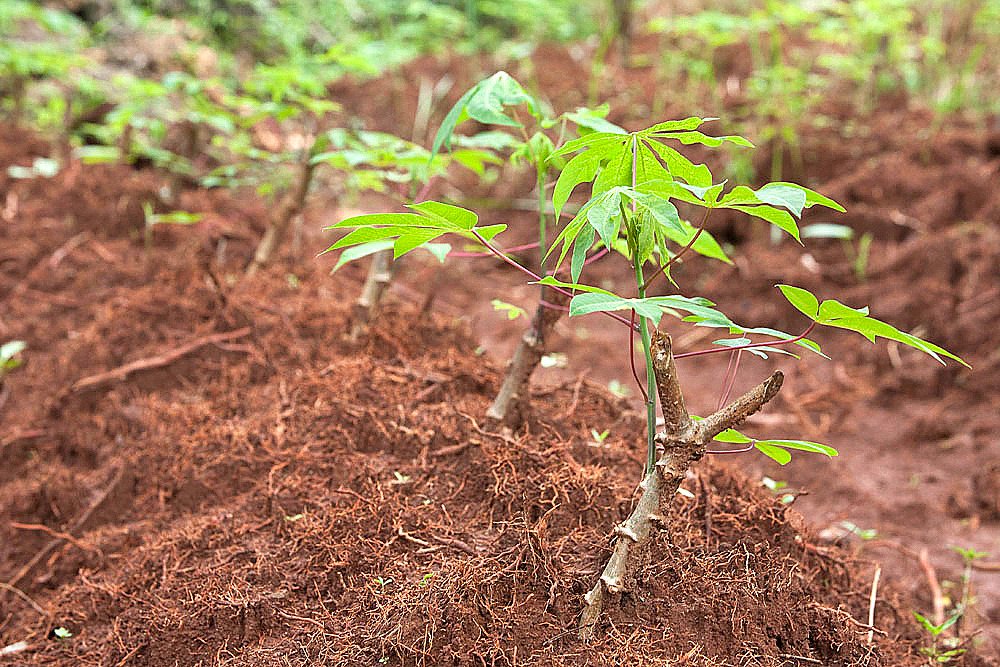
More than 4,000 farmers in Nakuru County have undergone training in proper agronomical practices aimed at increasing cassava production, in a strategic effort to promote the crop as a climate-resilient solution for food security and commercialisation through value addition.
The training, conducted under the Transforming African Agricultural Universities to Meaningfully Contribute to Africa’s Growth and Development (TAGDev) programme, has equipped farmers not only with modern farming techniques but also with access to clean, disease-resistant, early-maturing cassava planting materials. In addition, participants are benefiting from improved extension services to support cassava cultivation, a crop widely consumed as a staple in rural households across Eastern Africa.
According to the project’s Lead Investigator, Prof. Richard Mulwa, the 10-year initiative, launched in 2023 under TAGDev’s Agri-food System and Entrepreneurship Consortium (ASEC), is being implemented by Egerton University in collaboration with the Regional Universities Forum for Capacity Building in Agriculture (RUFORUM) and the Mastercard Foundation.
Prof. Mulwa noted that Kenya currently produces approximately one million tonnes of cassava annually, significantly below the three million tonnes required to meet rising demand. He expressed concern that despite cassava’s resilience to drought and its ability to thrive in marginal soils—qualities that make it a vital buffer against climate change—its contribution to Kenya’s national food basket remains underdeveloped.
ALSO READ:
Public has until April 24, to submit views on Sacco Amendment Bill
He emphasized that the project is focused on repositioning cassava as both a food security crop and a commercial commodity. As part of this effort, demonstration plots have been established to showcase improved farming practices, while the Egerton-Hub is supporting youth-led startups engaged in cassava commercialisation through incubation programmes.
The initiative also extends training to students from tertiary institutions, women and youth groups, and farmer organisations. These groups are being equipped with skills across the cassava value chain, including production, processing, marketing, and breeding of cassava-based products.
So far, the project has identified and documented 23 cassava varieties suitable for cultivation in Nakuru County. This work is contributing to the development of an extension manual and strengthening capacity among processors in food safety and quality standards to enhance market access.
A Professor of Horticulture specialising in biotechnology, sustainable agriculture, and community-based research, Prof. Mulwa underscored that the initiative aims to shift perceptions of cassava from a subsistence crop to a high-value enterprise, with strong potential for commercial product development.
“We have skilled and supported individuals and farmer groups in the bulking of cassava planting materials to boost production,” he said.
Speaking at a demonstration farm in Njoro, Prof. Mulwa added that the project is designed to create employment opportunities, enhance food and nutrition security, and improve the quality, productivity, and marketability of cassava both locally and internationally.
He further highlighted the project’s market-oriented approach, noting that cassava farmers are being actively linked to potential markets. In the long term, the initiative is expected to stimulate the growth of cottage industries in cassava-growing regions across the country.
By Juma Ndigo
Get more stories from our website: Sacco Review.
For comments and clarifications, write to: Saccoreview@
Kindly follow us via our social media pages on Facebook: Sacco Review Newspaper for timely updates
Stay ahead of the pack! Grab the latest Sacco Review newspaper!