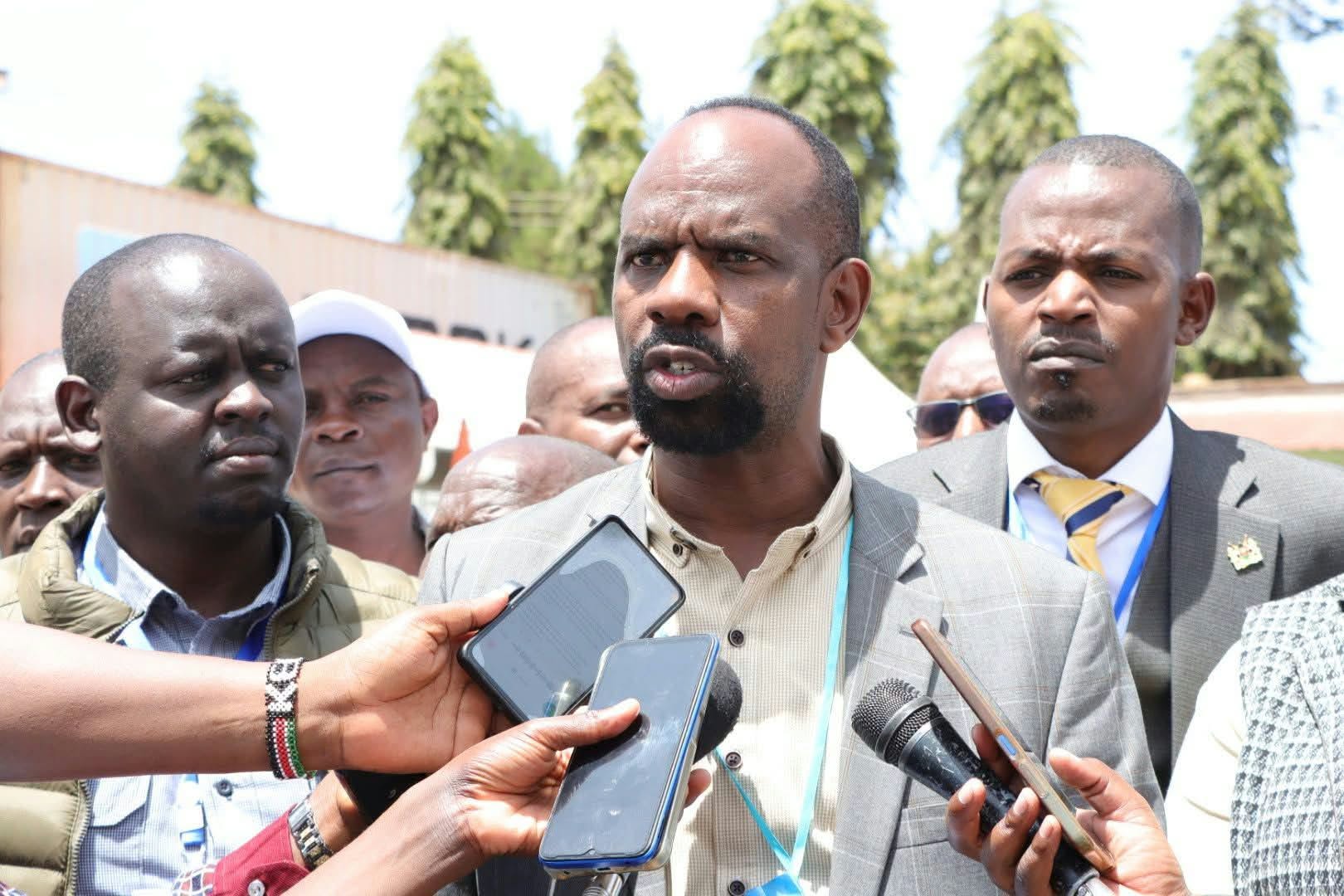

- PS Kimotho calls for farm data to help banks assess farmers for loans
- Government data systems could open new financing options for small farmers
- Irrigation firms urged to prepare for a planned 2027 equipment rollout
Small farmers in Kenya could get loans more easily if banks looked at how their farms perform, instead of asking for land or property as security. That is the message Principal Secretary (PS) for Irrigation Ephantus Kimotho delivered in Nairobi.
He spoke at the Eastern and Southern Africa Private Sector Forum on Irrigation, where he opened a session on the “missing middle”. This is the group of farmers and farm businesses that are too big for tiny loans but too small to interest most banks. The session looked at how to get affordable loans to them.
Kimotho said most small farmers do not own property that banks accept as security. As a result, many are turned away even when their farms make money. He suggested that banks should instead check how much a farmer grows, sells and earns.
According to him, the information already exists. Government offices, banks, mobile money platforms and technology companies all keep records on farmers. However, these records are kept separately. He said they should be brought together and used carefully.
“Significant farmer data already exists across government, financial institutions, mobile platforms and private-sector technology providers. The challenge is to connect and responsibly utilise this information to support better financing decisions,” he said.
With this data, a bank could see what a farmer produces, what irrigation system they use, who buys their crops and how much money comes in. This would help the bank judge whether the farmer can repay a loan. In turn, lending to small farmers would become less risky and cheaper to manage. Kimotho added that phone apps and digital platforms can help with this.
READ:
He also had a message for companies that sell irrigation equipment. He asked them to talk to government, lenders and farmers early, since a rollout is planned for April 2027. They should also find out what farmers can afford and are willing to pay, and consider offers that encourage more farmers to buy.
On the lenders’ side, Kimotho spoke about tools that share the risk of lending. These include guarantees and blended finance, which mixes public and private money. Such tools can give private investors the confidence to put money into irrigation. He described irrigation as a good investment, because it raises harvests, increases household income and helps farmers cope with changing weather.
Still, he warned that loans alone are not enough. Farmers also need training, suitable equipment and reliable buyers for their crops. Without these, they may not earn enough to pay back what they borrow. He therefore called for a simpler system that moves cheap loans and guarantees quickly to farmers and worthwhile irrigation projects.
Kimotho said the Government will keep working with development partners and private companies to raise money for irrigation. The goal, he said, is to irrigate more land, improve food security and raise farmers’ incomes.
By Benedict Aoya
Get more stories from our website: Sacco Review.
For comments and clarifications, write to: Saccoreview@
Kindly follow us via our social media pages on Facebook: Sacco Review Newspaper for timely updates
Stay ahead of the pack! Grab the latest Sacco Review newspaper!