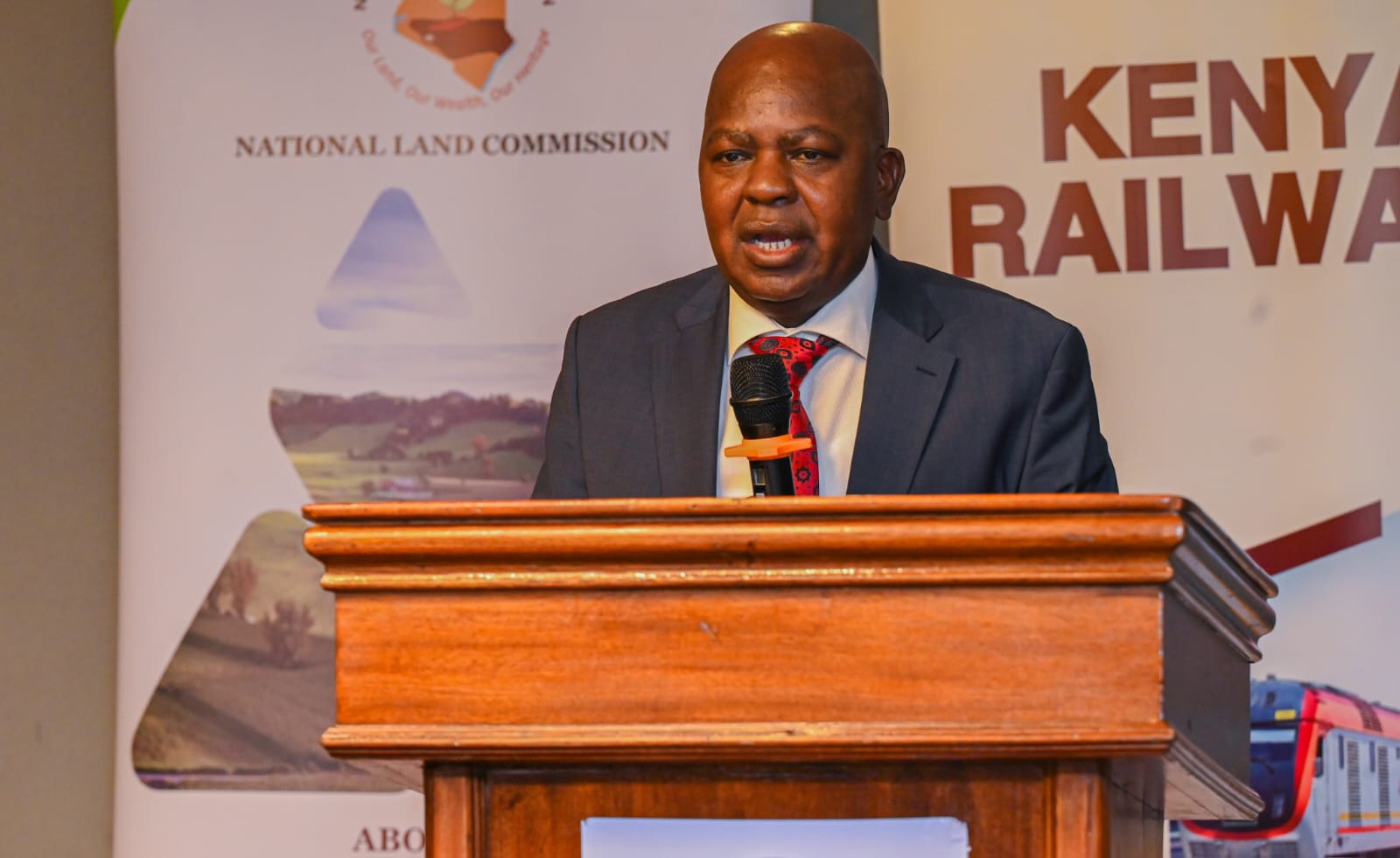
Kenya Railways has confirmed that construction of the Standard Gauge Railway (SGR) Phase 2B and 2C, stretching from Naivasha through Kisumu to Malaba, will officially begin on March 20. Managing Director Philip Mainga announced the multibillion-shilling project during a high-level stakeholder meeting in Kisumu, attended by the National Lands Commission, Governor Anyang’ Nyong’o, MPs, MCAs, government officials, and technical experts. President William Ruto is expected to preside over the groundbreaking ceremony.
Mainga said preliminary activities are already underway, with preparations aligned to the March timeline. A top priority before construction begins is the identification and compensation of Project Affected Persons (PAPs) along the 264-kilometre main line and the 8.6-kilometre branch connecting to Kisumu Port. The project requires approximately 5,000 acres of land. He urged residents to ensure they have valid identification and active bank accounts, noting that documentation gaps have caused delays in past projects.
NLC Director Joel Ombati assured that due diligence will guarantee fair compensation based on prevailing market rates, with Kisumu County recording the highest number of affected persons. To speed up the process, the commission will deploy a digital platform to map parcels and collect ownership data, aiming to complete compensation within eight months.
ALSO READ:
Governor Mutuma pledges revival of debt‑stricken Afya Millers cooperative enterprise
Phase 2B will feature seven stations, including intermediate stops at Mulot, Narok, Bomet, Sotik, Sondu, and Ahero, with a main terminus in Kisumu West. Kisumu County will host two passenger stations and two freight stations at Kibos and Kodiaga. The line will include 79 bridges covering 43 kilometres, eight tunnels spanning 14.26 kilometres, and 376 culverts stretching about seven kilometres. Passenger trains will run at 120 km/h, while freight trains will operate at 80 km/h, with capacity for trains carrying up to 4,000 tonnes.
Governor Nyong’o described the railway as more than a transport upgrade, calling it an opportunity to reshape the regional economy. He said extending the line to Kisumu and onwards to Malaba could lower logistics costs, stimulate industrial growth, expand agricultural value chains, and attract investment in warehousing, cold storage, fisheries, and manufacturing. He emphasized Kisumu’s strategic location on Lake Victoria, positioning it as a multimodal hub integrating rail, lake, and road transport, thereby strengthening Kenya’s competitiveness within the East African trade network.
ALSO READ:
Local MPs voiced strong support for the project. James Onyango K’oyoo of Muhoroni pledged political backing and urged continuous community engagement. Shakeel Shabir of Kisumu East called for priority employment of local youth during construction, while Rosa Buyu of Kisumu West cautioned that compensation must be handled carefully to avoid conflict. Nyanza Regional Commissioner Flora Mworoa said the railway is expected to boost agro-processing, manufacturing, and cross-border trade, reinforcing Kisumu’s role as a regional gateway.
Once completed, the Naivasha-Kisumu line will enhance cargo movement from the Port of Mombasa through Nairobi and Naivasha to the lake region, enabling goods to move by lake and road into Uganda, Tanzania, Rwanda, and South Sudan. The planned extension to Malaba will further cement Kenya’s position as a logistics hub within the East African Community.
By Fredrick Odiero
Get more stories from our website: Sacco Review.
For comments and clarifications, write to: Saccoreview@
Kindly follow us via our social media pages on Facebook: Sacco Review Newspaper for timely updates
Stay ahead of the pack! Grab the latest Sacco Review newspaper!