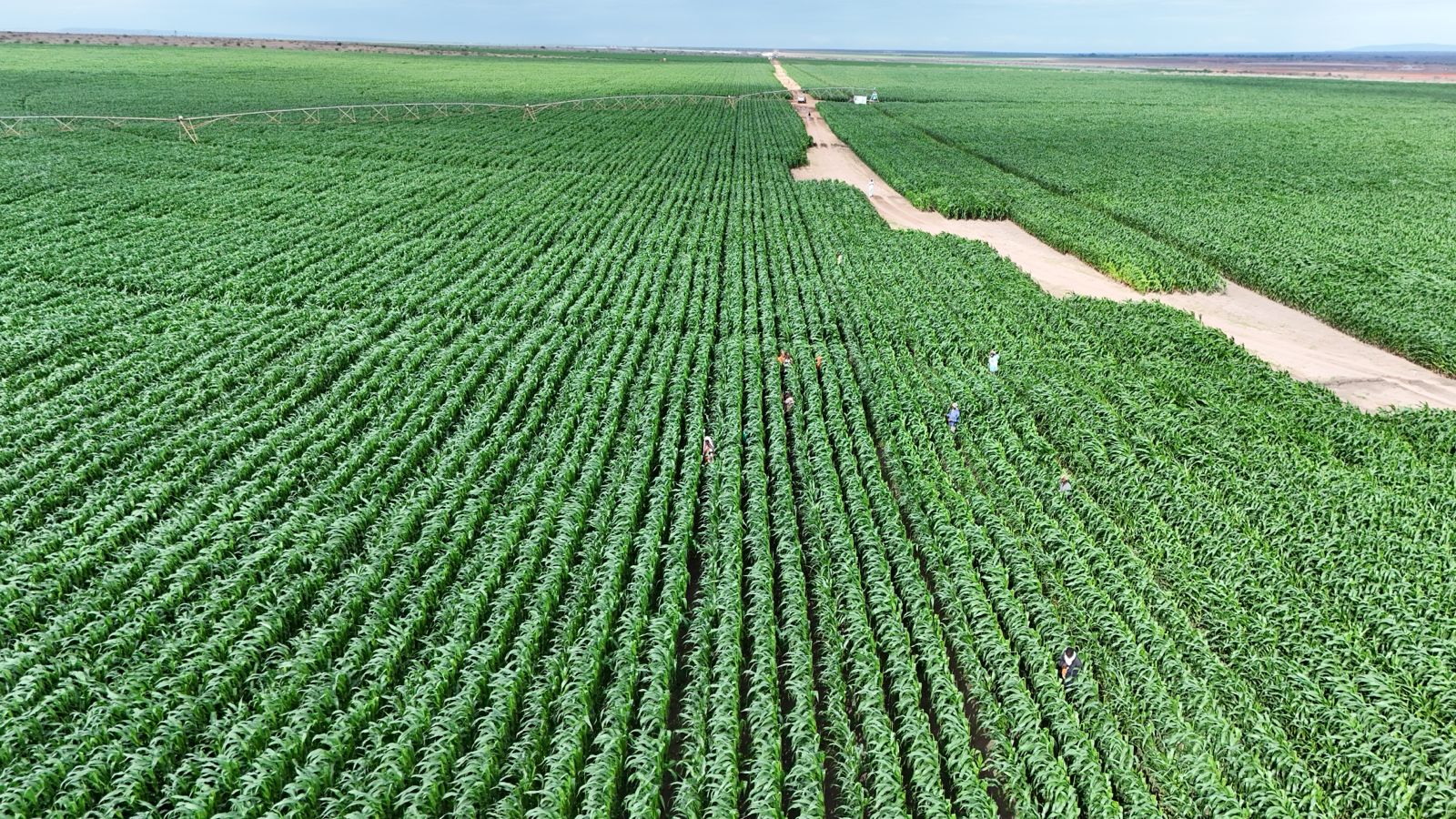
The government through the National Irrigation Authority, (NIA) and the Ministry of Water, Sanitation and Irrigation is spearheading the Galana Kulalu Food Security Project which aims to transform previously arid land into fertile, food-producing zones bolstering Kenya’s food security.
The NIA’s primary role has been to construct essential irrigation infrastructure, including a comprehensive canal system, reservoirs and the installation of high-capacity pumps, all designed to enable year-round irrigation.
According to the NIA, the initiative has successfully attracted private sector involvement, most notably from SELU Limited, the lead private investor responsible for large-scale grain and seed maize cultivation.
ALSO READ:
It is reported that the project is structured in three key phases: developing 20,000 acres for immediate food production, constructing the Galana Dam with a capacity of 300 million cubic meters and its associated water conveyance infrastructure and progressively opening 200,000 acres within the Galana-Kulalu ranch for irrigation-based commercial agriculture.
“The irrigation infrastructure is already operational. Water from the Galana River is efficiently filtered, channeled through canals to storage reservoirs, and then pumped to the fields using seven high-capacity pumps, with an additional seven currently being installed,” NIA said.
These interventions, led by the NIA, are effectively transforming vast arid areas into productive lands capable of supporting high-volume, year-round crop production.
ALSO READ:
Laikipia Governor flags off 10,000 coffee seedlings to farmers
In June 2025, the first production cycle under the PPP arrangement commenced, with SELU beginning the cultivation of seed maize. This marked a crucial step toward establishing a sustainable supply of high-quality seed varieties for national use and distribution, projected to yield hundreds of thousands of bags of maize annually.
The project is creating hundreds of direct and indirect jobs, stimulating rural economies and promoting agro-industrial development through future investments in value addition and support services.
The project will address Kenya’s food security needs, enhance economic resilience and catalyze inclusive growth for communities in the coastal region and beyond.
By Obegi Malack
Get more stories from our website: Sacco Review.
For comments and clarifications, write to: Saccoreview@
Kindly follow us via our social media pages on Facebook: Sacco Review Newspaper for timely updates
Stay ahead of the pack! Grab the latest Sacco Review newspaper!