
A move by commercial banks to cut their lending rates after intense pressure from monetary authorities, is attracting the attention of many financial services users. Do these latest cuts in the price of bank loans pose any threat to SACCOs, considered a serious player in the lending business and Kenya’s financial sector?
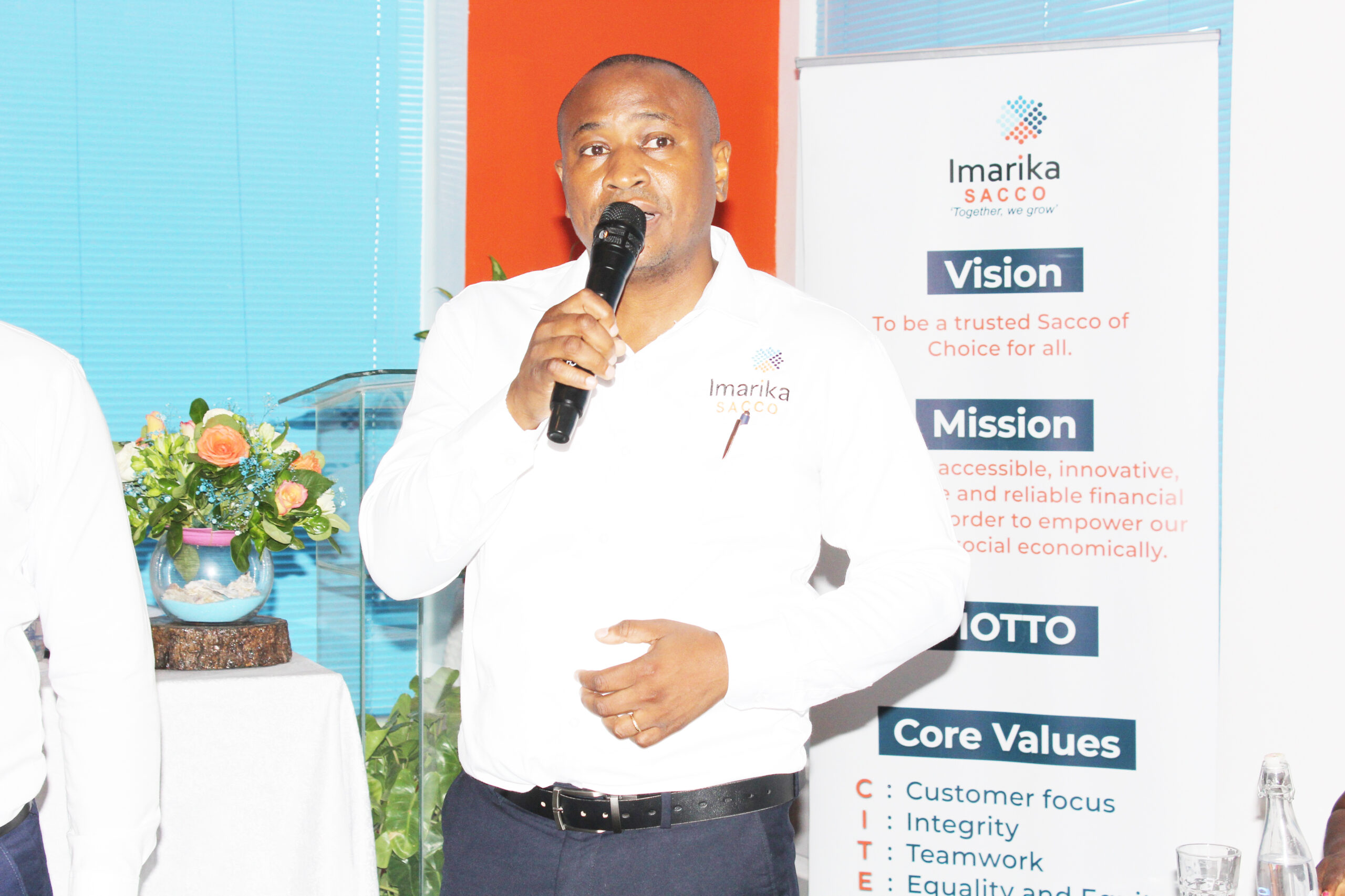
“This trend to lower interest rates on loans by banks does not really affect the business of SACCOs. What this development in the banking sector could mean is that those people who were considering joining a SACCO for purposes of getting a lower-interest loan may not have that motivation anymore.
However, for those SACCOs that still offer more competitive interest rates on their loan products to members, they remain more attractive than banks and will therefore continue to attract more business away from banks,” said George Yongo Ngala, Chief Executive Officer, Imarika DT SACCO Limited. SACCOs lead monthly financial services usage.
The 2024 FinAccess Survey, which highlights shifting financial preferences in Kenya, shows that SACCOs lead in the financial channels that Kenyans use per month, at 74.9 %, ahead of Banks at 58.7%, due to their use of this channel for loan repayments, savings contributions and salary deposits.
ALSO READ:
Uchumi Supermarket wins Ksh26.7 million in franchise dispute
“The ultimate impact of the SACCO model makes SACCO loans cheaper than those offered by other players in the market. Borrowing from a SACCO as a member gives one an opportunity to earn a dividend, rebates, and benevolent services among others. These benefits are not available to one who takes out a bank loan, “said Solomon Atsiaya, Chief Executive Officer, Kenya National Police DT SACCO Limited.
He gives the example of a borrower from a SACCO who is charged an interest of 13% while the same SACCO pays out a dividend rate of 10%. “This means that the effective cost of that SACCO loan is reduced to about 3%,” said Atsiaya.
SACCOs are member-based organizations thus rely heavily on patronage of their products from members, to boost liquidity, earn interest income and provide affordable credit to members. Members also have the opportunity to earn dividends and rebates.
With rapid advancements in technology, SACCO members now do not have to visit the physical brick and mortar branches. These Financial Cooperatives have switched to modern delivery channels such as agency banking, internet platforms, and mobile technologies, significantly transforming member interactions.
ALSO READ:
“We have traditional SACCO products that are ever affordable. If a SACCO gives out a loan at 12%, reducing balance, this translates to 6.5% on a one-year repayment period. This is much lower than a bank loan taken at an interest of 15%. All repayments on a SACCO loan comes back to a member in the form of rebates or dividend on share capital.
SACCO loans are also guaranteed and their repayments do not vary with the prevailing market rates. Banks on the other hand will adjust upwards their loan repayment rates, depending on signals from the Central Bank of Kenya, “said then Daniel Marete, Chief Executive Officer, Solution DT SACCO Limited, based in Meru County.
He added that profits earned by SACCOs are shared among its membership as opposed to multinational or local banks, who only distribute their huge profits among a few shareholders, some of them being foreigners.
“SACCOs are member-owned and controlled. This member is also the customer as well as owner of the business. The impact of Dividend payouts by SACCOs is felt locally and in the villages where most members reside, unlike banks which share their returns with only a handful of owners, “said Marete.
ALSO READ:
Police recover part of 7,354 bags fertilizer stolen from NCPB depot in Meru
Annual payments by SACCOs are felt among boda boda operators, local business, vegetable vendors and small businesses, enabling repayment of household debts, unlike earnings from banks.
According to the 2024 FinAccess Survey, SACCOs remain the main attraction owing to their expanded reach and lower interest rates on loans compared to commercial banks, which may also have motivated their higher usage. SACCOs are also more popular in urban areas, members increasing their usage of this platform due to advanced mobile and other digital channels.
The Survey found that even with advances in technology, SACCO members continue to consume services at the branch, particularly in rural areas, where usage remains high at 66.7 %, compared to 52.0 % in urban settings.
ALSO READ:
These insights highlight the evolving landscape of SACCO service delivery, emphasizing the importance of addressing barriers to technology adoption, particularly in rural areas and among female users.
While trust concerns persist in the SACCO sector, in light of recent happenings at KUSCCO, banks have to deal with eligibility challenges that are also impacting the use of mobile money. Mobile phone ownership is also a major barrier for mobile money usage.
In this Survey, the majority of respondents who ceased using SACCOs identified voluntary withdrawal (51.7 %) and an inability to maintain their accounts (46.2 %) as the primary reasons for discontinuation.
By Jackson Okoth
Get more stories from our website: Sacco Review.
For comments and clarifications, write to: Saccoreview@
Kindly follow us via our social media pages on Facebook: Sacco Review Newspaper for timely updates
Stay ahead of the pack! Grab the latest Sacco Review newspaper!