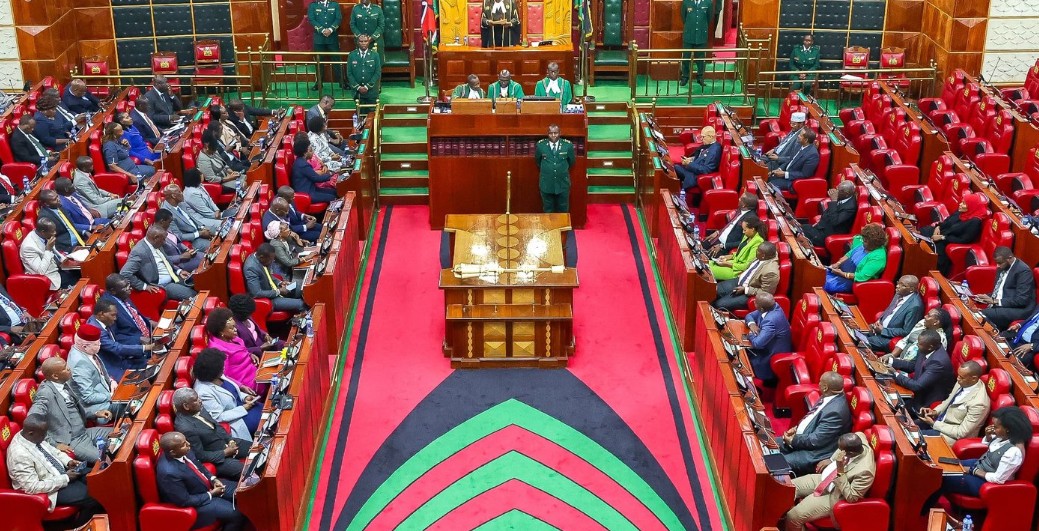
The National Assembly’s Departmental Committee on Agriculture and Livestock has resumed fresh consideration of the Tea (Amendment) Bill, 2023, after Speaker Moses Wetang’ula directed a new review of the legislation following a conflict of interest complaint against a member of parliament.
Wetang’ula’s ruling followed a complaint by Nyeri tea farmer Dr John Omanga, who questioned the integrity of parliamentary proceedings on the proposed law. The speaker said Gatundu South MP Gabriel Kagombe had participated in debate on the Bill without disclosing his interests in companies linked to the tea sector.
Documents tabled in the House indicate that Kagombe is a sitting director of Theta Tea Factory Company Limited, KTDA Holdings Limited and Majani Insurance Brokers Limited. Dr Omanga argued that the operations of the three companies are a direct subject of the Bill, and the MP ought to have declared his interest.
The Speaker noted that while Kagombe had disclosed his directorship before the Departmental Committee on Agriculture and Livestock, where he serves as a member, he did not make a similar declaration during proceedings in the Committee of the Whole House on March 12, when lawmakers debated provisions on governance, management and oversight of tea factories. Wetang’ula said the contributions were substantive and directly related to the provisions under consideration, and that the failure to declare the interest casts doubt on the probity of the deliberations.
ALSO READ:
Gov’t moves to dispel myths on proposed 0.8pc Tea Levy, assures farmers of protection
The Bill and what it proposes
The Tea (Amendment) Bill, which was passed by the Senate on October 8, 2024 and forwarded to the National Assembly for concurrence, seeks to amend certain provisions of the Tea Act, 2020 to protect tea growers’ proceeds from mismanagement by factories. It also aims to incentivise value addition of tea by exempting value-added tea from payment of the tea levy, and to liberalise the tea industry through direct overseas sales, providing multiple marketing avenues and enhancing the opportunity for price discovery.
As the committee reopened deliberations, the Kenya Tea Development Agency (KTDA) and the Tea Board of Kenya (TBK) presented divergent views on the proposed tea levy, one of the most disputed provisions of the legislation.
KTDA says the levy will hurt farmers
KTDA National Chairman Senior Counsel Chege Kirundi, appearing before the committee, urged the MPs to scrap the proposed levy, emphasising that existing taxes already overburden smallholder tea farmers and that the primary goal must be to maximise their returns. KTDA Chief Executive Officer Wilson Muthaura backed the call, saying the agency’s priority was to protect farmers’ income and not tax them further.
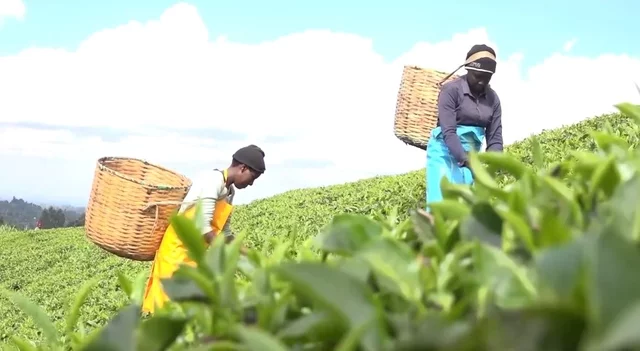
Farmers at KTDA factory annual general meetings have similarly warned that the proposed tea levy of Ksh3.85 per kilogramme of sold tea will directly affect their earnings. KTDA Zone Six Board Member Enos Njeru said each factory would be forced to pay about Ksh31 million annually, and that combined with other taxes in the sector, the amendment would extract not less than Sh2 billion from the 71 smallholder tea factories.
The Bill also proposes reducing the number of directors in KTDA subsidiaries and requiring that at least 40 per cent of made tea undergo value addition before sale, provisions that have drawn sharp criticism from farmers and industry players.
Tea Board argues levy falls on exporters, not farmers
The Tea Board of Kenya (TBK) countered KTDA’s position, arguing that the levy is paid by exporters and does not come directly from farmer bonuses. The board pointed to Sri Lanka as an example where a similar levy was introduced and the country’s average tea prices subsequently rose, suggesting that well-designed levies can benefit the sector over time rather than harm it.
ALSO READ:
Gov’t pushes tea value addition as legislative setbacks stall reform agenda
What this means for farmers
Kenya’s tea sector supports millions of smallholder farmers and remains one of the country’s leading foreign exchange earners. The fresh review by the Agriculture Committee offers farmers and industry stakeholders another opportunity to influence the outcome of a Bill that will shape how farmer proceeds are managed, how much value Kenya retains from its tea exports, and how governance of tea factories is structured.
Muthaura appealed to legislators to adopt a consultative approach with industry stakeholders before enacting measures that could negatively affect production and earnings, saying policy must empower the farmer and not burden them.
The committee is expected to receive submissions from both KTDA and the Tea Board before preparing a fresh report for tabling in the House ahead of the Bill’s next reading.
By Benedict Aoya
Get more stories from our website: Sacco Review.
For comments and clarifications, write to: Saccoreview@
Kindly follow us via our social media pages on Facebook: Sacco Review Newspaper for timely updates
Stay ahead of the pack! Grab the latest Sacco Review newspaper!