- A total of 502,621 youth undertook the Entrepreneurial Aptitude Test, more than double the original target of 200,000
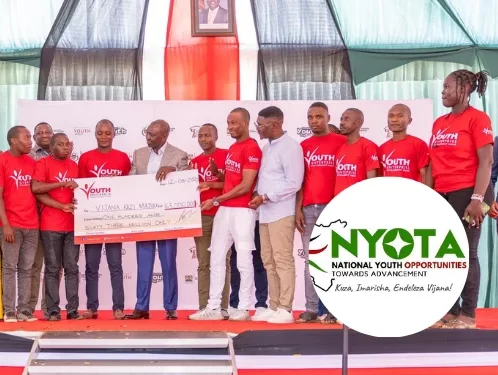
- 91,253 beneficiaries have received the first tranche of business startup capital totaling more than Ksh 2.01 billion
The Micro and Small Enterprises Authority (MSEA) has recorded significant progress in the Business Support Component of the National Youth Opportunities Towards Advancement (NYOTA) Project, according to findings presented during a World Bank Implementation Support Mission (ISM) held in Nairobi.
The presentation was led by Component 2 Project Coordinator Patrick Kamenyi, who outlined key achievements, milestones, lessons learned and upcoming priorities under the intervention. The programme aims to increase employment opportunities and improve earnings among vulnerable and marginalized youth across the country.
A total of 502,621 youth undertook the Entrepreneurial Aptitude Test, more than double the original target of 200,000, Kamenyi said, pointing to strong demand for entrepreneurship opportunities among young people nationwide.
ALSO READ:
Cooperative leaders calls for unity as the country heads towards the 2027 general election
The Business Development Services programme has trained 124,850 youth in entrepreneurship, representing over 92 percent of its planned target. The project has also reached 4,188 host community beneficiaries under its refugee and host community inclusion framework.
Mentorship has emerged as one of the project’s strongest pillars, with 90,478 youth completing the first two rounds of support covering financial management, business planning, customer service, record keeping and growth strategies.
On funding, 91,253 beneficiaries have received the first tranche of business startup capital totaling more than Ksh 2.01 billion. A further Ksh 273.8 million has been transferred to individual youth savings accounts under the National Social Security Fund’s Haba Haba savings programme.
The capital has supported enterprises in agriculture, retail trade, fashion and design, beauty and cosmetics, hospitality, manufacturing and information and communication technology (ICT) services. Monitoring data presented at the mission showed 88 percent of supported businesses are fully operational, while 10 percent are partially operational.
MSEA also reported publicity around 15 business capital disbursement forums officiated by President William Ruto in different regions, alongside digital campaigns to boost participation in mentorship and training.
ALSO READ:
SASRA data shows majority of SACCO members hold less than KSh100,000 in deposits
Among adaptive measures introduced during implementation, the project adopted ward based targeting to ensure equitable distribution of opportunities across all 1,450 wards. National Government Administration Officers were also brought in to support beneficiary mobilization and oversight, while strategic fund reallocations allowed the project to reach additional youth beyond its original design.
County governments have made commitments including provision of market stalls, establishment of youth support desks and waivers on selected business license fees to support enterprise formalization.
Looking ahead, MSEA said priorities include disbursing the second tranche of business capital, beginning support to Phase Two beneficiaries, rolling out additional mentorship sessions and piloting a Results Based Financing programme targeting hard to serve youth.
By Benedict Aoya
Get more stories from our website: Sacco Review.
For comments and clarifications, write to: Saccoreview@
Kindly follow us via our social media pages on Facebook: Sacco Review Newspaper for timely updates
Stay ahead of the pack! Grab the latest Sacco Review newspaper!