- Dangote’s proposed Lamu refinery could transform Kenya into a major regional petroleum hub.
- Kenya’s potential $500 million stake raises questions over public money, returns and investment risks.
- Local jobs, environmental protection and Kenyan participation will be key to determining whether the project delivers lasting value.
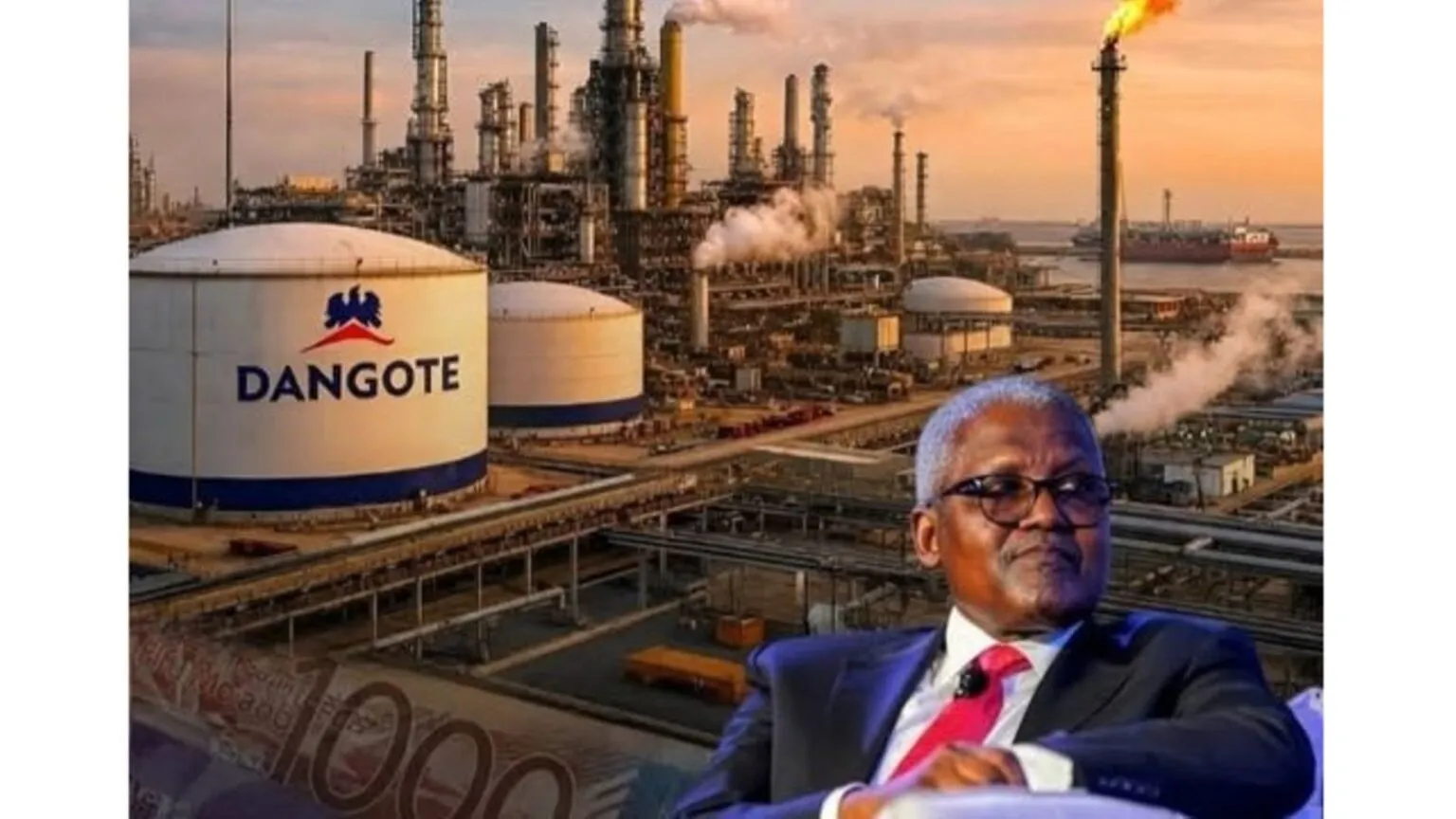
Kenya could be on the threshold of one of the most consequential industrial investments in its history after Nigerian billionaire Aliko Dangote selected Lamu as the site for a proposed mega-refinery designed to process up to 700,000 barrels of crude oil a day.
The project, estimated at about $16 billion–$17 billion for the refinery, could rise to roughly $20 billion when associated petrochemical facilities and port infrastructure are included.
What makes the proposal even more significant is that Dangote is not simply looking for a site in Kenya. He is offering East African governments an opportunity to become equity partners in the project.
Kenya is expected to consider a 10 per cent stake valued at about $500 million, while Ethiopia and Rwanda have also expressed interest. The combined regional participation could amount to approximately 30 per cent, or $1.5 billion, according to David Ndii, an economic adviser to President William Ruto.
This transforms the Lamu refinery from a conventional foreign investment story into something potentially much bigger: an African-owned regional energy enterprise in which governments that currently spend billions importing petroleum products could also become investors in the infrastructure supplying their markets.
READ:
The proposed refinery would have a capacity significantly larger than current refined-fuel demand across East Africa, with reports indicating the plant could serve Kenya, Uganda, South Sudan, Rwanda, Burundi and the Democratic Republic of Congo, turning Lamu into a regional petroleum hub.
A refinery of this magnitude would require an enormous ecosystem of storage facilities, pipelines, transport networks, engineering services, logistics companies, maintenance contractors and skilled workers.
The country should negotiate for maximum local value addition. Kenyan companies should not merely provide security, transport and low-level services while sophisticated engineering, technology and management contracts are imported.
The project should deliberately create opportunities for Kenyan manufacturers, contractors, engineers, technicians, universities, TVET institutions and professional-service firms.
Lamu has the strategic advantage of a deep-water port, making it particularly suitable for large crude carriers, strengthening the logistical argument for locating a large-scale refinery there.
Yet the excitement must be matched by caution. A $500 million Kenyan equity commitment is public money and must therefore be subjected to rigorous financial, legal and technical scrutiny.
Parliament, regulators, financial experts and other stakeholders should establish exactly what Kenya receives in return for its investment, how the shares will be structured, what dividends are anticipated, what risks the government assumes and how the investment will be protected.
Environmental considerations are equally important. Lamu possesses an ecologically and culturally sensitive environment, and large-scale industrial development must meet the highest environmental standards.
The refinery, port expansion, pipelines and petrochemical facilities should undergo comprehensive environmental and social assessments, with affected communities meaningfully involved in decisions affecting their land, livelihoods and future.
YOU MAY WANT TO READ:
The commercial viability of a 700,000-barrel-per-day plant will depend heavily on reliable, competitively priced crude supplies and efficient transportation.
Kenya and its neighbours therefore need a coherent regional petroleum strategy linking crude production, pipelines, storage, refining and distribution.
His Nigerian refinery near Lagos has a reported capacity of 650,000 barrels per day, making it one of Africa’s largest refining facilities. The proposed Lamu plant would therefore represent a major extension of Dangote’s refining strategy from West Africa into the East African market.
For Kenya, however, the central question should not simply be whether Dangote is bringing $17 billion to Lamu. The bigger question is what Kenya will become because of it.
If properly structured, the refinery could stimulate manufacturing, create thousands of direct and indirect jobs, expand the tax base and position Kenya at the centre of East Africa’s petroleum and petrochemical economy. But if poorly negotiated, Kenya could find itself carrying financial risks while much of the value created by the project flows elsewhere.
By Hillary Muhalya
Get more stories from our website: Sacco Review.
For comments and clarifications, write to: Saccoreview@
Kindly follow us via our social media pages on Facebook: Sacco Review Newspaper for timely updates
Stay ahead of the pack! Grab the latest Sacco Review newspaper!