- KUSCCO’s collapse raises fresh concerns over members’ money and accountability.
- Liquidators face pressure to recover assets and answer key financial questions.
- The crisis offers lessons on governance, investment controls and transparency.
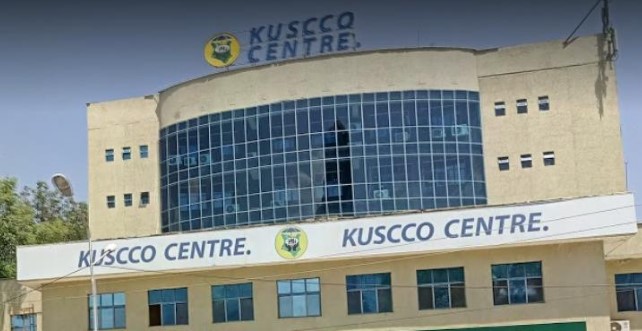
The giant Kenya Union of Savings and Credit Co-operatives (KUSCCO) has reached a dramatic turning point after members resolved on Friday, August 28, 2026, to have the troubled cooperative umbrella organisation liquidated.
The resolution marks what could be the end of an institution that for decades occupied a powerful position at the apex of Kenya’s cooperative movement, bringing together savings and credit co-operative societies (Saccos) and representing their interests at the national level.
But the decision to liquidate KUSCCO is not merely the story of an organisation coming to an end. It is also a story about trust, accountability, members’ money and the consequences of financial decisions made at the highest levels of the cooperative movement.
Following the members’ resolution, the Commissioner for Co-operatives, David K. Obonyo, appointed liquidators to undertake the liquidation exercise in accordance with Section 61(1)(c) of the Co-operative Societies Act, Cap. 490.
The appointment of the liquidators was subsequently gazetted in the Kenya Gazette of August 31, 2026, Volume CXXVIII, No. 153, formally setting in motion the process of winding up the institution. The liquidation is expected to last 12 months.
The team appointed to undertake the liquidation comprises Deputy Commissioner of Police CPA Peter Wanjohi Kiama; Habil Olembo Jesse, Principal Co-operative Officer; and Mariam Adam Abubakar, Deputy Chief State Counsel from the State Department for Co-operatives.
A painful chapter for primary Saccos
For Kenya’s primary Saccos, however, the liquidation is much more than a regulatory or administrative exercise. It represents a moment of anxiety.
Many primary co-operative societies have money invested or otherwise tied up in institutions and financial arrangements associated with KUSCCO, and the collapse of confidence in the umbrella body raises a fundamental question: what happens to the money belonging to ordinary Sacco members?
Across the country, co-operative societies have been expressing concern over funds that have been sunk into KUSCCO-related investments and transactions.
YOU MAY WANT TO READ:
Kenya National Police Sacco CEO Atsiaya elected university alumni chair
For a primary Sacco, money entrusted to it does not belong to an individual official. It belongs to thousands of members—teachers, farmers, police officers, civil servants, business people, boda boda operators, employees and other ordinary Kenyans who save a portion of their income with the expectation that their money will be protected and put to productive use.
A farmer who hoped to obtain a development loan may be affected. A parent who was saving for school fees may be affected. A small trader who depends on Sacco credit may be affected.
That is why the KUSCCO liquidation must be treated not simply as the closure of an organisation, but as a matter of public interest within Kenya’s cooperative economy.
From cooperative giant to liquidation
KUSCCO’s importance within the cooperative sector made its troubles particularly significant. For many years, the organisation was regarded as a major pillar of Kenya’s Sacco movement, and its name carried considerable weight among cooperative societies, particularly because Saccos depend heavily on confidence and institutional credibility.
The liquidators have a heavy responsibility
The three-member liquidation team now carries an enormous responsibility. Their work should go beyond merely closing offices, disposing of assets and settling administrative matters. They will need to establish a clear financial picture of KUSCCO and provide credible answers to those who have entrusted their money to the cooperative movement.
The process should be transparent, professional and guided strictly by the Co-operative Societies Act and other applicable laws. Every asset must be accounted for. Every liability must be established. Every legitimate creditor must be identified. And every recoverable shilling should be pursued.
READ ALSO:
Liquidation should not become a convenient graveyard where unanswered questions disappear with the organisation.
The wider lesson for Kenya’s cooperative movement
The KUSCCO episode offers a painful lesson to Kenya’s cooperative sector. The strength of a Sacco is ultimately built on member confidence.
Members deposit their money because they believe their institutions are properly governed, audited, supervised and managed. When that confidence is damaged, the consequences can be devastating.
The cooperative movement therefore needs stronger corporate governance, more rigorous investment controls, effective internal audit systems, professional management and meaningful accountability by boards and officials.
Co-operative societies must also avoid the temptation of treating members’ savings as if they were an unlimited source of capital for risky ventures. Every shilling invested is somebody’s hard-earned money.
The liquidation of KUSCCO is undoubtedly a dark moment for Kenya’s cooperative movement. But it can also become an opportunity for reform.
That achievement must not be destroyed by the failure of individual institutions. The answer is not to discourage Kenyans from joining Saccos. The answer is to make Saccos stronger, more transparent and more accountable.
The liquidators have been given a difficult assignment. They must now demonstrate that liquidation does not mean that members’ money has simply vanished.
For thousands of Sacco members watching from across Kenya, the hope is that the KUSCCO story will ultimately be one of recovery, accountability and reform—not merely a story of how a giant cooperative institution collapsed.
KUSCCO may be facing liquidation, but the cooperative movement itself must not be allowed to die with it.
By Xavier Lugaga
Get more stories from our website: Sacco Review.
For comments and clarifications, write to: Saccoreview@
Kindly follow us via our social media pages on Facebook: Sacco Review Newspaper for timely updates
Stay ahead of the pack! Grab the latest Sacco Review newspaper!